

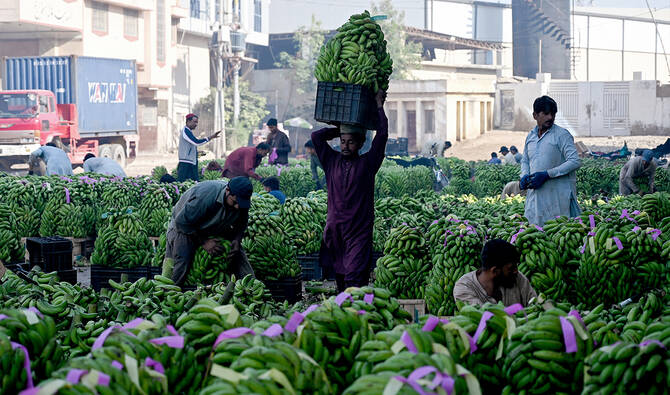
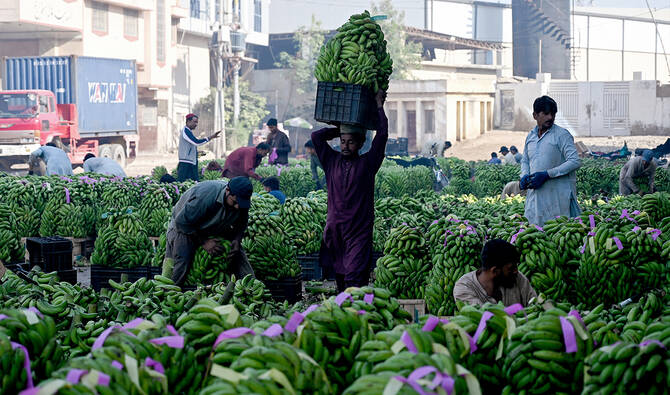
ISLAMABAD: Pakistan plans to roll out a five-year strategy to boost agricultural exports while raising crop yields through improved seed quality and farm inputs, Prime Minister Shehbaz Sharif said on Tuesday, as the government moves to shore up food security and foreign exchange earnings.
The push comes as Pakistan’s agriculture sector faces mounting pressure from erratic climate patterns, including floods and heat stress that have damaged crops and disrupted supply chains in recent years, creating food security concerns and weighing on export-oriented industries such as textiles.
The prime minister said it was vital to increase crop yields while chairing a review meeting of the working group on proposals for agricultural sector reforms in the federal capital.
“Agricultural reforms and introducing farmers to internationally practiced methods are the government’s top priority,” he said, according to a statement circulated by his office. “Measures are being taken to increase per-acre yields by ensuring the provision of quality seeds, timely availability of fertilizer at appropriate prices and medicines to prevent crop diseases.”
The statement said Sharif called for measures to increase the production of palm oil along the coastal belt.
“He instructed that a roadmap be prepared to increase agricultural exports over the next five years,” it added.
Sharif said the government was also working on policies to expand value-added agricultural exports through improved processing and certification regimes, aimed at increasing the global market value of Pakistani farm goods and boosting farmer incomes.
Officials briefed the meeting on plans to expand exports of fisheries, fruits and processed agricultural products.
Sharif said Pakistan has significant potential for growth in the agricultural sector, adding that his administration had reached an agreement with China to train 1,000 Pakistani students in modern agricultural technology.


