

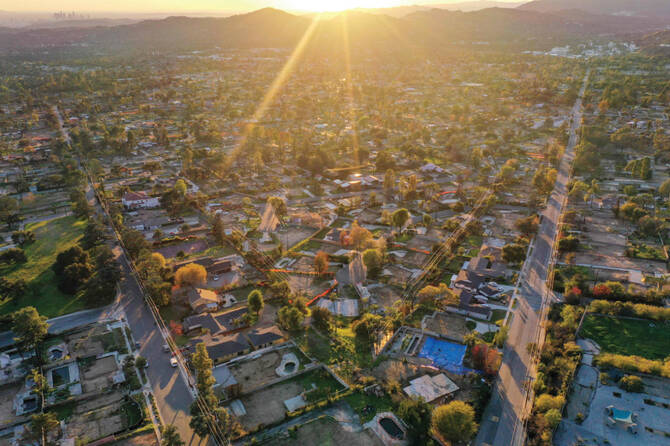

ALTADENA: Less than a year after watching flames raze his home in the Altadena foothills, Ted Koerner has moved into a brand new house, one of the first to rebuild in this Los Angeles suburb.
It has been an uphill battle, and Koerner is visibly moved as he brings his dog, Daisy, back home. “We’ve been through a lot this year,” he said.
Altadena was hardest hit by the fires that ravaged parts of the sprawling US metropolis in January 2025. Thousands of homes were destroyed and 19 people died in the town — compared to 12 killed in the upscale Pacific Palisades neighborhood.
To rebuild his home, Koerner, a 67-year-old head of a security company, had to front up several hundred thousand dollars as his mortgage lender refused to release insurance payouts for months. Koerner also had to contend with the uncertainties created by the policies of US President Donald Trump. Tariffs on steel, wood, and cement, which are often imported, have increased construction costs, and Latino construction workers fear arrest by Immigration and Customs Enforcement.
“If ICE grabs construction crews and Trump does that to us on top of tariffs, we’ll never get this town rebuilt,” Koerner said.
Slowly, however, Altadena is coming back to life. Amid the thousands of empty lots, a few frames are beginning to rise from the ground.
The hurricane-strength 160 kilometer per hour gusts of wind that spread the fire at breakneck speed last January are still fresh in everyone’s minds. But despite the destruction and the pervasive threat of climate change in California, dogged survivors refuse to move away.
“Where are you gonna go?” sighs another Altadena resident, Catherine Ridder, a 67-year-old psychotherapist. “There’s no place around here that’s not vulnerable to catastrophic weather.”


