

Markets of Makkah embody the city’s rich history

1 / 2
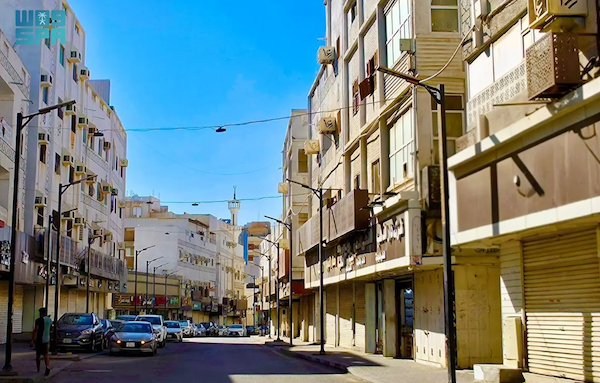
The markets of Makkah reflect the city’s rich history, shaped by centuries of pilgrims, caravans and merchants. (SPA)
2 / 2
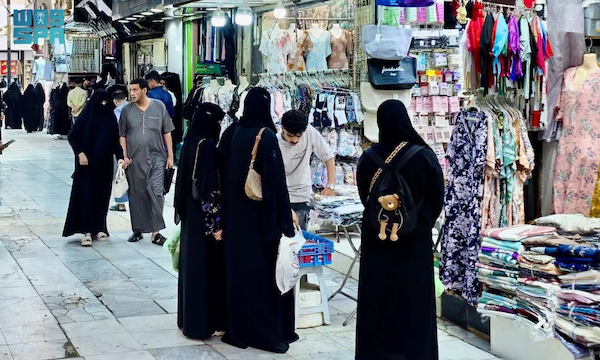
The markets of Makkah reflect the city’s rich history, shaped by centuries of pilgrims, caravans and merchants. (SPA)
Short Url
Updated 04 January 2026
Follow

Markets of Makkah embody the city’s rich history

RIYADH: The markets of Makkah have been shaped by centuries of pilgrims, caravans and merchants, which have helped to establish the holy city as an international center of religion and commerce.

They served as social and cultural hubs that influenced local life and the economy, and continue to play an important role in Makkah’s development today, supporting the goals of Vision 2030 to diversify the economy and enhance quality of life.

The night market is one of the city’s oldest, known for serving customers in the city center at odd hours, and is still running today.

Historical commercial activity extended to markets that served the southern and western sides of the city including Al-Musfala Market and the Ajyad Market.

Other markets were well known in the northern and eastern neighborhoods, such as Al-Maalla Market and Al-Hajoun Market, in addition to local markets including Jarul Market and Al-Zahir Market, and Al-Shubaika Market near the Grand Mosque.

While some of these markets have disappeared due to urban expansion, they have remained documented in historical sources.

Historians told the Saudi Press Agency that these markets were meeting points for diverse cultures, fostering the exchange of goods, customs and knowledge.

They helped give Makkah its early global commercial character while providing livelihoods and preserving traditional crafts across generations.

Estimates indicate that between 30-35 percent of visitors to Makkah make a point of visiting these markets, spending an average of between SR250 ($66.65) and SR400 per visit.

With hundreds of shops, the markets provide employment, support SMEs and sustain artisans, particularly in handicrafts, perfumes and traditional foods.

Urban development programs are now focusing on these historic markets, enhancing the landscape, regulating commerce, improving infrastructure and preserving their architectural identity.

These efforts complement projects to develop the central area and improve the pedestrian experience, benefiting both visitors to the Grand Mosque and Makkah’s residents.

Makkah’s historic markets are thus not only a legacy of the past but a living part of the city’s present and future, sustaining a thriving economy and reflecting a rich urban identity shaped by centuries of culture and commerce.


Kingdom key player in regional peace, EU official says

Updated 17 January 2026
Follow

Kingdom key player in regional peace, EU official says

  • Hana Jalloul Muro highlights Riyadh’s role in regional stability, economic growth and advancing EU-Saudi strategic ties

Riyadh: Hana Jalloul Muro, vice-chair of the European Parliament’s Foreign Affairs Committee, has praised Saudi Arabia’s role as a “reliable partner” to the EU.

Describing the Kingdom as a “key international actor,” she highlighted its pivotal role in regional stability, including brokering peace talks on Ukraine, promoting peace in Palestine, and supporting stable governments in Lebanon and the Syrian Arab Republic.

“Saudi is a reliable partner because it is a country that has demonstrated that with Vision 2030, only in the last five, six years, it has changed impressively. It has a major women’s labor force, a very low youth unemployment rate and is growing very fast,” Muro told Arab News.

Speaking on the sidelines of the Future Minerals Forum in Riyadh, she added: “Saudi Arabia is becoming a key major player in the international arena now — for peace conversations on Ukraine, supporting the Syrian government, paying Syria’s external debt, stabilizing the government in Lebanon, promoting peace in Gaza, in Palestine and pushing for a ceasefire, too.

“So, I think it is a very key international actor, very important in the region for stability,” Muro added.

Explaining why she considers the Kingdom a reliable partner, Muro said: “It’s a country that knows how to see to the East and to the West.”

Muro also serves as the European Parliament’s rapporteur for Saudi Arabia, and is responsible for drafting reports on legislative and budgetary proposals and other key bilateral issues.

In mid-December 2025, the European Parliament endorsed a road map to elevate EU-Saudi relations into a full-fledged strategic partnership, which Saudi Ambassador to the EU Haifa Al-Jedea described as “an important milestone” in bilateral ties.

The report highlighted the possibility of Saudi-EU visa-free travel, reaffirming the EU’s commitment to advancing a safe, mutually beneficial visa-free arrangement with the five GCC countries to ensure equal treatment under the new EU visa strategy.

“One of the key hot topics is the visa waiver to Saudi Arabia, which I always support,” Muro said. “Saudi Arabia has, as you are aware, been in cascade for five years, and I think we need to work toward a visa waiver.”

The report also highlighted the economic significance of Saudi tourists to EU member states, particularly for the hospitality, retail and cultural sectors, while emphasizing that Saudi citizens do not pose a source of irregular migration pressure.

When asked about the status of the visa waiver, Muro said: “The approval, it is the recommendation to the commission to take into account its importance. We need to advance on that because we are in the framework of this strategic partnership agreement that covers many topics, so this is why the visa waiver is a central key issue.”

She added: “I think by now we recognize the international role of Saudi Arabia and how important it is to us as a neighbor — not only for security, counter-terrorism and energy, but for everything. We need to get closer to partners like the GCC, Saudi specifically.

“And I think that we need to take Saudi Arabia as a very big ally of ours,” Muro said.

During her time in Riyadh, Muro took part in a panel at the forum focused on the EU-KSA business and investment dialogue, and advancing the critical raw materials value chain.

On the sidelines, she met Saudi Vice Foreign Minister Waleed Elkhereiji to discuss ways to further strengthen Saudi-EU relations.

She also met Hala Al-Tuwaijri, chairwoman of the Saudi Human Rights Commission, saying: “I have to congratulate you and the government, your country, on doing a great job.”