

Non-hydrocarbon sector drives Qatar’s 2.9% growth in Q3 

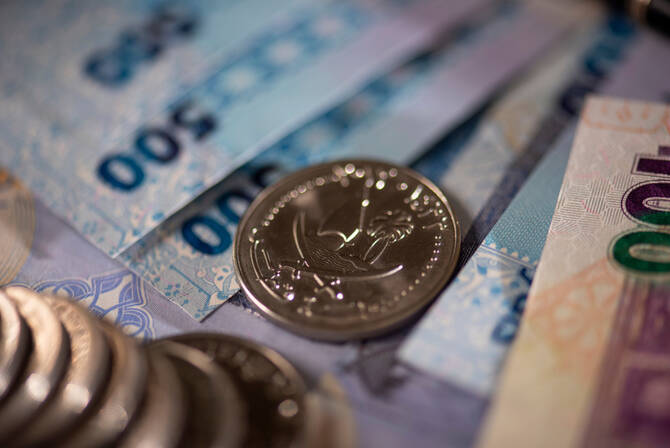
Data released by the National Planning Council show that estimated GDP at constant prices reached 186.1 billion Qatari riyals ($51 billion) in the third quarter of 2025, up from 180.9 billion riyals during the same period last year. Shutterstock
Short Url
Updated 29 December 2025
Follow

Non-hydrocarbon sector drives Qatar’s 2.9% growth in Q3 

RIYADH: Qatar’s real gross domestic product increased by 2.9 percent year on year in the third quarter of 2025, supported primarily by strong performance in the non-hydrocarbon sector, which recorded growth of 4.4 percent. 

Data released by the National Planning Council show that estimated GDP at constant prices reached 186.1 billion Qatari riyals ($51 billion) in the third quarter of 2025, up from 180.9 billion riyals during the same period last year, according to figures cited by the Qatar News Agency. 

This outcome is consistent with recent analysis by the International Monetary Fund, which noted that economies across the Gulf Cooperation Council are expected to sustain growth momentum despite heightened global uncertainty. The IMF attributed this resilience to robust non-oil activity, firm domestic demand, and the continued rollout of structural reforms across the region. 

The results also align with the IMF’s forecast that overall GCC output will accelerate to an average of 3.3 percent in 2025, compared with 1.7 percent in 2024, as member states gradually unwind oil production cuts agreed under the OPEC+ framework. 

According to QNA, non-hydrocarbon activities accounted for 65.5 percent of real GDP, with value added rising to 121.9 billion riyals in the third quarter of 2025, compared with 116.8 billion riyals in the corresponding period of 2024. This represents an annual increase of 4.4 percent and remains in line with the goals of the Third National Development Strategy and Qatar National Vision 2030. 

Within the non-hydrocarbon economy, construction, wholesale and retail trade, repair of motor vehicles and motorcycles, as well as accommodation and food service activities, emerged as the fastest-growing sectors on an annual basis, expanding by 9.1 percent, 8.9 percent, and 6.4 percent, respectively. 

The statement added that this growth reflects stronger domestic demand, increased visitor activity, and the continued execution of infrastructure and public sector projects, with positive spillover effects across services and trade-related industries. 

NPC Secretary-General Abdulaziz bin Nasser bin Mubarak Al-Khalifa said the results underscore “the strength of the Qatari economy and the continuation of the economic diversification path,” noting that real growth driven by non-hydrocarbon activities confirms the effectiveness of economic and development policies. He added that these policies are enhancing the contribution of productive and service sectors in line with the Third National Development Strategy and reinforcing the national economy’s capacity to achieve sustainable and balanced growth over the medium and long term. 

During the third quarter, 15 out of 17 economic activities recorded positive real growth, highlighting the breadth and resilience of Qatar’s economic base. 

The National Statistics Centre, which operates under the NPC, continues to enhance GDP measurement methodologies, with recent revisions applied to third quarter estimates. 

As part of broader efforts to align national accounts with international best practices, a comprehensive review of Qatar’s national accounts is currently underway and is expected to be completed by the first quarter of 2026. 


Free trade negotiations between GCC, India mark new phase of partnership, says sec-gen

Updated 24 February 2026
Follow

Free trade negotiations between GCC, India mark new phase of partnership, says sec-gen

RIYADH: The Gulf Cooperation Council’s secretary-general affirmed that the negotiations for a free trade agreement between the GCC and India, and the signing of the joint statement, represents a new phase of strategic partnership.

Jasem Mohamed Al-Budaiwi said that this contributes to enhancing close cooperation and strengthening economic and trade ties, according to the Saudi Press Agency.

This came during the signing ceremony of the joint statement on launching the free trade agreement negotiations between the Al-Budaiwi and India’s Minister of Commerce and Industry, Piyush Goyal, which took place in New Delhi, on Tuesday.

During the signing ceremony, Al-Budaiwi said that the Terms of Reference, signed on Feb. 5, provide a comprehensive and clear framework for these negotiations. The two nations agreed to discuss enhancing cooperation in vital strategic areas, including trade in goods, customs procedures, and services.

Additionally, the framework covers Sanitary and Phytosanitary measures, intellectual property rights, cooperation on Micro, Small, and Medium Enterprises, along with other topics of mutual interest. This reflects the comprehensive nature of the agreement and its ability to keep pace with the future economy.

Al-Budaiwi expressed hope that these negotiations would lead to a comprehensive and ambitious free trade agreement that works to remove customs and non-customs barriers, enhance the flow of quality investments in both directions, and achieve further liberalization in trade and investment cooperation between the GCC and India for mutual benefit. 

This would provide a stimulating economic environment and an investment climate that opens broad horizons for the business sector, supports supply chains, and accelerates the pace of economic growth in line with the ambitious developmental visions of the GCC states. 

The top official affirmed the full readiness of the General Secretariat to host the first round of negotiations at its headquarters in Riyadh during the second half of this year.

The two sides held a meeting during which they reviewed the existing cooperation relations between the GCC and India and discussed ways to develop and elevate them to broader horizons, serving mutual interests and enhancing opportunities for strategic partnership between the two sides, particularly in the economic, investment, and trade fields.

They praised the role undertaken by the negotiating teams from both sides, appreciating the efforts contributing to reaching a comprehensive agreement that enhances economic integration and supports the smooth flow of trade between the two nations.