

Crochet is more than a hobby for Saudi women

1 / 7
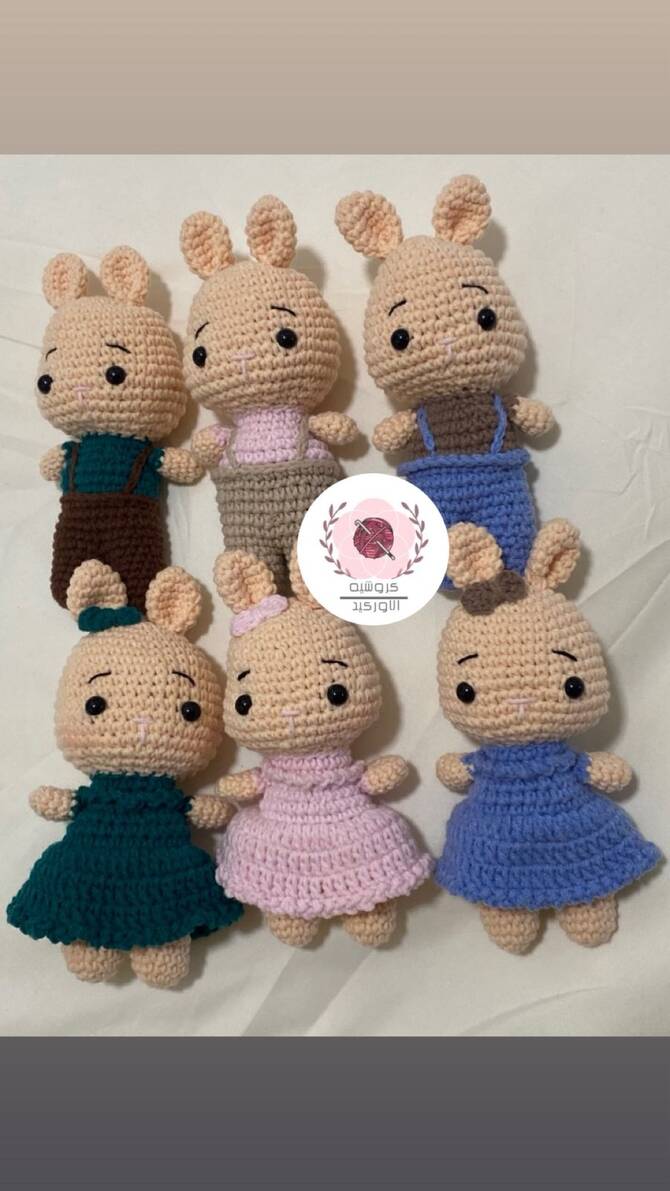
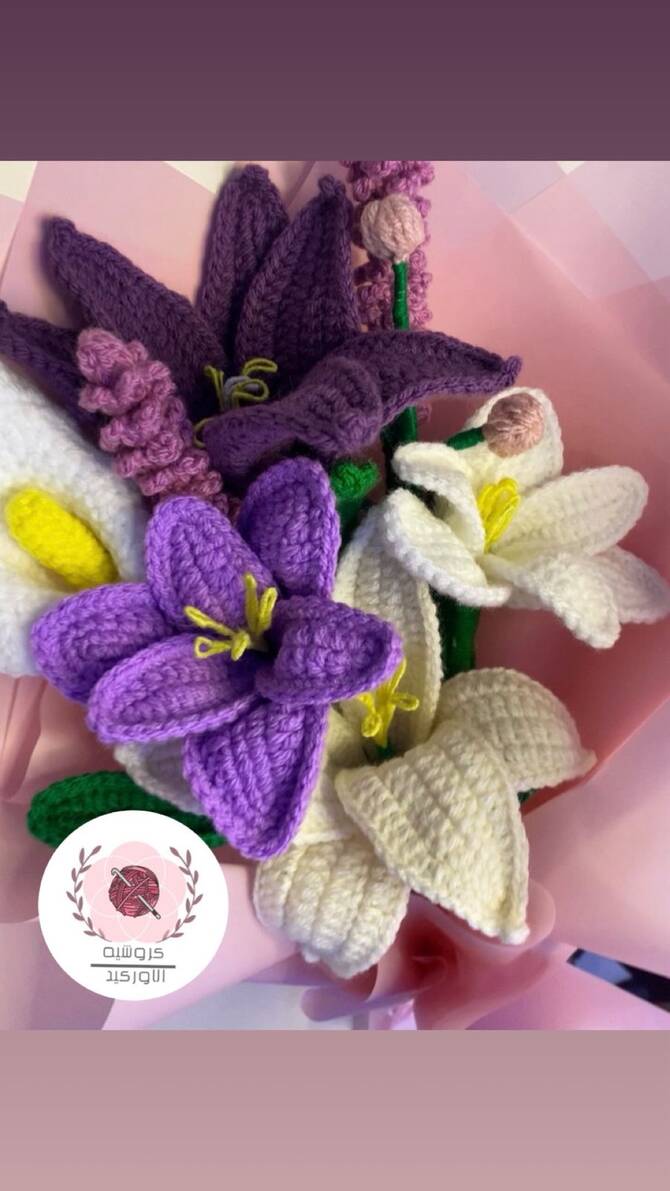
Al-Shammari crochets dolls, forever flowers, teapot covers and more. (Supplied)
2 / 7
Al-Shammari crochets dolls, forever flowers, teapot covers and more. (Supplied)
3 / 7
Al-Shammari crochets dolls, forever flowers, teapot covers and more. (Supplied)
4 / 7
Al-Shammari crochets dolls, forever flowers, teapot covers and more. (Supplied)
5 / 7
Al-Shammari crochets dolls, forever flowers, teapot covers and more. (Supplied)
6 / 7
Al-Shammari crochets dolls, forever flowers, teapot covers and more. (Supplied)
7 / 7
Al-Shammari crochets dolls, forever flowers, teapot covers and more. (Supplied)
Short Url
Updated 27 December 2025
Follow

Crochet is more than a hobby for Saudi women

  • Younger makers are rediscovering heritage through patience, skill and design

RIYADH: Across Saudi Arabia, a revival is unfolding as young people rediscover crafts traditionally associated with older generations and give them new life.

Among these crafts, crochet has emerged as a symbol of creativity and continuity. For many artisans, each stitch carries memory, identity, and emotional connection. 

For Harayer Al-Shammari, founder of Orchid Crochet (@Orchid_657 on Snapchat), crochet is a family legacy. Her first memories of the craft are of her late mother weaving intricate designs. “I was only 11, quietly watching her work,” she told Arab News. “One day she asked, ‘Do you want me to teach you?’ Of course, I said yes.”

What began as imitation became inheritance. “I love it and I am passionate about everything within the realm of crochet,” she said. 

Al-Shammari noted that the craft seems to be growing in popularity again. “There is more interest now, especially among young girls,” she said.

In our fast-paced, digitally-connected world, crochet has also become a form of mindfulness. Each piece requires patience, from two hours for smaller pieces to as long as four days for handmade dolls. For many creators, crochet offers a counterbalance to constant online engagement. 

“It gives me peace and enjoyment,” said Ghadi, the artist behind Ghadi Crochet (@Ghadicro1 on Snapchat). “It helps me make good use of my time instead of wasting it.”

But the online world also benefits today’s makers. “I started selling my work because I wanted people to see the art I create,” Al-Shammari said. Social media enabled her to attract attention to her work.

Today, crochet’s most active spaces are often digital. Al-Shammari shares her creations online, drawing inspiration from YouTube tutorials and connecting with followers across multiple platforms.

“It’s helped me a lot,” she said. “I get ideas, share my pieces, and even meet students who want to learn.”

Ghadi also credits digital platforms for her growth. “People’s comments and positive feedback on Instagram and TikTok make me want to improve.”

As the handmade market expands, others are following similar paths. For makers like Ghadi, encouragement from family turned passion into a small business, demonstrating how heritage and entrepreneurship can coexist. What was once a solitary activity is now a shared language.

Al-Shammari’s designs, ranging from table covers and dolls to teapot cozies and floral pieces, often reflect patterns inspired by Saudi homes and traditions. Younger makers like Ghadi tend toward minimalist styles but share the same emphasis on individuality.

Their work attracts customers who value handmade detail and customization, turning simple threads into personal expressions. Crochet is not purely decorative; it is expressive. 

Running a small creative business comes with challenges. “Delivery is the hardest part,” Ghadi said. “It’s limited to my city or nearby areas.”

Still, her optimism mirrors that of others across the Kingdom who find strength in doing what they love.

Al-Shammari focuses her energy not only on production but on empowering others.

“I taught a two-week crochet course at an orphanage,” she said. “A few days later, the director told me some girls wanted to continue learning, so I taught them online.”

Crochet in Saudi Arabia has transformed from a domestic art to a living symbol of resilience and reinvention.

Each creation, whether stitched in a family home or streamed on social media, tells a shared story; one of women weaving their past into their future, loop by loop.

-ENDS-


Saudi Arabia positions space sector as pillar of knowledge economy

Space is increasingly seen in the Kingdom as a driver of technology development, job creation, and international cooperation.SPA
Updated 5 sec ago
Follow

Saudi Arabia positions space sector as pillar of knowledge economy

RIYADH: Saudi Arabia is stepping up efforts to develop its space sector as part of wider plans to build a diversified, knowledge-based economy under Vision 2030, officials and industry figures say.

Space is increasingly seen in the Kingdom as a driver of technology development, job creation, and international cooperation, Saudi Press Agency reported. 

Policymakers say it now underpins a range of services, from telecommunications and navigation to climate monitoring and disaster management.

CEO of the Saudi Space Agency Mohammed Al-Tamimi said space technologies are closely linked to daily life and national development priorities.

“Space has become a vital tool for human development,” he said, noting that innovations in communications, Earth observation and navigation support sectors such as agriculture, logistics and urban planning.

Al-Tamimi added that growing private-sector involvement is creating new opportunities for startups and international partnerships, as Saudi Arabia seeks to build local capabilities rather than rely solely on imported technology.

Recent years have seen a series of institutional reforms. The establishment of the Saudi Space Agency in 2018, the transfer of regulatory responsibilities to the Communications, Space and Technology Commission, and the creation of the Supreme Space Council, chaired by Crown Prince Mohammed bin Salman, have helped set clearer governance and strategy for the sector.

Saudi Arabia has also expanded its participation in global programs. Agreements with NASA include cooperation on climate and space-weather missions, while partnerships with research centers and space companies support training, joint experiments, and technology transfer.

Domestically, investment is being directed toward satellite manufacturing, Earth-observation platforms, and data services linked to smart-city and environmental projects. Neo Space Group, owned by the Public Investment Fund, is expected to play a key role in developing sovereign capabilities and attracting international partners.

Youth programs and education initiatives feature prominently in the strategy. Competitions, academic research projects, and astronaut training opportunities are designed to encourage students to pursue careers in science and engineering.  

In 2023, Saudi astronauts Rayyanah Barnawi and Ali Al-Qarni participated in the Axiom-2 mission to the International Space Station, conducting scientific and outreach activities.

According to national indicators, the Saudi space economy was valued at around $8.7 billion in 2024 and is forecast to grow steadily through 2035, with expansion expected across both manufacturing and downstream services such as data analytics and navigation.

Officials also highlight sustainability as a priority. New regulations aim to ensure safe and responsible space activity, while the Kingdom plans to host the Space Debris Conference in 2026 to discuss global challenges linked to congestion in orbit.

As Saudi Arabia deepens partnerships and builds local expertise, analysts say the sector could support economic diversification, strengthen research capacity and provide high-skilled opportunities for young Saudis.

For policymakers, the space sector is less about prestige and more about practical outcomes: better services, stronger national capabilities and a foothold in an industry expected to grow rapidly in the coming decade.