Saudi speech-language pathologist colors her world with crochet

1 / 3
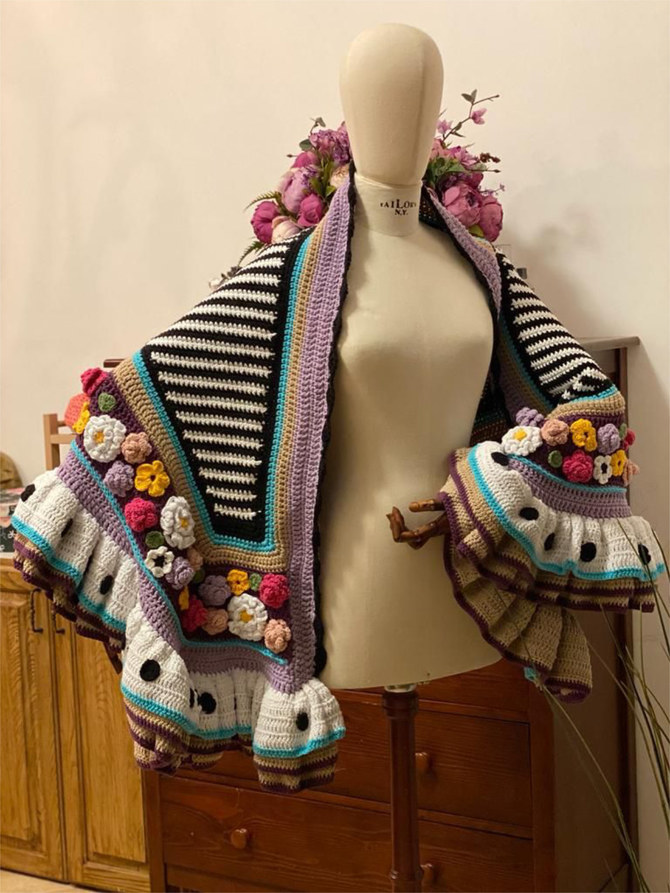
The world of crocheting became an ‘ocean of lessons’ for Marya Al-Sunbul. (Supplied)
2 / 3
“I love color and creating things by hand like carpenting, but I was the furthest thing away from crocheting and knitting. After scrolling through a website with the most beautiful crocheted shawls decorated with flowers and bursting with color, I decided to not purchase anything, but instead create them myself," Alsunbul said. (Supplied)
3 / 3
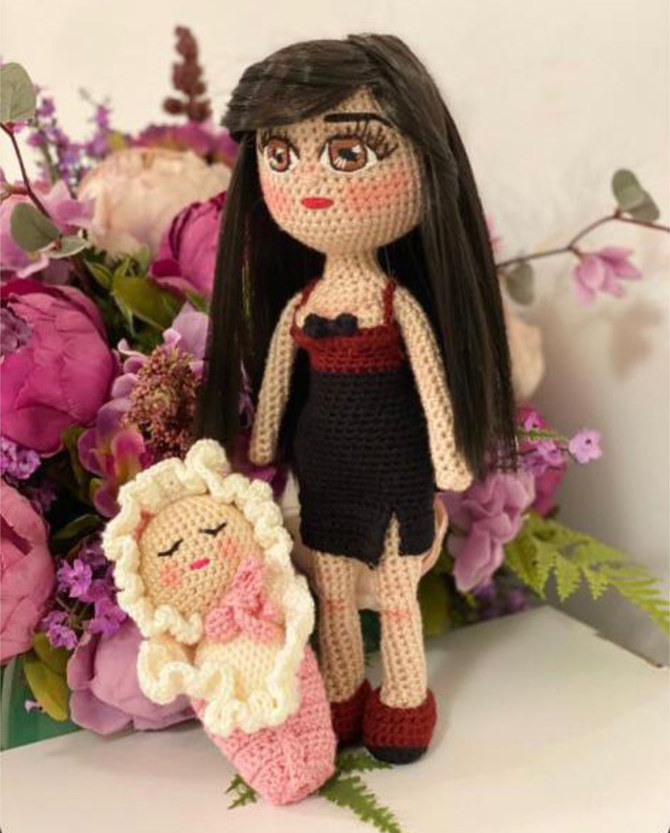
Al-Sunbuls custom order using amigrumi, a Japanese method of crocheting to create dolls or stuffed animals. (Supplied)
Short Url
Updated 03 June 2023
Follow

Saudi speech-language pathologist colors her world with crochet

  • Al-Sunbul said: “Amigurumi is a more complex method than crocheting a shawl because it requires a lot more tugging and calls for a particular type of yarn

RIYADH: A Saudi speech-language pathologist with a passion for the arts has made a name for herself creating dolls for children with special hearing needs.

Marya Al-Sunbul’s interest in art began at a young age when she started drawing and painting as a hobby but initially her career path took a different route.

She said: “I did not get encouragement ... because it was during a time when most artists either became art teachers or had trouble finding a job.


In the journey of learning how to crotchet, Alsunbul discovered amigrumi, a Japanese method of crotcheting that involves working in the round, creating spheres and shapes that result in a stuffed animal or doll. (Supplied)

“So, I decided to take the medical route and studied to become a speech-language pathologist and completely stopped drawing and painting.”

Al-Sunbul had a moment of epiphany five years ago when her father passed away. She described it as being “in a state of shock,” and she asked herself, “why wait? Why don’t I go back to doing what I adore and fulfil my dreams?”

She returned to painting and joined a workshop with Saudi artist Zaman Jassim, but it was no longer the same for her. “I felt as if painting wasn’t my passion,” she added.


“I love color and creating things by hand like carpenting, but I was the furthest thing away from crocheting and knitting. After scrolling through a website with the most beautiful crocheted shawls decorated with flowers and bursting with color, I decided to not purchase anything, but instead create them myself," Alsunbul said. (Supplied)

Her admiration for handmade crafts and love of “color and creating things by hand” sparked her interest in learning how to crochet.

She said: “After scrolling through a website with the most beautiful, crocheted shawls decorated with flowers and bursting with color, I decided not to purchase anything, but instead create them myself.”

The world of crocheting became an “ocean of lessons” for her.


“I love color and creating things by hand like carpenting, but I was the furthest thing away from crocheting and knitting. After scrolling through a website with the most beautiful crocheted shawls decorated with flowers and bursting with color, I decided to not purchase anything, but instead create them myself," Alsunbul said. (Supplied)

“Every time I learned something new, before I could even finish learning it, I was anticipating the next thing,” Al-Sunbul added.

At the peak of her fascination with crochet she was learning six or seven techniques at a time.

“It took me to another dimension and all the colors were so joyful. Whenever I looked at crochet shawls, I would be amazed.”

She discovered amigurumi, a Japanese method of crocheting that is used to create stuffed dolls and animals.

Al-Sunbul said: “Amigurumi is a more complex method than crocheting a shawl because it requires a lot more tugging and calls for a particular type of yarn.

“My hands hurt for an entire week due to the intricate work, stitching, and manual strength needed, but I really enjoy making them.”

She also took an online course to improve her skills and to learn how to make specific styles of amigurumi with detail that gives the impression the dolls are drawn.

In her work as a speech pathologist, Al-Sunbul often makes dolls for her young patients.

“My focus is on children’s hearing rehabilitation using cochlear implants, so I made a doll that is wearing a cochlear implant to represent a child with hearing impairment. It made me really happy to have done that,” she added.

Al-Sunbul makes custom-made dolls for customers throughout the Kingdom, along with pieces using macrame, a type of crocheting technique that involves knotting instead of weaving.

She is currently working on expanding her collection of crocheted items and dolls for a future exhibition.

“Creating handcrafted art made me calmer and more focused. It offers a great sense of relaxation and I absolutely adore that,” she said.

For more information on her work visit Instagram at @crochetmarya20.


Hafez Galley’s exhibition pays tribute to two Egyptian artists who shaped a visual era

Both artists emerged in an era when newspapers and magazines played a central role in shaping Egypt’s visual culture. (Supplied)
Updated 6 sec ago
Follow

Hafez Galley’s exhibition pays tribute to two Egyptian artists who shaped a visual era

  • Artworks by Attyat Sayed and El Dessouki Fahmi will be on display until Feb. 28

JEDDAH: Hafez Gallery in Jeddah has opened an exhibition showcasing the works of influential Egyptian artists Attyat Sayed and El Dessouki Fahmi. The exhibition runs until Feb. 28.

Kenza Zouari, international art fairs manager at the gallery, said the exhibition offers important context for Saudi audiences who are becoming increasingly engaged with Arab art histories.

Artworks by Attyat Sayed and El Dessouki Fahmi will be on display at Hafez Gallery until Feb. 28. (Supplied)

“Attyat Sayed and El Dessouki Fahmi’s decades-long practice in Cairo established foundational models for how artists across the region approach archives, press, and ultimately collective memory,” Zouari told Arab News. 

Both artists emerged in an era when newspapers and magazines played a central role in shaping Egypt’s visual culture. Their early work in press illustration “demanded speed, clarity, the ability to distill complex realities into a single, charged image,” the gallery’s website states.

Seeing the works of both artists side-by-side is breathtaking. It’s fascinating to witness how press illustration shaped such profound and lasting artistic voices.

Lina Al-Mutairi, Local art enthusias

Heba El-Moaz, director of artist liaison at Hafez Gallery, said that this is the second time that the exhibition — a posthumous tribute to the artists —has been shown, following its debut in Cairo.

“By placing their works side by side, it highlights how press illustration, often considered ephemeral, became a formative ground for artistic depth, narrative power, and lasting influence, while revealing two distinct yet deeply interconnected artistic paths within modern Egyptian visual culture,” she told Arab News. 

Artworks by Attyat Sayed and El Dessouki Fahmi will be on display at Hafez Gallery until Feb. 28. (Supplied)

Sayed’s work evolved from black-and-white illustration into “layered, dynamic compositions that translate lived emotion into physical gesture, echoing an ongoing negotiation between the inner world and its outward form,” the website states. Viewed together, the works of Sayed and Fahmi “reveal two distinct yet deeply interconnected artistic paths that contributed significantly to modern Egyptian visual culture.”

The exhibition “invites visitors into a compelling dialogue between instinct and intellect, emotion and structure, spontaneity and reflection; highlighting how artistic rigor, cultural memory, and sustained creative exploration were transformed into enduring visual languages that continue to resonate beyond their time,” the gallery states.

Lina Al-Mutairi, a Jeddah-based art enthusiast, said: “Seeing the works of both artists side-by-side is breathtaking. It’s fascinating to witness how press illustration shaped such profound and lasting artistic voices. The exhibition really brings their vision and influence to life.”