

Palestinian president affirms efforts to release Marwan Barghouti from Israeli prison

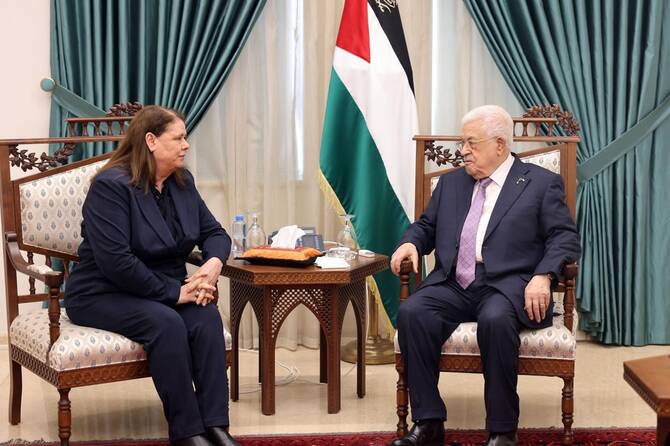
President Mahmoud Abbas received Fadwa Barghouti, the wife of Marwan Barghouti, at the presidential headquarters in Ramallah. (Wafa)
Short Url
Updated 23 December 2025
Follow

Palestinian president affirms efforts to release Marwan Barghouti from Israeli prison

  • Mahmoud Abbas praised Barghouti’s resilience during a meeting with his wife, Fadwa, at presidential headquarters in Ramallah

LONDON: President Mahmoud Abbas emphasized the Palestinian Authority’s efforts to support calls for the release of senior Fatah leader and Central Committee member Marwan Barghouti from an Israeli prison.

On Tuesday, Abbas received Fadwa Barghouti, his wife, at the presidential headquarters in Ramallah, affirming that his release has always been a top priority for both the presidency and the Fatah movement.

Abbas praised Barghouti, who has been in Israeli prisons since April 2002 after receiving five life sentences plus 40 years for his conviction of carrying out deadly attacks on Israelis during the peak of the Second Intifada of 2000.

Hamas proposed Barghouti’s name on the list of prisoners to be exchanged for Israeli captives, but Israel declined to release him in October. The 66-year-old national figure also served over four years in prison in 1978 for political activism. Analysts have long seen him as a potential presidential candidate if and when he is released from prison.

His family accused Israel Prison Service officers of having beaten him unconscious. In August, the Israeli far-right National Security Minister Itamar Ben-Gvir posted video footage showing him visiting Barghouti in prison and making threatening remarks to him.


Iran president warns suppliers against overpricing goods

Updated 5 sec ago
Follow

Iran president warns suppliers against overpricing goods

  • The prices of some basic goods, such as cooking oil and eggs, have increased significantly since the policy was announced

TEHRAN: Iran’s president warned domestic suppliers against hoarding or overpricing goods, state media reported on Thursday, as Tehran rolls out high-stakes subsidy reforms amid nationwide protests over economic hardship.

“People should ‌not feel any ‌shortage in terms of goods’ supply and distribution,” Masoud Pezeshkian said, calling upon his government to ensure adequate supply of goods and monitoring of prices across the country.

Iran’s subsidy reform is intended to favor consumers over importers by removing preferential currency exchange rates that allowed importers to access foreign currency at rates cheaper than those available to ordinary Iranians.

Under the new policy, Iranians will receive about $7 per month to purchase basic goods at select grocery stores. 

The prices of some basic goods, such as cooking oil and eggs, have increased significantly since the policy was announced.

Germany criticized the “excessive use of force” against protesters after authorities used live fire and tear gas to disperse demonstrations.

“It is their right to express their opinion peacefully,” said Foreign Minister Johann Wadephul of the protesters.

Meanwhile, Foreign Minister Abbas ‍Araqchi said Tehran remained open to negotiations with the US as long as they are based ‌on “mutual respect and ‌interests, ‌but it was ‌also ready for war if that is Washington’s intent.

Araqchi, speaking at a press conference in Beirut, added that his visit to Lebanon aimed to discuss Israel’s “challenges and threats” to regional security and to expand bilateral ties.