UAE’s Masdar signs deal to build Southeast Asia’s largest floating solar project in Malaysia

The estimated project value exceede $208 million. Masdar
Short Url
Updated 23 December 2025
Follow

UAE’s Masdar signs deal to build Southeast Asia’s largest floating solar project in Malaysia

RIYADH: Abu Dhabi’s renewable energy firm Masdar has signed its first partnership in Malaysia, setting the stage for the largest floating solar project in Southeast Asia. 

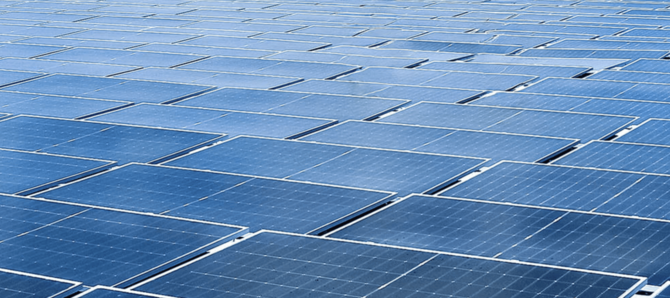
Masdar, together with Malaysian partners Citaglobal and Tiza Global, has signed a power purchase agreement with national utility Tenaga Nasional Berhad to develop a pioneering 200-megawatt floating photovoltaic plant at the Chereh Dam in Pahang state, the Emirates News Agency reported. 

Spanning approximately 950 acres of reservoir surface, the Chereh Dam plant will boast a generation capacity exceeding 300MW-peak, delivering clean electricity equivalent to the needs of more than 100,000 homes. 

With an estimated project value exceeding $208 million, the venture represents a significant step toward Malaysia’s goal of deriving 35 percent of its national energy mix from renewables by 2030. 

Mohamed Jameel Al-Ramahi, CEO of Masdar, said: “This is a milestone project, our largest floating solar development globally and our inaugural project in Malaysia, reaffirms Masdar’s expertise in floating solar and our position as a trusted partner across the region.” 

He added: “By leveraging our experience in delivering utility-scale solutions worldwide, we can provide affordable, secure, clean energy to the Malaysian people.” 

The CEO said he looked forward to working closely with Citaglobal, Tiza Global, and the Malaysian government to help deliver the country’s ambitious renewable energy roadmap. 

The consortium secured the project through a competitive tender under Malaysia’s Large Scale Solar Cycle 5+ program, offering the lowest tariff in its category, supported by Masdar’s global supply-chain capabilities and regional experience, including the 145-MW Cirata floating solar plant in Indonesia. 

Tan Sri Mohamad Norza Zakaria, executive chairman and president of Citaglobal Berhad, said: “This collaboration gives us confidence that the Chereh floating solar project will be delivered to the highest international standards, while strengthening Malaysia’s energy security and long-term economic resilience.” 

The Chereh floating solar plant will be the first project under the 10-gigawatt renewable energy roadmap agreed in 2023 between Masdar and the Malaysian Investment Development Authority, the WAM report added. 

Beyond Pahang, Masdar is advancing a feasibility study for a major floating solar installation at Sarawak’s Murum reservoir, in collaboration with Sarawak Energy and Gentari, initiatives aligned with Malaysia’s National Energy Transition Roadmap and New Industrial Master Plan 2030. 

The Chereh Dam project also emphasizes local integration, partnering with Pahang Water & Energy Resources for execution. It will deploy advanced floating solar technology tailored to the dam’s topography, optimizing performance while conserving freshwater. 

Financed through a non-recourse structure with international lenders, the project reflects strong market confidence. Floating solar is particularly well suited to Malaysia, offering a land-efficient, scalable solution enhanced by natural water-cooling effects. 


UNCTAD, Social Development Bank launch fellowship to power Saudi entrepreneurs

Updated 9 sec ago
Follow

UNCTAD, Social Development Bank launch fellowship to power Saudi entrepreneurs

RIYADH: The Social Development Bank has signed a memorandum of understanding with UN Trade and Development to launch the “Empretec Saudi Fellowship,” a new initiative aimed at equipping high-potential Saudi entrepreneurs with advanced training and tools to scale their ventures.

The agreement was signed on the sidelines of the second edition of the DeveGo 2025 forum, held on Dec. 21–22 at the King Abdulaziz International Conference Center in Riyadh. The event brought together entrepreneurs, policymakers, and representatives from regional and international organizations, alongside public and private sector leaders.

Featuring more than 150 exhibitors, 85 speakers, and 45 workshops, the forum focused on sharing local and global best practices and strengthening the Kingdom’s entrepreneurial ecosystem.

The Empretec Saudi Fellowship is part of UNCTAD’s flagship capacity-building program to promote entrepreneurship and support micro, small, and medium-sized enterprises and startups. Active in more than 40 countries, the program seeks to develop personal entrepreneurial behaviors through intensive training, access to international experts, and technical tools that help transform promising ideas into scalable, high-impact businesses.

Rebeca Grynspan, UNCTAD secretary-general, said Saudi Arabia offers fertile ground for entrepreneurial growth.

“Saudi Arabia has a wonderful platform to bring everybody up, and the entrepreneurs here are so eager. They have ideas, creativity, and energy,” she told Arab News. “If they come through our program with the Social Development Bank, which does a wonderful job, they will be more successful — because that’s what we want.”

In his opening remarks, Saudi Minister of Human Resources and Social Development Ahmed Al-Rajhi, who also chairs the SDB board, highlighted the rapid evolution of the Kingdom’s startup landscape.

“The Kingdom is witnessing a qualitative transformation in the entrepreneurship and freelance ecosystem, enabling young men and women to enter new promising sectors such as artificial intelligence, renewable energy, advanced technologies, and venture capital,” he said. “This provides broader opportunities to contribute to innovation, expansion, and global competitiveness.”

During a tour of the exhibition alongside Al-Rajhi, Grynspan met a wide range of small and medium-sized businesses and handicraft makers, praising the depth of local talent. She noted that participants spanned the full spectrum of enterprises — from early-stage ventures to more established and sophisticated companies — reflecting a rich diversity of experience.

Al-Rajhi said the Social Development Bank invests more than SR8 billion annually to support enterprises and entrepreneurs, helping raise employment in bank-financed businesses from about 12,000 in 2021 to more than 140,000 in 2025.

Beyond financing, the bank runs several non-financial programs, including the Jada 30 business communities, which have incubated more than 4,300 enterprises across 13 cities, and the Dulani Business Center, which has delivered over 67,000 consultations benefiting more than 150,000 male and female entrepreneurs.

Speaking on the broader economic outlook, Grynspan added: “This is a wonderful place to come. Now is an economy that is thriving, is a population that is hopeful. And you have these young, talented people that are only waiting for an opportunity to make it happen for everybody.”

During the forum, the bank also signed multiple cooperation agreements spanning key sectors such as finance, education, energy, healthcare, heritage, the nonprofit sector, and freelance work. The partnerships align with SDB’s strategy to build an integrated system of financial and non-financial empowerment tailored to the needs of entrepreneurs, startups, and micro-enterprises.