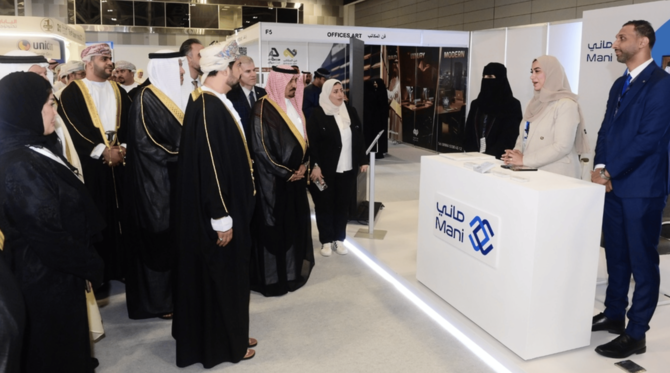

RIYADH: Around 50 companies have gathered for the Oman-Saudi Industries Exhibition in Muscat, with both countries looking to deepen industrial and investment cooperation.
The four-day event that began on Dec. 21 is being held at the Oman Convention and Exhibition Center, with a focus on strengthening industrial integration, expanding export and joint investment opportunities, and facilitating direct engagement between manufacturers and investors, the Oman News Agency reported.
The exhibition also highlights the latest industrial innovations and national companies in the energy, mining, manufacturing, and technology sectors, with the participation of supporting entities and industrial incubators.
This comes in the context of broader economic cooperation between Oman and Saudi Arabia, including the signing of three agreements in February covering trade, legal services, and manufacturing to strengthen private sector collaboration.
It also aligns with growing economic ties between the two nations, with bilateral trade reaching 2.18 billion Omani rials ($5.65 billion) by December 2024 and 1,496 Saudi-partnered companies operating in Oman.
Saleh bin Said Masan, undersecretary for commerce and industry at Oman’s Ministry of Commerce, Industry, and Investment Promotion, affirmed that the exhibition serves as a vital platform bringing together industrialists, investors, and entrepreneurs from Oman and Saudi Arabia to exchange expertise, explore cooperation opportunities, and build promising industrial, commercial, and investment partnerships, the ONA report stated.
It added: “In his address, he explained that the exhibition contributes to strengthening economic relations between the two countries and supports joint efforts to develop local industry, opening broader horizons for exports and investment. It also provides an opportunity to learn about the latest industrial solutions and products and to participate in dialogue sessions and bilateral meetings that enhance industrial and commercial integration.”
During his address, Masan noted that the two countries have achieved tangible progress in industrial integration, citing the completion of the first phase of the integration project, the acceptance of Omani certificates of origin for access to Saudi markets, and the implementation of the “Future Factories” initiative.
He also said that 12 agreements have been signed to link supply chains between factories in both countries, contributing to the creation of joint manufacturing opportunities with added value.
Masan added that trade between Oman and Saudi Arabia has witnessed remarkable growth, emphasizing continued efforts to activate memoranda of understanding and enhance cooperation between the public and private sectors to further expand trade volumes.
For his part, Ibrahim bin Saad bin Bishan, Saudi ambassador to Oman, said the exhibition aims to strengthen economic cooperation by opening new avenues for commercial partnerships between Omani and Saudi companies and institutions.
He added that the event reflects the depth of relations and the level of cooperation between the two countries across various fields and at all levels.
Bishan also said the exhibition underscores the role of the private sector as a key partner in achieving economic integration under Oman Vision 2040 and Saudi Vision 2030, and represents an extension of the development of strategic economic relations between the two sides, which have seen sustained growth.
The exhibition includes a series of panel discussions and specialized workshops aimed at promoting economic, trade, and investment exchange, while providing a platform for networking between businesspeople and investors from both countries.
During the event, a Saudi platform was launched to support Saudi factories and brands in expanding into Gulf and international markets, particularly the Omani market, and to connect them with investors and partners through an integrated export system.