

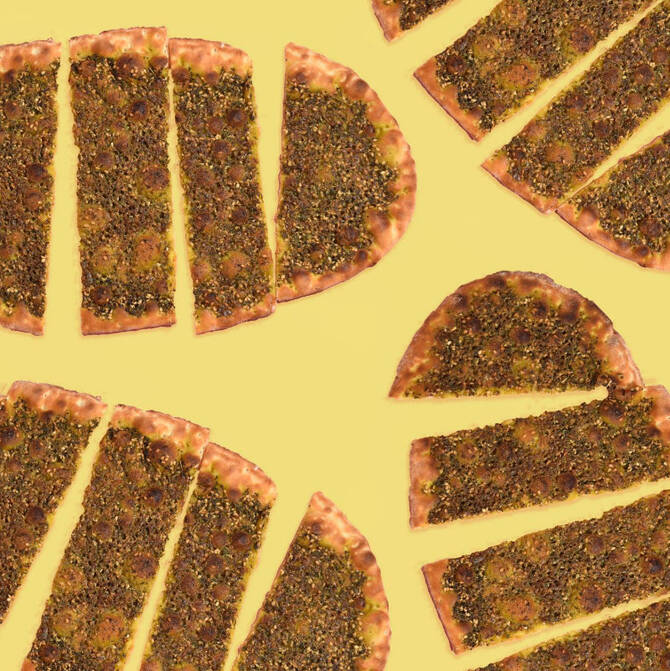
Where We Are Going Today: Forn Wa Saj

1 / 4
An assortment of house specials maneesh at Forn Wa Saj. (@fornwasaj on Instagram)
2 / 4
Akkawi cheese manoosha at Forn Wa Saj. (@fornwasaj on Instagram)
3 / 4
Pesto halloumi manoosha at Forn Wa Saj. (@fornwasaj on Instagram)
4 / 4
Zaatar manoosha at Forn Wa Saj. (@fornwasaj on Instagram)
Short Url
Updated 12 December 2025
Follow

Where We Are Going Today: Forn Wa Saj

If you live in this part of the world, then you know exactly what it feels like to wake up on a Friday morning with your friends or your family yearning for a good manoosha and a cup of hot karak tea. Choosing the right place, however, can be quite the task.

With so many manaeesh restaurant options on the market, it gets difficult to differentiate between the good and the bad, the classic traditional and the “modern twist” that is just trying too hard.

Forn Wa Saj, in both Riyadh and Jeddah, is somewhat in between.

They have your classic akkawi, zaater, lahmah bel ajeen and others, but they also include some wildcard house specials such as a pesto halloumi, pepperoni and even a pumpkin spread.

Their lahmah bel ajeen is a great option; it is flavorful and contains just the right amount of tanginess.

For zaatar fans, its flavor is good — perhaps the zaatar labneh would have been a better option.

For the house specials, there were some hits and misses. Esh albulbul (mixed cheese with labneh and honey) is for sure a success. The balance of sweet, creamy and slightly salty is excellent.

Both the musakhan and falafel manaeesh are pretty good but could use some minor adjustments — the musakhan is great quality chicken but you might wish for a bit less tanginess, and the falafel just need more falafel.

Overall, Forn Wa Saj is a good choice for your weekend breakfast. It may not blow you away but will leave you satisfied.

The portion sizes are pretty generous, and although the prices are a bit high, they are average among the more “modern” manaeesh restaurants.


Where We Are Going Today: Nakhat Marga

Photo/Supplied
Updated 21 February 2026
Follow

Where We Are Going Today: Nakhat Marga

  • For the main course, the menu offers a variety of meat and chicken dishes, but the must-try is madhgout laham, a flavorful one-pot meal of spiced meat slow-cooked with rice and served hot

Nakhat Marga, with locations in Al-Naeem and Al-Waha in Jeddah, is a restaurant that focuses on traditional Saudi meat and broth dishes, making it a fitting choice to celebrate Saudi Founding Day. 

The menu is structured around classic dishes, offering a wide selection of meats, chicken, and accompanying sides that reflect the culinary heritage of the Kingdom.

We began with jareesh, a creamy, savory porridge, and marqa, a slow-cooked stew of tender meat, onions, garlic, and different spices, simmered to create a rich broth. 

For the main course, the menu offers a variety of meat and chicken dishes, but the must-try is madhgout laham, a flavorful one-pot meal of spiced meat slow-cooked with rice and served hot.

If you are looking for other rice options, red meat madhbi is cooked in a traditional style, with muqlaqil and maknoom offering familiar tastes that many in Jeddah would recognize from home-cooked meals. 

Among the chicken dishes, kabli stands out for its balanced flavor, but the must try is the maqluba which is served in a generous portion, layering rice and chicken in the classic inverted style. The taste is so good that you may end up eating more than you expected.

Side dishes such as liver and moussaka were consistent with their descriptions and went well with the mains, not too heavy or filling. I also tried the yogurt cucumber salad, which offered a simple, cooling contrast to the heavier meat dishes.

Desserts such as basbousa are served with a dipping sauce, while marsa, made from semolina, sugar, butter, and flavored with cardamom, is similar in texture to basbousa but may vary slightly in ingredients and taste different.

Aseedah is a must-try when visiting, delivering a comforting taste of Saudi cuisine with its soft, traditional porridge served with butter, honey, or date syrup.

The restaurant’s atmosphere leans more toward functional but traditional dining rather than an elaborate experience, which keeps the focus on the food itself.