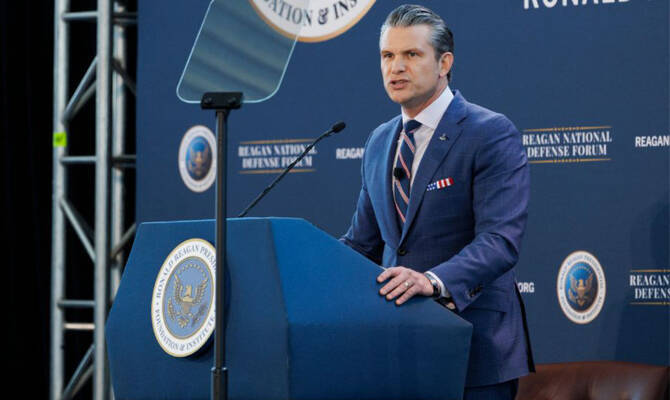
WASHINGTON: Defense Secretary Pete Hegseth is facing intensifying demands from Congress to release the full video of an attack on an alleged drug boat that killed two survivors in what Democrats and legal experts said may have been a war crime or murder.
Hegseth provided a classified briefing for congressional leaders Tuesday alongside Secretary of State Marco Rubio and CIA Director John Ratcliffe at the Capitol. He said he’s still weighing whether to release the video.
The situation has awakened the Republican-controlled Congress to its oversight role after months of frustration about the trickle of information from the Pentagon.
Meanwhile, the US military flew a pair of fighter jets over the Gulf of Venezuela on Tuesday as the Trump administration raises pressure on President Nicolás Maduro.
Trump’s speech on combating inflation turns to grievances about immigrants: On the road in Pennsylvania on Tuesday, President Donald Trump tried to emphasize his focus on combating inflation, yet the issue that has damaged his popularity couldn’t quite command his full attention.
Yet he meandered during his remarks, asking why the US couldn’t take in more immigrants from Scandinavia and using an expletive to describe countries such as Haiti and Somalia.


![]()

Hegseth tells congressional leaders he is weighing release of boat strike video
Short Url
https://arab.news/58b9w
Hegseth tells congressional leaders he is weighing release of boat strike video
- The situation has awakened the Republican-controlled Congress to its oversight role
- The US military flew a pair of fighter jets over the Gulf of Venezuela on Tuesday


Latest updates


Recommended


© 2026 SAUDI RESEARCH & PUBLISHING COMPANY, All Rights Reserved And subject to Terms of Use Agreement.