


JEDDAH: From the streets of Makkah to the heights of football stardom, Mohammed Noor’s journey is a story of resilience, talent, and enduring legacy.
The biographical film “Noor” traces the career of one of Saudi Arabia’s most celebrated footballers, whose commanding presence at Al-Ittihad Club led the team to numerous domestic and continental titles. Noor’s influence extended beyond club football, and he represented the Kingdom in the 2002 and 2006 FIFA World Cups, inspiring generations of fans along the way.
Directed by Omar Almuqarri and produced by Saad Turkistani, the documentary features interviews with prominent figures in Saudi football, including Prince Nawaf bin Mohammed, Yasser Al-Qahtani, Osama Al-Muwallad, Hussein Abdulghani, Mohamed Al-Deayea, Hamad Al-Montasheri, and Adam Noor.
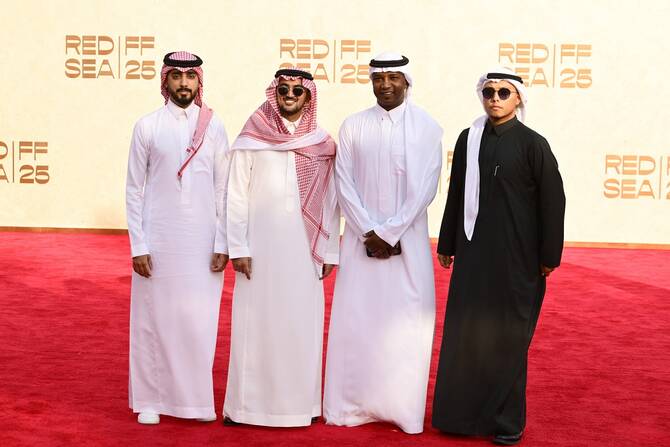
The film premiered at the fifth edition of the Red Sea International Film Festival, where Almuqarri spoke to Arab News about the making of this ambitious project.
The film, blending archival footage, interviews, and dynamic storytelling, presents a vivid, inspiring portrait of Noor’s life.
Almuqarri revealed that the greatest challenge in producing the film was compiling archival material.
“Honestly, the biggest challenge was finding the archival material. Getting the archive and all those old clips, and figuring out how to connect them you’re talking about a story that spans from 1995 to 2016, his entire career as a football player,” he said.

Omar Almuqarri directed the documentary. (Getty Images)
The scale of the task was enormous. Noor played more than 30 matches each season, totalling nearly 400 games in club and national team competitions.
“You end up having to watch between 100 and 200 matches for this one player,” Almuqarri said. “And you need to search and review all of them, plus his matches with the national team.”
With his background as a former sporting director, Almuqarri brought firsthand knowledge of Saudi football to the project. This insight guided his approach: “That’s why I insisted on making the film 70 percent archival footage and 30 percent interviews and modern shots. Because new generations know Mohammed Noor by name, but they didn’t live those moments.”
The documentary aims to immerse viewers in the era, capturing the intensity of matches, the competitive push-and-pull, and the lively, often bold sports media environment in Saudi Arabia, which the director describes as adding “a layer of excitement for the viewer.”
A defining feature of “Noor” is its candid portrayal of the footballer’s life, including the challenges he faced.
“You’re not making a film about an angel, you’re making a film about a human being. This person has failures and successes, positives and negatives,” Almuqarri said.
The film does not shy away from controversy, including Noor’s doping ban, his departure from Al-Ittihad, and conflicts with club management.
“If the film is positive from start to finish, believe me, no one will sit in the theatre … there would be no plot, no intrigue at all. Let’s bring it back and show it — that’s the essence of documentary work,” he said.
Even the film’s subjects recognized the honesty in its storytelling. “We included the (doping) case. And you’ll notice that one of the speakers even says, ‘I doubt you’ll put this part in,’” Almuqarri added.
The film consists of three chapters, each representing a stage of Noor’s journey. The first focuses on his beginnings and entry into Al-Ittihad, the second on his rise to stardom, and the third, titled “Al-Ittihad’s Circumstances,” explores the challenges the club faced.
Almuqarri explained: “Mohammed Noor wasn’t a star at the beginning of his career. You grow along with the character’s development. He started as a simple, humble player, then evolved and rose; his performance climbed steadily. The film mirrors the player himself. It resembles his career because the film builds upward until it reaches its end.”
Maintaining audience engagement was a priority for the director. The 90-minute documentary features a fast-paced rhythm to keep viewers invested. When asked about Noor’s response to the film, Almuqarri said: “The first question I asked Mohammed Noor was, ‘Do you have any reservations about anything?’ He said, ‘I have no reservations.’”
Noor watched the film for the first time at its premiere and was visibly moved. Almuqarri said: “He teared up a bit. The audience was moved too. Mohammed Noor has an emotional bond with the fans, a deep sentimental connection. He gave them so many championships, so many achievements and moments of joy. He made them happy on the pitch, and he still does.”
“Noor” was entirely self funded, without corporate sponsors or external support. “The goal wasn’t business; it was about storytelling and introducing a new style of documentary filmmaking,” Almuqarri said.
He also shared his vision for the future: “We’ll work on more biographies like this, or different documentaries telling the stories of footballers, artists, public figures, and major events. Many stories can be told in new, engaging ways.”


