Saudi Arabia’s Princess Lamia urges media to amplify forgotten crises

1 / 3
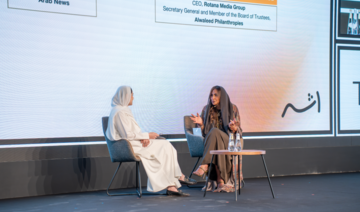
Princess Lamia bint Majed at the BRIDGE Summit in Abu Dhabi. (AN Photo/Sami Bsat)
2 / 3
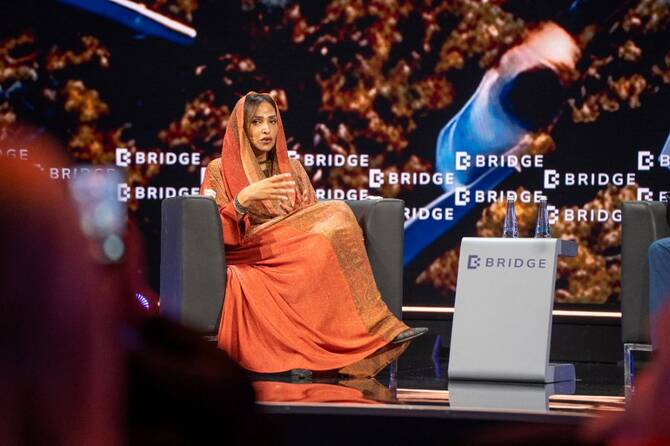
Princess Lamia bint Majed at the BRIDGE Summit in Abu Dhabi. (AN Photo/Sami Bsat)
3 / 3
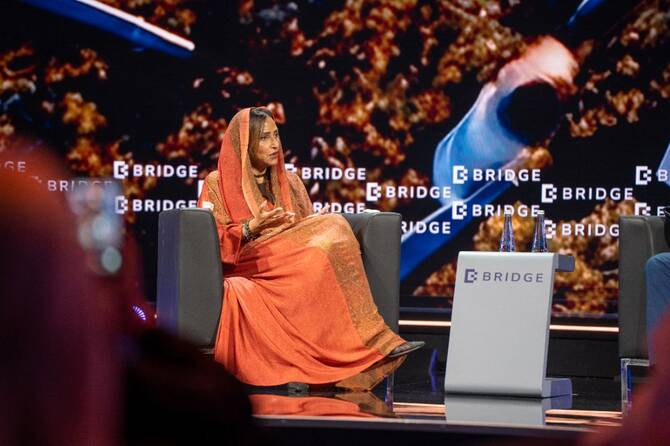
Princess Lamia bint Majed at the BRIDGE Summit in Abu Dhabi. (AN Photo/Sami Bsat)
Short Url
Updated 10 December 2025
Follow

Saudi Arabia’s Princess Lamia urges media to amplify forgotten crises

  • Princess addresses media leaders, policymakers, innovators in Abu Dhabi
  • Princess Lamia bint Majed: Media and philanthropy are not very much far from each other

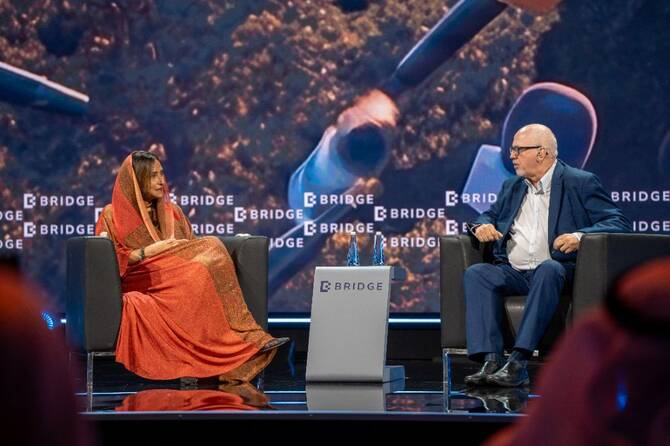
ABU DHABI: Philanthropy is part of the region’s “DNA”, but how it is perceived and supported often hinges on media narratives, said Princess Lamia bint Majed Saud Al-Saud, secretary-general of Alwaleed Philanthropies, on the second day of the BRIDGE Summit in Abu Dhabi.

Addressing media leaders, policymakers and innovators, Princess Lamia stressed that media hold the power to amplify or undermine philanthropic efforts, making responsible storytelling a critical pillar in advancing humanitarian and development causes.

During Alwaleed Philanthropies’ measles and rubella vaccination campaign, Princess Lamia said fake news broadcast a warning that the jab increased the risk of autism.

She explained: “We wanted kids to be vaccinated but we had to make a full campaign to educate people about autism in medicine and so on.”

She added that media and philanthropy were connected, with each playing a unique role in addressing community needs.

She said: “Media and philanthropy are not very much far from each other because media creates awareness on what this community needs,” noting that while media had the power to shine a spotlight on urgent issues, philanthropy sustained that attention in the long term.

“One of the most important aspects of jobs in media is that whenever there is a crisis, it makes headlines in every channel and entity for a maximum of a month.”

Philanthropy, however, played the role of a constant reminder, and Princess Lamia said: “Philanthropists play the role of guardians to keep reminding the people, for example in Syria, Palestine and Myanmar, who people keep forgetting about, the struggles of women there.”

Alwaleed Philanthropies is currently working on several projects, including restoration of water supply in eastern Aleppo, supporting Palestinian crafts for a sustainable future, and helping to transform the craft industry in Myanmar.

Princess Lamia said the organization had a formula for success in almost every country in the world, and added that there were no “hit and runs” in philanthropy.

She added: “We have an international partner that we trust. We must have a governmental entity on (the) ground to make sure that this is going to be sustainable and it is not going to vanish and end whenever we are out. And there is a local NGO (nongovernmental organization) to make sure that this satisfies the needs of the community.”

Alwaleed Philanthropies is a Saudi-based NGO focused on empowering women and youth. It also helps in disaster relief and community development.

Princess Lamia noted that philanthropy has always defined the people of this region.

“Philanthropy and doing good in this part of the world is in our DNA, it’s Zakat. It’s an amount of money that you have to pay for others for them to be better. And we have a belief as much as you pay, as much you will get.”

She added: “This is Islam; when you pay, you get.”


Study finds nearly half of UK news stories on Muslims show signs of bias

Updated 09 March 2026
Follow

Study finds nearly half of UK news stories on Muslims show signs of bias

  • Centre for Media Monitoring finds 20,000 out of 40,913 articles from 30 major news outlets contain bias and 70% link Muslims to negative behaviors or themes
  • Findings reveal ‘deeply concerning evidence of structural bias’ in portrayal of Muslims by UK press and point to ‘systemic problem’ within the media, says center’s director

LONDON: Nearly half of news articles published in the UK in 2025 that referenced Muslims or Islam contained some degree of bias, according to a report issued on Monday by the Centre for Media Monitoring. It also found that about 70 percent of stories linked Muslims to negative behaviors or themes.

The nonprofit organization, which tracks the ways in which Muslims and Islam are portrayed in the media, examined 40,913 articles from 30 major news outlets and found that about 20,000 showed some form of bias.

The study looked at “structural patterns” in coverage that “shape public narratives” about Muslims amid rising hostility toward the community.

“As the largest study of its kind ever conducted in the UK, this report presents deeply concerning evidence of structural bias in how Muslims are portrayed in the UK press,” said Rizwana Hamid, the director of the organization.

It found that 70 percent of the articles it reviewed highlighted negative aspects related to Muslims, though not all of the stories were biased in themselves. The wider patterns were also troubling: 44 percent of the coverage omitted key context, 17 percent relied on generalizations, and 13 percent included outright misrepresentation.

Taken together, the monitoring center said, the findings amounted to evidence of an “information integrity crisis” that distorts public understanding, and “a deeply concerning trend” in reporting on Muslims.

The research points to a “systemic problem within our media ecosystem,” Hamid said.

“When entire communities are repeatedly framed through lenses of suspicion or threat, it inevitably shapes public attitudes, political debate and the everyday lives of British Muslims,” she added.

News brands targeting right-wing audiences were more likely to produce biased coverage, the report found.

The Spectator magazine and GB News were identified as having the highest proportion of “very biased” articles, and as the “worst across all five bias categories”: negative framing, generalizations, misrepresentation, lack of context, and problematic headlines.

Other outlets highlighted for displaying high levels of biased content about Muslims included The Telegraph, The Jewish Chronicle, Daily Express, The Sun, Daily Mail and The Times.

In contrast, the BBC, other broadcasters and left-leaning outlets recorded the lowest rates of bias in the study.

The research comes as British Muslims report rising levels of discrimination. Official figures published in October revealed that religious hate crimes against Muslims rose by 19 percent in the year to March 2025 compared with the previous 12 months.