

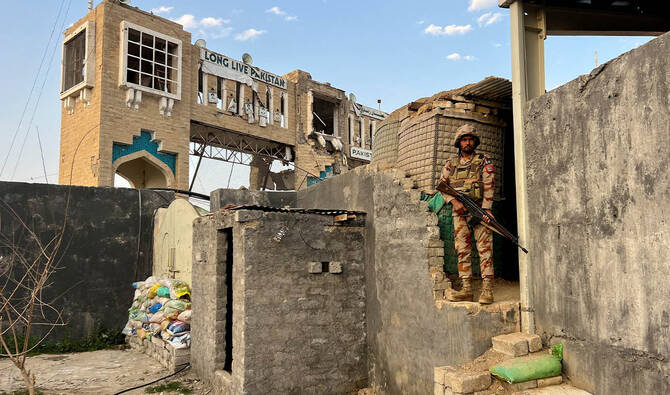

ISLAMABAD: Militant violence in Pakistan declined for a second consecutive month in April following cross-border strikes and subsequent China-mediated talks with Afghanistan, a think tank said on Friday, pointing to improving security indicators after weeks of heightened tensions.
The Pakistan Institute for Conflict and Security Studies (PICSS) reported 85 militant attacks in April, down from 146 in March, a 42 percent decline, with fatalities also falling sharply, suggesting a relative easing of violence after a ceasefire agreed following fighting along the Pakistan-Afghanistan border earlier this year.
“The improvement follows Pakistan’s cross-border military campaign targeting anti-Pakistan militant groups and Taliban positions between February 26 and March 18, which concluded with a ceasefire and subsequent talks in Urumqi, China,” it said in the latest security report.
The fighting marked one of the most serious escalations in recent years, as Pakistan carried out strikes against what it said were militant safe havens across the border.
Islamabad has long accused the Taliban administration in Kabul of facilitating cross-border attacks against civilians and security forces, an allegation Afghan authorities deny.
China stepped in to host talks in Urumqi in early April, bringing officials from both sides together in an effort to de-escalate tensions and keep diplomatic channels open, though no major breakthrough was announced.
PICSS data showed fatalities from militant attacks dropped from 106 in March to 60 in April, while overall injuries declined from 210 to 131. Losses among security forces personnel fell by more than half, from 59 to 28, while civilian deaths remained broadly stable.
The report said security forces operations remained intense despite the drop in attacks, with 224 militants killed in April, taking the total number of militants killed in the first four months of the year to 988.
Khyber Pakhtunkhwa remained the most affected province, although violence declined significantly in its tribal districts, while Balochistan also saw a sharp drop in attacks.
The think tank said most incidents in April were low-intensity, though the month included two suicide attacks in Bannu and a high-profile assault on a mining facility in Balochistan.
Pakistan recorded no militant attacks in Punjab, Sindh, Azad Jammu and Kashmir or Islamabad during the month, though security forces carried out intelligence-based operations in these areas, arresting several suspects.


