Oman fixed-income assets rise to $13bn by Q3

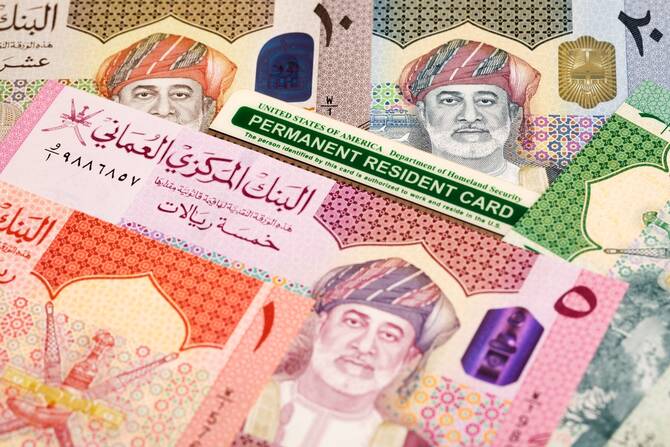
The market’s value rose to 4.98 billion rials ($12.9 billion) by the end of the third quarter, up from 4.31 billion rials at the end of 2024, the Oman News Agency reported, citing the Financial Services Authority. Shutterstock
Short Url
Updated 07 December 2025
Follow

Oman fixed-income assets rise to $13bn by Q3

JEDDAH: Oman’s bond and sukuk market expanded nearly 16 percent in the first nine months of 2025, lifted by stronger institutional demand and ongoing regulatory reforms aimed at deepening the country’s fixed-income landscape. 

The market’s value rose to 4.98 billion rials ($12.9 billion) by the end of the third quarter, up from 4.31 billion rials at the end of 2024, the Oman News Agency reported, citing the Financial Services Authority. 

The gains reflect rising confidence in domestic capital markets and growing appetite for green and sustainable financing instruments, the report said. 

“The Capital Market Authority continues its efforts to develop Oman’s bond and sukuk market by strengthening policies and regulatory frameworks for these financial products and innovating long-term lending instruments linked to green and sustainable financing,” the ONA report stated. 

On the regulatory side, development in this sector has been reinforced through the enhanced framework for issuing bonds and sukuk, which provides a comprehensive structure governing public and private issuances, ensuring transparency, investor protection, and market confidence, as per ONA. 

The framework also supports new issuances, keeps pace with evolving debt instruments, and offers a flexible legislative structure that encourages innovation, including green and sustainable bonds, endowment sukuk, and other tailored products that meet financing needs while aligning with issuer and investor priorities. 

Omani investors continued to lead trading activity, with purchases totaling 43.6 million rials compared with 8.7 million rials by foreign investors, while Omani sales reached 43.9 million rials against 8.3 million rials by foreigners. 

Statistics on debt instruments by the end of the third quarter of 2025 show a clear concentration of ownership among Omani investors, who hold 4.75 billion rials, representing 97.2 percent of total ownership, while foreign investors hold approximately 137 million rials, or 2.8 percent. 

Mustafa bin Ahmed Salman, chairman and CEO of United Securities, said the rise in Oman’s bond and sukuk market, both on the Muscat Securities Market and globally, is driven by stronger demand following US Federal Reserve interest rate cuts and expectations of further easing, which have boosted overall trading activity, particularly in fixed-income instruments. 

Speaking to ONA, Salman added that investor demand for bonds and sukuk is also supported by the current “instability in global financial markets.” 

He noted that rising bond and sukuk prices on the Muscat Securities Market are boosting listed companies’ shares, which differ from global counterparts by offering attractive returns even at higher prices, serving as an additional factor attracting more investors to the Muscat Securities Market. 


Saudi Exchange shows resilience on Aramco shares, defying regional trend

Updated 10 sec ago
Follow

Saudi Exchange shows resilience on Aramco shares, defying regional trend

RIYADH: Saudi Arabia’s Tadawul All Share Index showed signs of resilience on March 2, buoyed by gains in Saudi Aramco, even as the Middle East region continues to grapple with escalating tensions.

As of 11:50 a.m., Saudi time, the Kingdom’s benchmark index maintained stability, seeing only a marginal decline of 0.74 percent to 10,398.64. 

Aramco’s share price increased by 1.16 percent to SR26.10 ($6.95), compared to the previous close of SR25.80.

The gains posted by Saudi Aramco and the stable movement of the Kingdom's benchmark index came even as most Gulf markets declined after Israel and the US launched strikes on Iran, triggering retaliatory attacks and raising fears of a broader regional conflict.

On March 1, the UAE’s Capital Market Authority announced a two-day closure of the Dubai Financial Market and Abu Dhabi Securities Exchange, effective March 2 and March 3, citing escalating regional tensions and its regulatory mandate to maintain market stability.

Boursa Kuwait declined by 2.25 percent, while Bahrain’s benchmark and Muscat Qatar Stock Exchange edged down by 1.53 percent and 3.26 percent, as of 11:00 a.m. Saudi time. 

Investors are keeping a close eye on oil markets, particularly the Strait of Hormuz, as tensions escalate in the region.

Tony Hallside, CEO of STP Partners, told Arab News that Gulf equities have opened with volatility rather than panic, with sharp early drawdowns followed by partial rebounds as investors separate direct conflict risk from oil upside and government balance sheet strength.

“Local and regional investors are broadly de-risking around the edges, raising cash, shortening time horizons, and rotating toward defensives and energy-linked exposure, while foreign flows tend to get more selective until the Hormuz and escalation trajectory is clearer,” said Hallside.

He added: “The key tell is dispersion: energy strength alongside broader market weakness, and a premium placed on liquidity and balance sheet quality.”

Abdulrahman Al-Sudairy, CEO of Vault Saudi, told Arab News that regional markets reacted sharply to heightened uncertainty on March 2, with a clear flight to safety as investors shifted into a risk-off mode.

“Selling pressure was evident across most sectors, while energy names held up better as markets priced in rising supply risks,” said Sudairy.

He added: “Looking ahead, volatility is likely to remain elevated. Oil prices are poised to open significantly higher, and until there is greater clarity on the geopolitical front, we expect equities to stay under pressure while commodities continue to take center stage.”

Sudairy also discussed the vitality of prioritizing global diversification over concentration.

“We are reminding clients that volatility is not the same as permanent loss; history shows that reacting emotionally to headlines often does more damage to long-term wealth than the events themselves. Our stance is to remain disciplined, look past the short-term noise, and focus on fundamental resilience,” he added.

Hallside said the most obvious divide after the conflict is between energy and non-energy cyclical stocks. Oil and upstream-linked companies tend to benefit from higher crude prices, while sectors such as tourism, aviation, and retail, as well as real estate and banking, may face near-term pressure if risk premiums rise and borrowing costs increase.

“Regionally, anything exposed to cross-border trade flows, shipping lanes, or discretionary demand is the most headline sensitive,” added the STP Partners official.