Anti-Hamas Gazan tribal leader killed in setback for Israeli policy

Israel’s Army Radio, citing security sources, said on Thursday that Yasser Abu Shabab, the most prominent anti-Hamas clan leader in Gaza, had died in a hospital in southern Israel of unspecified wounds. (X/@M_shebrawy3)
Short Url
Updated 04 December 2025
Follow

Anti-Hamas Gazan tribal leader killed in setback for Israeli policy

  • His death would be a boost to Hamas, which has branded him a collaborator and ordered its fighters to kill or capture him
  • Gaza’s Popular Forces said in a statement that its leader died of a gunshot wound as he intervened in a family quarrel

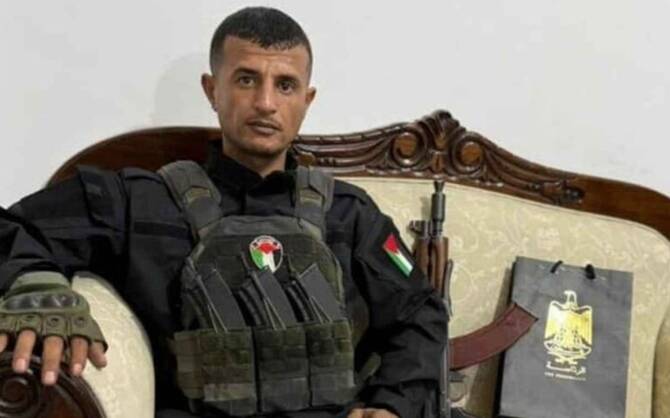
JERUSALEM/CAIRO: The head of an armed Palestinian faction that opposes Hamas in Gaza died while mediating a family dispute, the group said on Thursday, in what would be a blow to Israeli efforts to support Gazan clans against the Palestinian movement.
Yasser Abu Shabab, a Bedouin tribal leader based in Israeli-held Rafah in southern Gaza, had led the most prominent of several small anti-Hamas groups that emerged in Gaza during the war that began more than two years ago.
His death would be a boost to Hamas, which has branded him a collaborator and ordered its fighters to kill or capture him.
Gaza’s Popular Forces said in a statement that its leader died of a gunshot wound as he intervened in a family quarrel, and dismissed as “misleading” reports that Hamas was behind his killing.
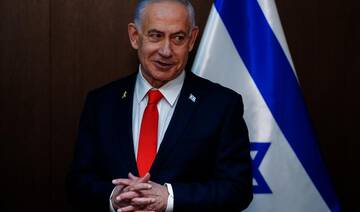
Prime Minister Benjamin Netanyahu acknowledged in June that Israel had armed anti-Hamas clans, though Israel has announced few other details of the policy since then.

RAFAH SECURITY SWEEP
Abu Shabab’s group has continued to operate from areas of Gaza controlled by Israeli forces since Hamas and Israel reached a US-backed ceasefire in October.
Rafah has been the scene of some of the worst violence during the ceasefire. Residents had reported gunbattles there on Wednesday, and Israel said four of its soldiers were wounded. The Israeli military said on Thursday its forces had killed some 40 Hamas militants trapped in tunnels below Rafah.
On November 18, Abu Shabab’s group posted a video showing dozens of fighters receiving orders from his deputy to launch a security sweep to “clear Rafah of terror,” an apparent reference to Hamas fighters believed to be holed up there.
The Popular Forces vowed to continue Abu Shabab’s path and to “fight terrorism” in Gaza, the group said.
Abu Shabab’s death was first reported by Israeli media including Kan, Israel’s public broadcaster, citing a security source.
Israel’s Army Radio, also citing a security source, said he had died in Soroka hospital in southern Israel of unspecified wounds, but the hospital denied admitting him.

RAFAH ADMINISTRATION
An Israeli government spokesperson declined to comment on the reports. Hamas had no comment, its Gaza spokesperson said.
Israel’s policy of backing anti-Hamas clans took shape as it pressed the Gaza offensive against the group, aiming to end its rule of the coastal strip in the wake of the October 7, 2023 attacks on communities in southern Israel.
In an article published in the Wall Street Journal in July, Abu Shabab — a member of the Tarabin Bedouin tribe — said his group had established its own administration in the Rafah area and urged US and Arab nations to recognize and support it.
Abu Shabab’s group has denied being backed by Israel.
Netanyahu said in June that Israel’s backing for Gazan clans had saved the lives of Israeli soldiers.
But the policy has also drawn criticism from some in Israel who have said such groups can provide no real alternative to Hamas, which has controlled Gaza since 2007.

CONTROVERSIAL POLICY
“The writing was on the wall. Whether he was killed by Hamas or in some clan infighting, it was obvious that it would end this way,” said Michael Milshtein, a former Israeli military intelligence officer at the Moshe Dayan Center in Tel Aviv.
Several other anti-Hamas groups have emerged in areas of Gaza held by Israel. Palestinian political analyst Reham Owda said that Abu Shabab’s death would fuel doubts among them about their “ability to challenge Hamas.”
US President Donald Trump’s Gaza plan foresees Hamas disarming and a transitional authority running the enclave, supported by a multinational stabilization force. But progress has appeared slow, with Hamas so far refusing to disarm and no sign of agreement on the formation of the international force.
Hamas has accused Abu Shabab of looting UN aid trucks during the war. Abu Shabab’s group has denied this, saying it has protected and escorted aid. 


UN nuclear watchdog says it’s unable to verify whether Iran has suspended all uranium enrichment

Updated 58 min 22 sec ago
Follow

UN nuclear watchdog says it’s unable to verify whether Iran has suspended all uranium enrichment

VIENNA: Iran has not allowed the United Nations nuclear watchdog to access nuclear facilities affected by the 12-day war in June, according to a confidential report by the watchdog circulated to member states and seen Friday by The Associated Press.
The report from the International Atomic Energy Agency stressed that therefore it “cannot verify whether Iran has suspended all enrichment-related activities,” or the “size of Iran’s uranium stockpile at the affected nuclear facilities.”
The IAEA report on Friday warned that due to the continued lack of access to any of Iran’s four declared enrichment facilities, the agency “cannot provide any information on the current size, composition or whereabouts of the stockpile of enriched uranium in Iran.”
The report stressed that the “loss of continuity of knowledge over all previously declared nuclear material at affected facilities in Iran needs to be addressed with the utmost urgency.”
Iran long has insisted its program is peaceful, but the IAEA and Western nations say Tehran had an organized nuclear weapons program up until 2003.
Highly enriched material should be verified regularly
According to the IAEA, Iran maintains a stockpile of 440.9 kilograms (972 pounds) of uranium enriched up to 60 percent purity — a short, technical step away from weapons-grade levels of 90 percent.
That stockpile could allow Iran to build as many as 10 nuclear bombs, should it decide to weaponize its program, IAEA director general Rafael Grossi warned in a recent interview with the AP. He added that it doesn’t mean that Iran has such a weapon.
Such highly enriched nuclear material should normally be verified every month, according to the IAEA’s guidelines.
The IAEA also reported that it had observed, through the analysis of commercially available satellite imagery, “regular vehicular activity around the entrance to the tunnel complex at Isfahan.”
The facility in Isfahan, some 350 kilometers (215 miles) southeast of Tehran, was mainly known for producing the uranium gas that is fed into centrifuges to be spun and purified.
Israel has struck buildings at the Isfahan nuclear site, among them a uranium conversion facility. The US also struck Isfahan with missiles during the war last June.
The IAEA also reported that through the analysis of commercially available satellite imagery, it has observed “activities being conducted at some of the affected nuclear facilities, including the enrichment facilities at Natanz and Fordow,” but it added that “without access to these facilities it is not possible for the Agency to confirm the nature and the purpose of the activities.”
The confidential IAEA report also said Friday that Iran did provide access to IAEA inspectors “to each of the unaffected nuclear facilities at least once since the military attacks of June 2025, with the exception of Karun Nuclear Power Plan, which is in the early stages of construction and does not contain nuclear material.”
IAEA joined Geneva talks between Iran and US
The IAEA reported on Friday that Grossi attended negotiations between the US and Iran on Feb. 17 and Feb. 26 in Geneva at which he “provided advice on issues relevant to the verification of Iran’s nuclear program.” The report said that those negotiations are “ongoing.”
The Trump administration has held three rounds of nuclear talks this year with Iran under Omani mediation. Thursday’s round of talks in Geneva ended without a deal, leaving the danger of another Mideast war on the table as the US has gathered a massive fleet of aircraft and warships in the region.
Oman’s Foreign Minister Badr Al-Busaidi said technical talks involving lower-level representatives would continue next week in Vienna, the home of the IAEA. The agency is likely to be critical in any deal.
The US is seeking a deal to limit Iran’s nuclear program and ensure it does not develop nuclear weapons.
Iran says it is not pursuing weapons and has so far resisted demands that it halt uranium enrichment on its soil or hand over its stockpile of highly enriched uranium.
Similar talks last year between the US and Iran about Iran’s nuclear program broke down after Israel launched what became a 12-day war on Iran, that included the US bombing Iranian nuclear sites.
Before the June war, Iran had been enriching uranium up to 60 percent purity.