CAIRO: Israel said Wednesday that it would reopen the Rafah border crossing in the coming days, allowing Palestinians to leave Gaza. That could be a major development for residents of the devastated strip, for whom leaving has been extremely difficult — if not impossible — for most of the war.
The announcement has raised hopes that thousands of sick and wounded people in Gaza will finally be able to access the care they need. Gaza’s health system was decimated by the two-year war, rendering advanced surgical procedures out of reach.
But, there are complications. For one, Israel says Palestinians wanting to leave Gaza will have to get Israeli and Egyptian security approval. It’s unclear what criteria that will involve.
Another key dispute: Israel says that until militants in Gaza return all the hostages they took in the Oct. 7, 2023, attack that triggered the war, it will only allow Palestinians to exit Gaza, not enter.
Egypt, meanwhile, says it wants the crossing immediately opened in both directions, so Palestinians in Egypt can enter Gaza. That’s a position rooted in Egypt’s vehement opposition to Palestinian refugees permanently resettling in the country.
A lifeline for Gaza
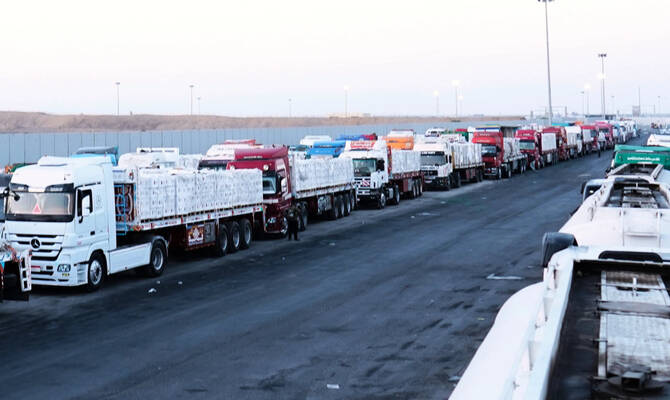
Before the war, Rafah bustled with goods and people passing to and from Egypt and Gaza. Although Gaza has four other border crossings, they are shared with Israel, and only Rafah links the territory with another country.
After Hamas-led militants invaded southern Israel in 2023, killing roughly 1,200 people and taking 251 others hostage, Egypt tightened its restrictions on traffic through the Rafah crossing. After Israel took control of the Gaza side in May 2024 as part of its offensive that has killed more than 70,100 Palestinians, according to Gaza’s Health Ministry, it closed the crossing except to the occasional medical evacuation.
The ministry does not distinguish between militants and civilians, though it says roughly half of those killed have been women and children. The ministry operates under the Hamas-run government. It is staffed by medical professionals and maintains detailed records viewed as generally reliable by the international community.
A reopened Rafah crossing would make it easier for Palestinians in Gaza to seek medical treatment, travel internationally or visit family in Egypt. The World Health Organization says there are more than 16,500 sick and wounded who need to leave Gaza for medical care.
It would also help Gaza’s decimated economy, allowing Palestinian merchants to market products beyond the borders of the pummeled territory.
Last-minutes hurdles delay reopening
Israel said the crossing would be opened in the coming days. An Israeli official, speaking on condition of anonymity to discuss operational plans, said the European Union mission supervising the crossing needed to finalize the logistics before the crossing can open.
The crossing, heavily damaged during the war. may also require repairs. A dispute between Israel and Egypt over Palestinian entry into Gaza may also delay the opening.
Citing an unnamed Egyptian official, Egypt’s State Information Service said Wednesday that the crossing, if an agreement is reached, will be used for travel in both directions, in accordance with a ceasefire plan advanced by US President Donald Trump.
Egypt is opposed to accepting Gaza refugees. It is already home to tens of thousands of Palestinians and hosts a migrant population of some 9 million people. Egyptian President Abdel Fattah El-Sisi has warned of the security implications of transferring large numbers of Palestinians to Egypt’s Sinai Peninsula, bordering Gaza.
Egypt supports the creation of a Palestinian state in the occupied West Bank, Gaza and east Jerusalem ,and fears a permanent displacement could erode that possibility.
But Israel’s government spokesperson Shosh Bedrosian said that entry into Gaza would not be permitted until Israel receives all hostages remaining in Gaza. Before the most recent return of remains, there were believed two deceased hostages in Gaza — an Israeli and one Thai national. The remains returned Wednesday have not yet been identified.


![]()

What Israel’s plan to reopen the Rafah border crossing means for Palestinians in Gaza
Short Url
https://arab.news/834h5
What Israel’s plan to reopen the Rafah border crossing means for Palestinians in Gaza
- The announcement has raised hopes that thousands of sick and wounded people in Gaza will finally be able to access the care they need


Latest updates





© 2026 SAUDI RESEARCH & PUBLISHING COMPANY, All Rights Reserved And subject to Terms of Use Agreement.