- Foreign ministers say early completion of transit agreement will help reach $100 million trade target
- Current Pakistan–Kyrgyzstan trade is under $10 million, making $100 million target a major leap
ISLAMABAD: Pakistan and Kyrgyzstan on Wednesday agreed to accelerate work on a long-delayed transit trade agreement that both sides say is essential for raising bilateral commerce to $100 million, according to a statement by the foreign office in Islamabad.
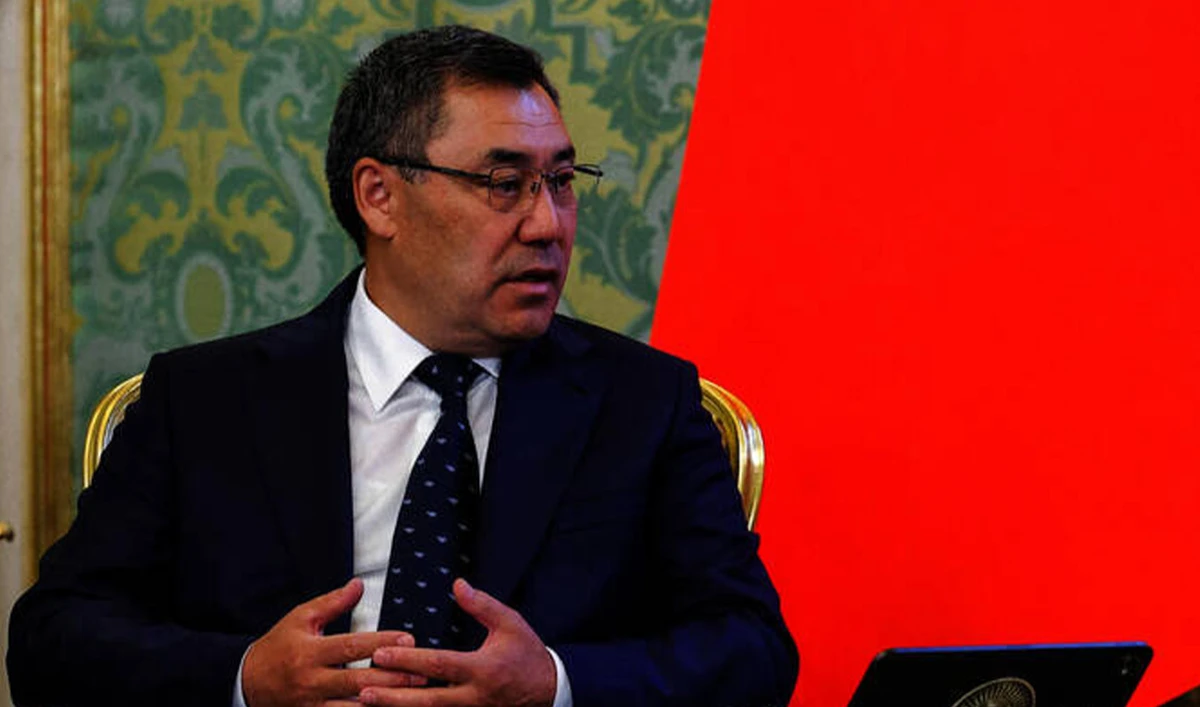
The development came as Kyrgyz President Sadyr Nurgozhoevich Zhaparov arrived in Islamabad earlier in the day for a two-day state visit, the first by a Kyrgyz president to Pakistan in 20 years, according to state broadcaster Radio Pakistan. He was received by Pakistan’s President Asif Ali Zardari and Prime Minister Shehbaz Sharif and accorded a 21-gun salute.
The two countries have been seeking to deepen economic and energy cooperation, with Pakistan looking to secure new trade corridors through Central Asia and Kyrgyzstan aiming to expand access to South Asian markets. A major element of their collaboration is CASA-1000, a regional electricity transmission project designed to export surplus hydropower from Kyrgyzstan and Tajikistan to Afghanistan and Pakistan. The multibillion-dollar initiative has been long delayed by instability but is central to regional energy integration plans.
“We noted with satisfaction the convening of a business forum and expressed hope that early finalization of the Transit Trade Agreement will help achieve the bilateral trade target of $100 million,” the foreign office said after Pakistan’s Deputy Prime Minister and Foreign Minister Ishaq Dar met Kyrgyz Foreign Minister Zheenbek Kulubaev in Islamabad.
Despite the ambition to raise bilateral commerce to $100 million, trade between Pakistan and Kyrgyzstan remains extremely limited.
Official statistics show annual trade has fluctuated below $10 million in recent years, with Pakistan exporting around $5–8 million worth of goods to Kyrgyzstan and importing only a small volume in return. The modest base means achieving the $100 million target would require a tenfold increase, underscoring why both governments have linked progress to new transit arrangements, improved transport corridors and deeper private-sector engagement.
According to the foreign office statement, the two delegations agreed to hold regular meetings of the Pakistan–Kyrgyzstan Bilateral Political Consultations and the Inter-governmental Commission, mechanisms intended to strengthen cooperation on trade, transport, investment and energy.
The statement added that both governments reaffirmed their commitment to the “timely and effective implementation” of CASA-1000 and emphasized the need for “secure, sustainable and diversified connectivity routes,” a reference to regional transport and energy corridors linking Central and South Asia.
The two ministers also discussed regional security and agreed to coordinate in multilateral forums, including the United Nations (UN), the Shanghai Cooperation Organization (SCO), a Eurasian political and security bloc led by China and Russia, the Organization of Islamic Cooperation (OIC), a 57-nation body representing Muslim-majority states, and the Economic Cooperation Organization (ECO), a regional grouping focused on trade and connectivity in Central and South Asia.
Dar also conveyed Pakistan’s appreciation for Kyrgyzstan’s facilitation of Pakistani students and workers, an issue that has periodically arisen in bilateral ties, and emphasized the need to strengthen cooperation in education and people-to-people exchanges, the statement added.
Radio Pakistan said Zhaparov is accompanied in Islamabad by senior Kyrgyz ministers, top officials and business leaders.
During the visit, he is scheduled to hold one-on-one and delegation-level talks with Pakistan’s leadership and address the Pakistan–Kyrgyzstan Business Forum on Thursday, which aims to bring private-sector firms into discussions on trade, transport and investment.