KANDIL: A senior Kurdistan Workers’ Party commander told AFP the group will take no further steps in the peace process with Turkiye, urging it to advance negotiations and free PKK founder Abdullah Ocalan.
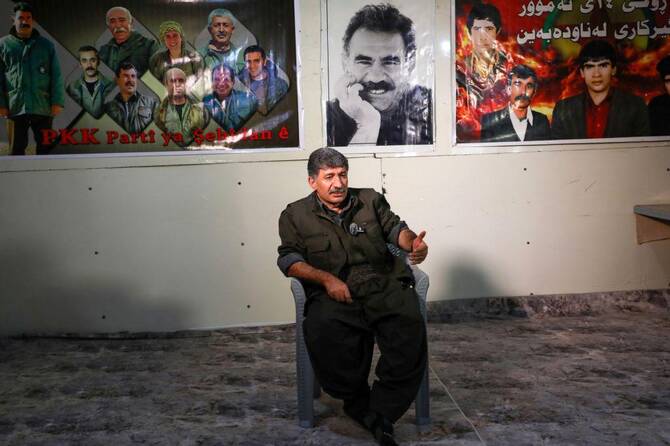
“All the steps the leader Apo has initiated have been implemented... there will be no further actions taken,” commander Amed Malazgirt told AFP on Saturday in a bunker in the Qandil mountains in northern Iraq.
“From now on, we will be waiting for the Turkish state and they have to be the one taking steps,” he said.
The group has two demands, he added.
“First, the freedom of leader Apo... without this, the process will not succeed. The second is the constitutional and official recognition of the Kurdish people in Turkiye.”
Female senior commander Serda Mazlum Gabar told AFP that “as long as the leadership is inside, the Kurdish people cannot be free. Nor can we, as guerrillas, feel free.”
“Our path to freedom passes through the freedom of our leadership,” she added.
Ocalan, 76, has led the peace process from his cell on Imrali island, where he has been held in solitary confinement since 1999.
Turkish lawmakers from a committee tasked with fleshing out the peace process with the Kurds visited Ocalan earlier this week.
In recent months, the PKK, which maintains a rear base in the mountains of northern Iraq, has taken several historic steps toward ending its decades-old fight against Turkiye that has claimed some 50,000 lives.
In May, the PKK formally renounced its armed struggle against Turkiye. It then held a ceremony in northern Iraq during which 30 fighters burned their weapons in a symbolic move to show their commitment to the peace process.
Last month, the group said it had begun withdrawing all of its forces from Turkish soil into northern Iraq.
Earlier this month, the PKK announced their forces had withdrawn from a key border area in northern Iraq.
“We have committed to not using weapons against the Turkish state,” Malazgirt told AFP on Saturday.
Ankara began indirect talks with the PKK late last year, with Ocalan in February urging the group’s militants to lay down their weapons and embrace democratic means to advance the Kurdish cause.
Turkiye has set up the cross-party parliamentary commission to lay the groundwork for the peace process and prepare a legal framework for the political integration of the PKK and its fighters.
“By establishing this committee, the Turkish state has made a positive move, but it is not the only action needed. We are closely monitoring this mission,” Malazgirt said.
The PKK says it wants to pursue a democratic struggle to defend the rights of the Kurdish minority.
But “the guerrilla is also the prototype of free life, the prototype of free humans, the prototype of free women,” Serda Mazlum Gabar said.
“Therefore, we can continue the struggle with different methods, but the guerrilla does not end.”


![]()

PKK urges Turkiye to free Ocalan to advance peace process
Short Url
https://arab.news/2tzmh
PKK urges Turkiye to free Ocalan to advance peace process
- “All the steps the leader Apo has initiated have been implemented... there will be no further actions taken,” commander Amed Malazgirt said


Latest updates


© 2026 SAUDI RESEARCH & PUBLISHING COMPANY, All Rights Reserved And subject to Terms of Use Agreement.