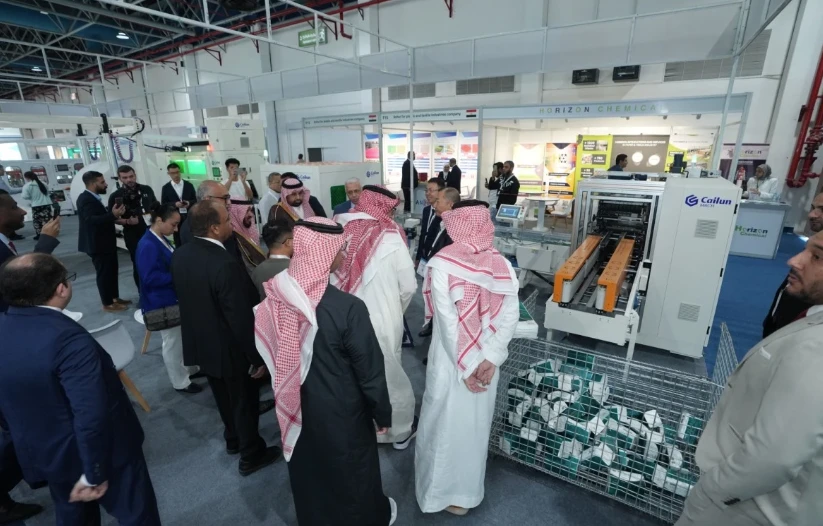
RIYADH: Saudi Arabia produces nearly 3 million tonnes of paper waste annually, with a recycling rate of only around 50 percent, indicating the presence of significant investment opportunities in the sector, according to experts and producers interviewed by Al-Eqtisadiah at the second International Paper and Packaging Industry Exhibition in Jeddah.
Industry participants said the wastepaper market remains underutilized, with control largely held by individual brokers who collect wastepaper from factories at low prices ranging between SR500 ($133.30) and SR800 per tonne, then resell it to recycling plants at significantly higher prices.
Recycling factories then process and sell the recycled paper at values ranging between SR3,500 and SR3,800 per tonne. They noted that the lack of direct channels between producing factories and recycling facilities enables intermediaries to dominate the market.
Manufacturers said the difficulty of direct communication with recycling plants stems from their limited number, compared with the widespread presence of brokers who have warehouses capable of storing quantities gathered from multiple factories before selling them commercially.
They added that rising paper consumption and the growth of production facilities increase the volume of waste, making paper waste management an attractive investment opportunity in a market that continues to expand annually.
Sami Al-Saffran, vice chairman of MAF, said the same indicators apply to other recyclable materials such as plastics, which enhances the sector’s appeal in light of Saudi Arabia’s vision for sustainable growth and a circular economy.
He said the wastepaper market has become one of the main drivers of the circular economy, referencing data from the National Center for Waste Management showing a target of diverting 90 percent of waste away from landfills and achieving a recycling rate of 79 percent by 2040.
Al-Saffran said achieving these goals requires strategic investments in recycling infrastructure estimated at around SR750 billion, adding that the sector is capable of creating more than 76,000 jobs, contributing SR650 billion to GDP, providing 500 new investment opportunities, and establishing 900 processing facilities.
Abdulaziz Al-Malki, owner of Richel Paper Factory, said paper industries naturally generate large amounts of waste, whether from paper, plastics, or different packaging materials. He explained that due to production scale, his factory faces monthly accumulations of waste ranging between one and four tonnes.
Al-Malki said the waste creates a burden in terms of space and storage, making disposal an urgent necessity. He stated: “We sometimes reach a point where we give it to any party that is simply willing to transport it from the factory site.”
He added that some brokers purchase the waste at low prices not exceeding SR800 per tonne, then resell it to recycling factories at higher prices, where it is re-sorted, processed, and reused.
He explained that some large factories have clear demand for these materials, but they typically do not deal with small quantities such as one or two tonnes. As a result, brokers collect waste from several factories before reselling it.
When asked whether he views the field as an investment opportunity, Al-Malki said the waste market is active and that some participants derive clear income from it.
He stated: “Yes, there is an opportunity, but most of those working in this field are non-Saudis, and yet the opportunity exists and is possible for anyone who wants to enter this activity.”
Talal Al-Nouri, general manager of Advanced International Industries, said the company relies on purchasing large quantities of paper monthly at costs between SR3,500 and SR3,800 per tonne from recycling factories to produce cartons.
Al-Nouri said brokers who buy waste operate individually and then resell it to recycling plants at much higher prices, noting that the price difference is captured primarily by intermediaries.
He added that direct communication with recycling factories is very limited, saying: “Rarely is there direct dealing with the factories”, explaining that most sales transactions occur through brokers responsible for collection and resale.
Regarding his assessment of investment opportunities in managing waste without intermediaries, Al-Nouri said the sector benefits from strong demand.
He stated: “We receive many requests to purchase wastepaper, and this indicates real demand in the market.”
He added that although he knows of only one or two factories operating in reprocessing, the market needs more specialized investments in the field, especially given the growing quantities of waste and the lack of direct channels.