- Minister says fast-changing maritime landscape requires new mechanisms for cooperation and safety
- Pakistan also proposes new Regional Maritime University, training institute for emerging IMO standards
KARACHI: Pakistan on Wednesday proposed the creation of a new “Regional Maritime Dialogue,” bringing together countries from the GCC, Central Asia and Africa, with maritime minister Muhammad Junaid Anwar Chaudhry saying the initiative would help states respond collectively to operational, environmental and technological challenges across connected shipping lanes.
The proposal comes as global maritime regulators push countries to adapt to stricter environmental rules, digital navigation systems and new safety requirements in increasingly congested seas. Regions such as the Arabian Sea, Gulf waters and the western Indian Ocean face overlapping pressures like rising climate vulnerabilities, rapid technological change and the need for coordinated search-and-rescue systems as shipping volumes grow.
Experts say frameworks for regional coordination remain fragmented, limiting collective influence at global forums like the IMO, where blocs such as the Small Island Developing States (SIDS), 39 low-lying island and coastal countries spread across the Caribbean, Pacific and Indian Oceans, have successfully shaped policy by presenting unified positions on emissions and climate concerns.
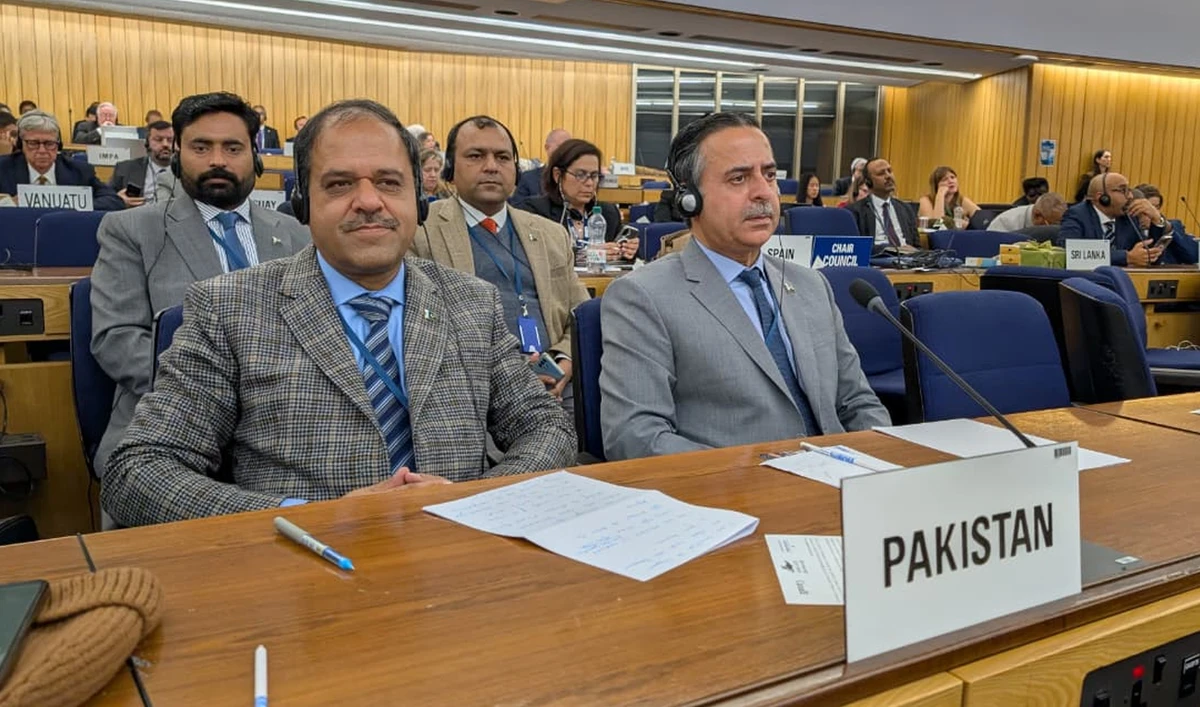
“The fast-changing global maritime landscape demanded new regional mechanisms that could help countries collectively respond to operational, environmental, regulatory and technological challenges,” Minister Chaudhry said as he addressed a high-level breakfast reception hosted by Pakistan at the International Maritime Organization (IMO) Headquarters in London with delegations from more than 173 countries, including over 100 maritime ministers.
Reaffirming Pakistan’s ambition to lead regionally, he said the country sought deeper collaboration with “friendly partners, particularly Saudi Arabia, the UAE, Qatar, other GCC states, Central Asia and Africa” to jointly build the proposed Regional Maritime Dialogue.
He added that the dialogue would prioritize cooperation on emissions, safety and navigation, noting Pakistan’s existing role within the IMO’s global navigational warning system. Under the World-Wide Navigational Warning Service (WWNWS), which divides the world’s seas into 21 NAVAREAs to ensure ships receive timely safety alerts, Pakistan is responsible for NAVAREA IX, covering the Arabian Sea, Gulf waters and parts of the Indian Ocean.
The minister said the new platform would focus on “carbon emissions reduction, safety of life at sea, coordinated search and rescue operations, and strengthening navigational safety.”
Drawing on the example of the Small Island Developing States, the minister said Pakistan wanted the proposed dialogue to eventually function as a coordinated bloc. He noted that SIDS had strengthened their influence at the IMO by forming a coalition, and argued that similar regional agreement could allow participating countries to present a single, coherent position on major maritime issues at global forums.
He reaffirmed Islamabad’s commitment to turn the idea into a permanent structure, saying Pakistan would work with partners to create “a structured, durable and outcome-oriented platform that strengthens maritime governance, enhances cooperation and supports sustainable development across three continents.”
Outlining capacity-building reforms, the minister proposed the establishment of a Regional Maritime University and a Regional Maritime Training Institute “to cater to the growing needs created by new IMO regulations, autonomous shipping, digitization and artificial intelligence.”
These institutions, Chaudhry said, would support “AI-enabled STCW compliance, ensuring that seafarers from Pakistan and the broader region receive training aligned with emerging global standards.” The Standards of Training, Certification and Watchkeeping (STCW) Convention is the IMO’s core framework governing the minimum qualifications for masters, officers and watch personnel, and is currently undergoing revisions to integrate digital navigation, automation and emerging technologies.
The proposal comes as the IMO’s decarbonization rules, e-navigation standards and data-driven vessel monitoring requirements accelerate a global shift toward more technologically advanced fleets, including early-stage autonomous and remotely operated ships. These changes are placing new burdens on national maritime administrations and training academies, which must update curricula, certification systems and simulators to stay compliant.
Chaudhry also highlighted Pakistan’s broader modernization plans, announcing a plan to establish a Pakistan-made terminal and stressing that ongoing projects, including work at the Gadani shipyard and industrial zone, were being executed in full compliance with IMO regulations.
“The pinnacle of maritime diplomacy is the IMO, and Pakistan is ready to play a proactive role in shaping regulations that reflect the needs of our region,” the minister added.
Speaking about the region’s exposure to extreme weather, Chaudhry noted that Pakistan had endured repeated climate-driven disasters in recent years. “We have faced three major climate-induced floods in recent years, leading to massive financial losses and tragic human casualties,” he said, stressing that “our maritime policies must reflect our vulnerabilities and our priorities.”
At the event, Chaudhry and IMO Secretary General Arsenio Dominguez also inaugurated the model of the PNSC Ship KARACHI, one of three new ships the Pakistan National Shipping Corporation plans to purchase, named after major Pakistani cities Karachi, Lahore and Quetta.