

Diriyah Season highlights power of storytelling in Al-Bujairi

1 / 3
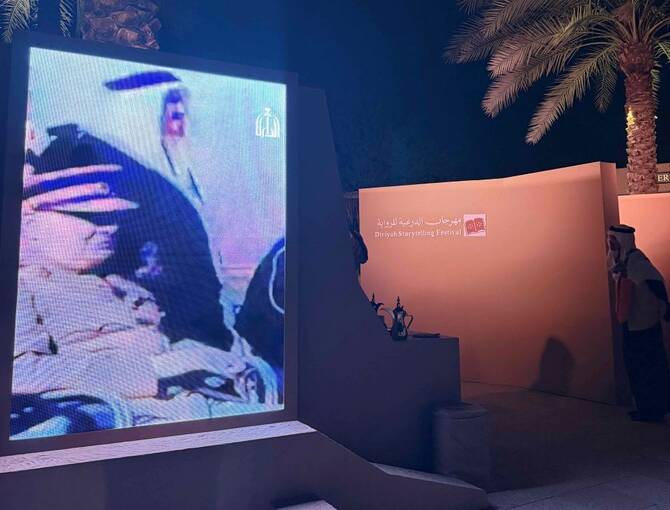
Traditional narrating experience at Diriyah. (AN Photo/Basmah Albasrawi)
2 / 3
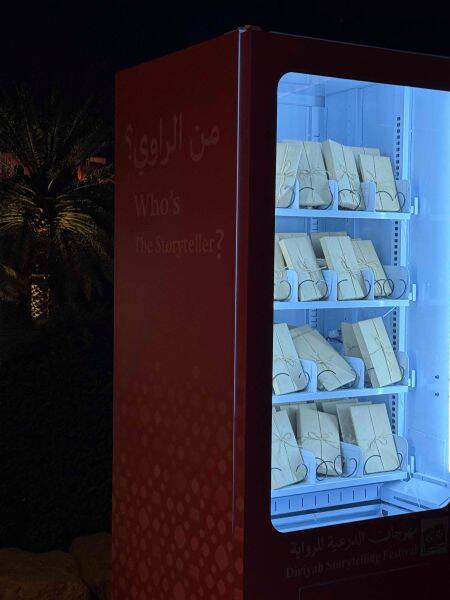
Untitled books vending machine at Diriyah. (AN Photo/Basmah Albasrawi)
3 / 3
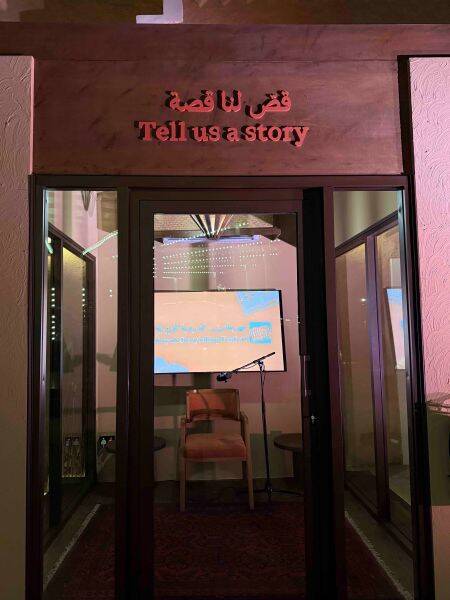
Tell Us A Story booth at Diriyah. (AN Photo/Basmah Albasrawi)
Short Url
Updated 25 November 2025
Follow

Diriyah Season highlights power of storytelling in Al-Bujairi

  • Festival’s author talks, immersive spaces and more celebrate region’s rich storytelling heritage
  • A discussion forum has featured interviews with authors such as Libyan writer Najwa Bin Shatwan

RIYADH: Al-Bujairi has been transformed into a lively hub of narratives, culture and creativity for the Diriyah Storytelling Festival, part of this year’s Diriyah Season.

Designed to create a direct connection between traditional storytelling and today’s modern, advanced narrative forms, the festival brings together a wide range of literary and cultural experiences in the heart of the UNESCO World Heritage Site. 

Diriyah Season, an annual celebration of art, culture and heritage, has once again embraced Riyadh’s winter crowds with programs, workshops and exhibitions highlighting local history.

But the Storytelling Festival stands out, bridging past and present forms of expression with a diverse range of activities in both Arabic and English, engaging locals and foreigners alike.

One of the first experiences, a storytelling venue, allows guests to choose their desired language before they enter a tent with traditional floor seating and decorated cultural handcrafts. After they are offered Saudi coffee, they listen to narrators tell a three-minute story.

Outside, visitors can explore traditional buildings and enjoy the winter atmosphere as they browse the various booths. Other interactive stations include “Diriyah Between the Lines,” where a literary gumball machine dispenses capsules containing prose.

A discussion forum has featured interviews with authors such as Libyan writer Najwa Bin Shatwan, the only woman to be shortlisted for the 2017 International Prize for Arabic Fiction.

She spoke about her writing experience to an eager audience, saying: “As Arabs, one of the first ways we used our language was in poetry.” She went on to discuss the industry, history of writing and trends in the Arab world.

Outside, the stone-carved “Giving Shelf” encourages visitors to donate books for others to take. Vending machines labeled “Who’s the Storyteller?” offer coverless, title-less books for guests to select blindly, encouraging engagement with Arab literature. “Tell Us a Story” inspires visitors to practice their own skills, as they narrate tales into a microphone.

The festival, which runs until Nov. 29 and is open daily from 5 p.m., connects visitors with history, culture and literature in one diverse experience. In total it features more than 40 workshops sessions and panels, along with around 20 inspiring talks with contributions from more than 30 storytellers.


The difference between European and Gulf weddings — from a photographer’s point of view

Updated 4 sec ago
Follow

The difference between European and Gulf weddings — from a photographer’s point of view

DUBAI: From her early career in northeast France to working across the Gulf and Europe, wedding photographer Maddy Christina has observed many contrasts between such events in different parts of the world.

Her early years as a photographer were defined by variety; she worked across fashion, family portraits and weddings simultaneously before recognizing how wedding photography brings multiple genres together in a single day. 

Christina said weddings in the region required a shift in both perspective and technique. (Supplied)

“I actually fell into weddings by accident,” Christina told Arab News. “It blends every discipline at once — fashion for the couple session, sports for the reception, documentary work throughout the day, still life with details and jewelry.”

Christina’s connection to the Middle East began through Parisian clients who invited her to Dubai for a post-wedding session: “I instantly connected with the energy of the city,” she said.

Christina’s connection to the Middle East began through Parisian clients who invited her to Dubai for a post-wedding session. (Supplied)

A few years later, a wedding in Kuwait marked the start of her long-term relationship with the region.

Now working extensively across the Gulf Cooperation Council, Christina said weddings in the region required a shift in both perspective and technique.

For Christina, the most meaningful aspect extends beyond the wedding day itself. (Supplied)

“Working across the GCC has opened my mind in ways I didn’t expect,” she said, adding it felt like “resetting everything I thought I knew about weddings” — particularly compared to her experience in Europe.

She said there were clear distinctions between the two regions. “European weddings tend to be more demonstrative and expressive, while brides in the Gulf often place a deeper emphasis on tradition, family bonds and a sense of ceremony,” she said. “The emotional language is different, yet equally beautiful.”

From a technical standpoint, the contrast is just as pronounced: “In the south of France, I was used to shooting outdoors at sunset with couples already comfortable in front of the camera. Here, I often find myself in much smaller spaces, with no windows, artificial light and couples who may be more reserved.”

Christina is drawn to candid moments. (Supplied)

She added that adapting to these conditions pushed her to explore new ways of shaping light and expanded her creative approach.

While Christina is drawn to candid moments, like “guests laughing together, old friends reconnecting, a fleeting emotion passing across someone’s face,” posed pictures remain central to her work.

For Christina, the most meaningful aspect extends beyond the wedding day itself.

“It’s not the decor that makes a wedding unforgettable for me,” she said. “It’s the connection I build with the bride. That long-term bond is what feels truly magical.”