



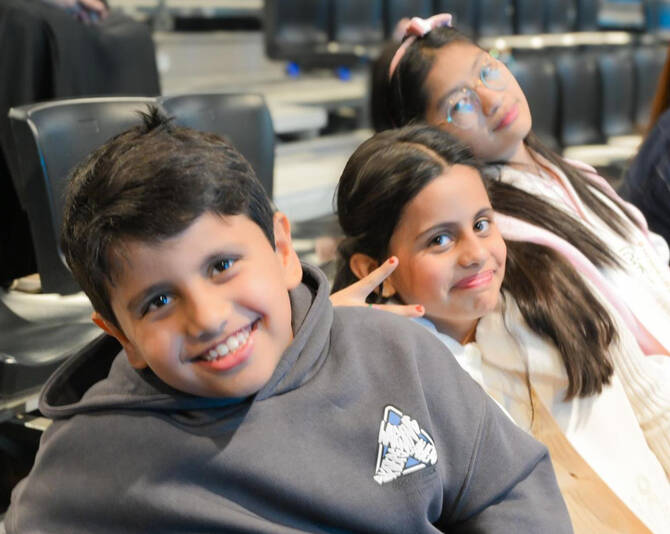

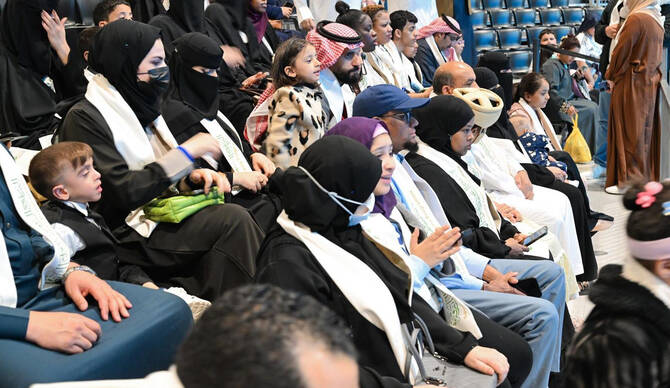

RIYADH: Saudi aid agency KSrelief recently organized a tour for conjoined twins, who had previously undergone separation surgeries in the Kingdom, to Boulevard World with their families.
The twins toured the cultural zones representing countries such as Saudi Arabia, Kuwait, Indonesia, South Korea, the US, Egypt, and Mexico, the Saudi Press Agency reported on Tuesday.
Following the tour, they attended a dolphin show, where they were captivated by the dolphins’ intelligence, acrobatics, and interactive performances in a specially designed pool.
At the end of their visit, the twins and their families expressed gratitude to the Kingdom, represented by its humanitarian arm, KSrelief, for organizing this experience, which reflects the generosity of the Saudi people.
On Nov. 24, the world marks the second UN World Conjoined Twins Day, celebrating courage and compassion while calling for stronger global support for children with disabilities.
The day commemorates achievements made in the medical field of conjoined twins separation surgery, as well as raising awareness of the humanitarian aspects related to conjoined twins.
KSrelief Supervisor-General Dr. Abdullah Al-Rabeeah highlighted the significance of the UN designating Nov. 24 as World Conjoined Twins Day, an initiative supported by King Salman and Crown Prince Mohammed bin Salman, reflecting Saudi Arabia’s commitment to public health and the rights of conjoined twins.
At a New York event themed “From Words to Action: A World Fit for Conjoined Twins and Children with Disabilities,” co-organized by KSrelief and UNICEF, Al-Rabeeah noted that children with disabilities are among the most vulnerable and marginalized populations globally, especially during crises.
He emphasized that healthcare systems often struggle to provide necessary diagnostics and treatment, adding to the burdens faced by these children and their families, the SPA reported.
Al-Rabeeah highlighted Saudi Arabia’s focus on the surgical separation of conjoined twins since the establishment of the Saudi Conjoined Twins Program in 1990.
The program fully covers surgery, treatment, rehabilitation, transportation, accommodation, and hosting for the children and their families, ensuring parental proximity and a supportive recovery environment.
It has assessed 152 cases from 28 countries and successfully carried out 67 complex separations, underscoring the importance of post-surgery care, including medical, rehabilitative, and educational support.
Al-Rabeeah called for a collective effort to strengthen support frameworks for children with disabilities, ensuring they not only survive but thrive, and expressed hope that the discussions would lead to meaningful outcomes for all such children.


