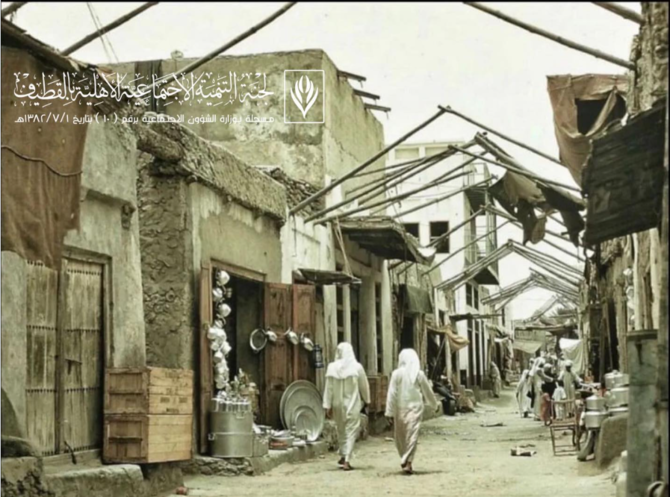

RIYADH: Have you ever wondered how differently our parents and grandparents experienced Ramadan? How the holy month shifted routines before modern technology became a factor?
Arab News sat down with cherished and active community member Sabah Al-Fakhr from Qatif to hear her stories of Ramadan in Saudi Arabia in the late 1950s and 1960s.
Now 80-years-old, Al-Fakhr transported us back to a time when she was just a young girl of about 12.
It all starts weeks prior, of course, when families start preparing their kitchens and themselves: psychologically, financially and religiously.
“We would prepare ourselves because once the month of God arrived, that was it — fasting begins. It was a joyful mark for us,” Al-Fakhr told Arab News.
The last day of Sha’ban was called “Yawm Al-Darsh” after the word “nadarsh,” which means to chew or grind food. On that day, you would make sure you ate well before beginning your fast the next morning.
“We prepared spiritually because we loved the month of God; we waited 11 months for it,” she said. “Life was different in Ramadan compared to the other months … the place became alive.”
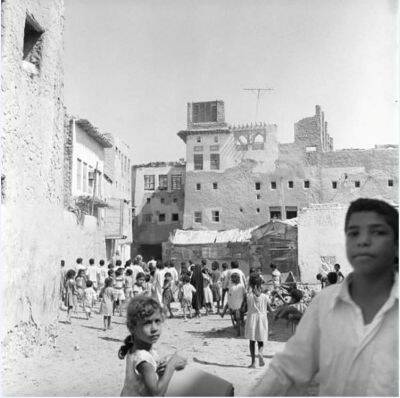
On the first day of Ramadan, all the members of the community would gather at a big open space called the “baraha.”
Al-Fakhr said: “Whether you were young or old … everyone would gather there: men, women, children. No one fought, no one insulted anyone.”
The baraha was a market and gathering area where community members would go and get all the supplies they needed to make iftar that night.
“There were no supermarkets. Everything came directly from farms.”
The place would be packed with all members of the community; farmers bringing products fresh from their farms: eggs, vegetables, seasonal fruit; children waiting for a chance to buy sweets or eggs; and women making falafel, chapati and other dishes. Some would even make ice cream at home and bring it to sell.
“We would buy what we needed and go home ready for iftar,” Al-Fakhr added.
Even the milk was different. Al-Fakhr spoke about how women brought fresh milk and laban from their farms, calling it “special” for Ramadan and insisting that it tasted different, better.
The “falaha” who brought milk to sell lived in the palm groves under an agreement with the grove owner. In exchange for housing and the right to farm the land, she would provide milk, eggs, chicken, dates and other seasonal products.
“She would carry two pots on her head: one to sell, and one to give to the palm grove owner. It was an understanding between them,” Al-Fakhr said.
Homes were built differently then. Most had large open courtyards where people gathered and vendors sold their goods.
“Back then, life was simple, and we were excited. Boys and girls together, everyone knew each other.”
Children had their own games. “We used to play a game with eggs. Each child brought an egg and we would knock one against another. Whoever’s egg didn’t crack won and kept the other egg. It was a competition — whose egg was stronger.”
Inside the home, everything was prepared by hand. Nothing was bought ready-made.
Al-Fakhr said her family soaked rice for 40 days before Ramadan, changing the water daily. By the end, the rice would soften and ferment before being dried and ground into starch for desserts like muhallabia and maftoota.
In the afternoons, the house filled with activity.
“About 15 of us women would sit together — one making kebab, one preparing samboosas, one kneading dough. The house was lively.”
Al-Fakhr recalled a strong sense of community, with streets full of children carrying trays between homes. Before maghrib time, families would send trays of food to neighbors and relatives.
“Every house sent a tray, no house kept food only for itself,” she said. “Children carried trays from house to house. We felt proud going to elders’ homes, they would give us a few coins sometimes.”
After iftar, families visited relatives, friends and neighbors. Hardly a day passed in Ramadan without visits.
“And our mothers, they would never tire, never complain. They were always happy. They loved Ramadan.”
She said these gatherings were humbler than many modern “ghabghat,” which she believes often focus more on appearance than the religious values of gratitude and togetherness.
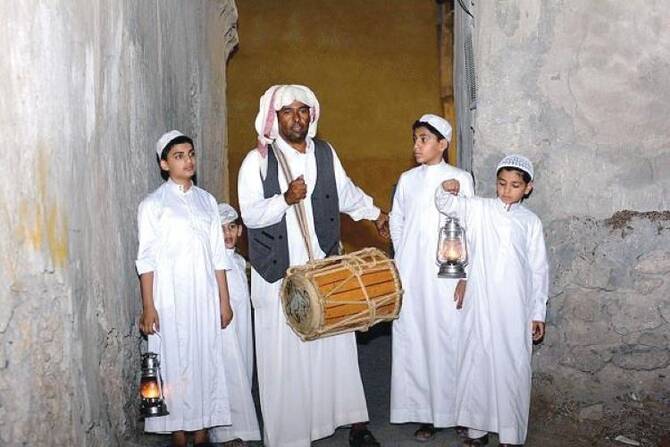
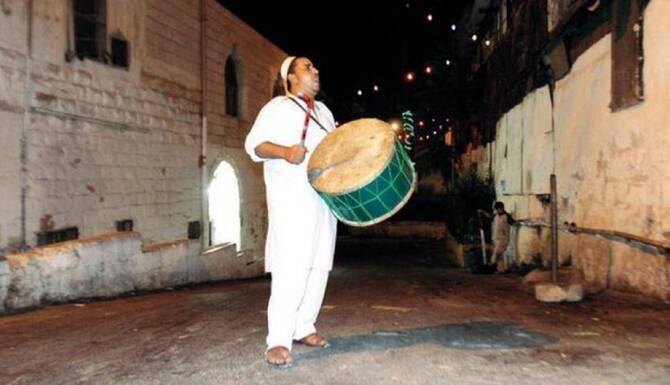
And unlike today, where the common practice is to stay up until after fajr prayer, Al-Fakhr said that homes would prepare their sahoor then sleep to later be woken up by the “mesaher,” a man who would walk the street, beating his drum and singing, calling out for people to wake up for sahoor.
“He would sing ‘Ya ‘ibadi Allah, Al-Sahoor … ig’ido tesaharo jakm Abu Tbaila” (O worshipers of Allah, it is time for sahoor, wake up and eat, the man with the drums has come).”
Every neighborhood or district had one.
“We would hear his voice in the street and run to the windows to see him. It was beautiful. I never saw it again.”
As Eid approached, women began sewing their own clothes.
“There were no malls, no-ready made clothing,” she said, adding that people sewed their own clothes, and if they lacked that skill, would visit friends, relatives and neighbors who knew.
“Every house had someone who could sew. If not and they could afford it, they paid a seamstress.”
The mesaher would also return on the night before Eid, singing through the streets to announce the moon sighting.
“‘Ya ‘ibadi Allah, eido jaakm Al-Eid” (O worshipers of Allah, celebrate! Eid has come).”
Families would give him an “eidiya” (gift; usually money) as thanks for his nightly calls throughout the month.
Some traditions never change; Eid mornings were spent visiting elders, followed by lunch at a grandparent’s home where the extended family gathered.
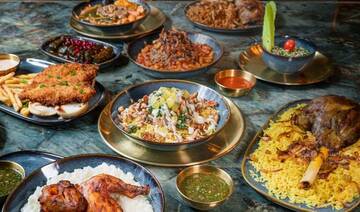
Al-Fakhr said much has changed since then. The streets are quieter, communities feel different, and food is often bought rather than made by hand. Once simple dishes are overcomplicated with additional flavors and “modern twists,” she said.
Al-Fakhr is proud of her age and the life she has lived, the people and the society she has seen grow up; she carries no shame for her years and does not try to appear younger than her age.
“I have lived through the older era, the middle era and the modern era. Every era has its beauty,” she said. “But you can’t live outside your generation.
“I tell my grandchildren these stories, so they know how we lived.”