JERUSALEM: A controversial US- and Israel-backed company that provided aid to Gaza said Monday it would shutter operations.
The Gaza Humanitarian Foundation had already closed distribution sites after a US-brokered ceasefire took effect six weeks ago in Gaza. It announced Monday that it was permanently shutting down, claiming it had fulfilled its mission.
“We have succeeded in our mission of showing there’s a better way to deliver aid to Gazans,” GHF director John Acree said in a statement.
The operations of the GHF were shrouded in secrecy during its short time in operation. Launched with US and Israeli backing as an alternative to the United Nations, the group never revealed its sources of funding and little about the armed contractors who operated the sites. It said its goal was to deliver aid to Gaza without it being diverted by Hamas.
Palestinians, aid workers and health officials have said the system forced aid-seekers to risk their lives to reach the sites by passing Israeli troops who secured the locations. Soldiers often opened fire, killing hundreds, according to witnesses and videos posted to social media. The Israeli military says it only fired warning shots as a crowd-control measure or if its troops were in danger.
GHF said there was no violence in the aid sites themselves but acknowledged the potential dangers people faced when traveling to them on foot. However, contractors working at the sites, backed by video accounts, said the American security guards fired live ammunition and stun grenades as hungry Palestinians scrambled for food.
Acree said that GHF would hand off its work to the US-led center in Israel overseeing the Gaza ceasefire, called the Civil-Military Coordination Center.
“GHF has been in talks with CMCC and international organizations now for weeks about the way forward and it’s clear they will be adopting and expanding the model GHF piloted,” he said.
GHF began operating in late May, after Israel had halted food deliveries to Gaza for three months, pushing the population toward famine.
Israel intended for the private contractor group to replace the UN food distribution system, claiming Hamas was diverting large amounts of aid. The UN denied the claims.
The UN had opposed the creation of GHF, saying the system gave Israel control over food distribution and could force the displacement of Palestinians. Throughout the war, the UN led a massive humanitarian effort with other aid groups, distributing food, medicine, fuel and other supplies at hundreds of centers around Gaza.
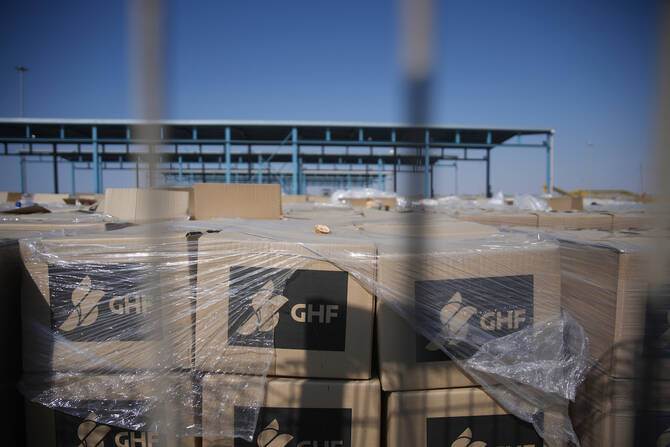
In the release, GHF said it had delivered over 3 million food boxes to Gaza, totaling 187 million meals.


![]()

Controversial US-backed aid company in Gaza GHF shuts
Short Url
https://arab.news/mtqbs
Controversial US-backed aid company in Gaza GHF shuts
- Palestinians, aid workers and health officials have said the system forced aid-seekers to risk their lives to reach the sites by passing Israeli troops who secured the locations
- Soldiers often opened fire, killing hundreds, according to witnesses and videos posted to social media


Latest updates


Recommended


© 2026 SAUDI RESEARCH & PUBLISHING COMPANY, All Rights Reserved And subject to Terms of Use Agreement.