DUBAI: Cities across the Arab world have long been celebrated for their vibrant cafe culture. Now, a new craze is taking hold — one where patrons can enjoy their morning cup in the company of animals, turning familiar spaces into places of calm and connection.
From owl cafes and cat lounges to pet-friendly spots that welcome dogs and birds, the trend reflects a growing comfort with animals in shared public spaces.
Mohamed Al-Shehhi, founder of Boomah Cafe in Abu Dhabi, said his business idea came from “a mix of curiosity, love for nature, and a desire to create something meaningful and different in the UAE.”
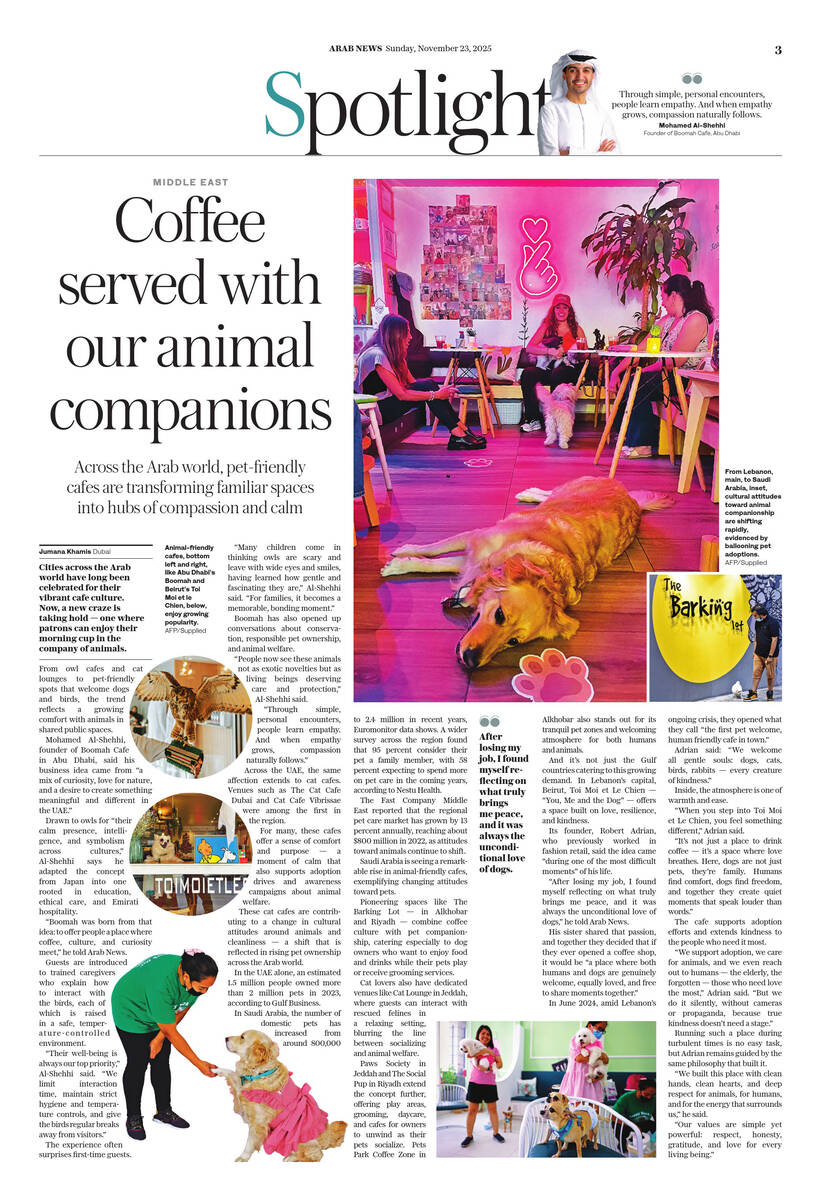
At the Boomah Cafe in Abu Dhabi, visitors can interact with owls, with trained caregivers around to guide them on how to approach the birds. (Supplied)
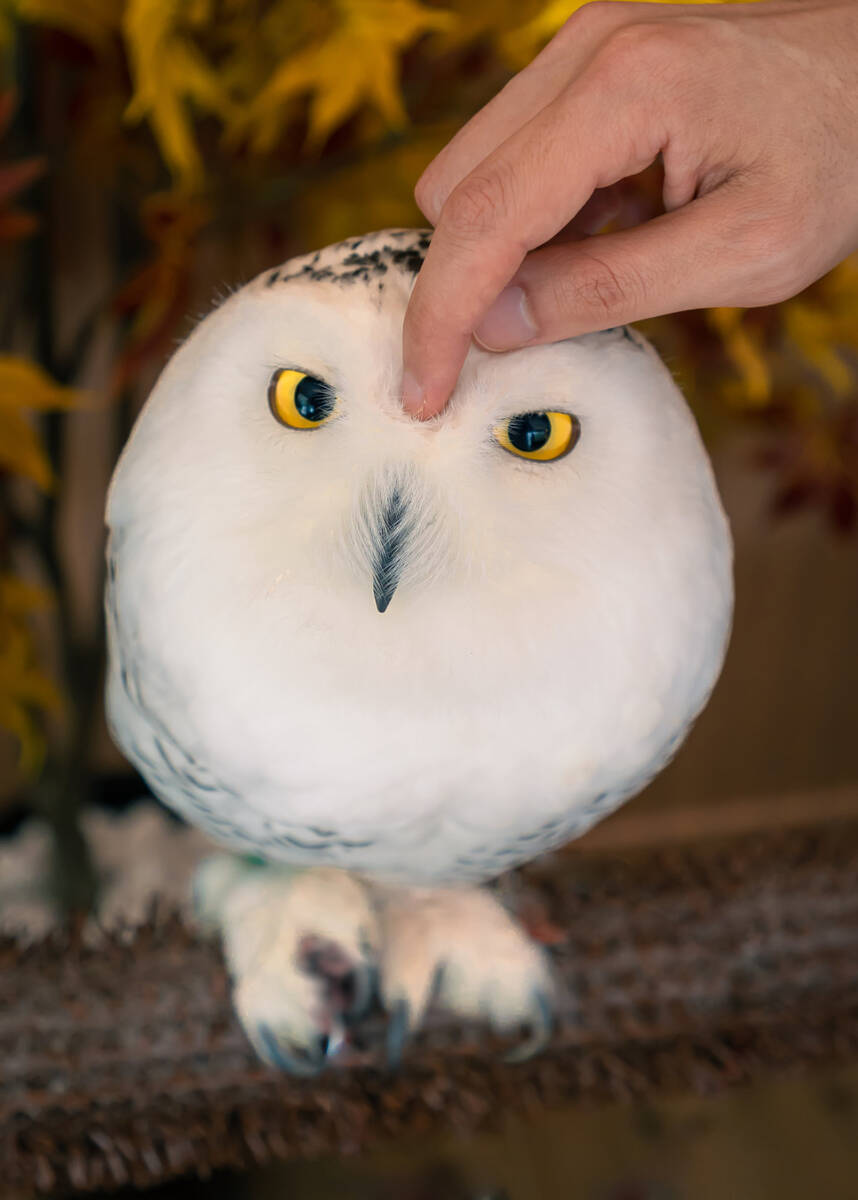
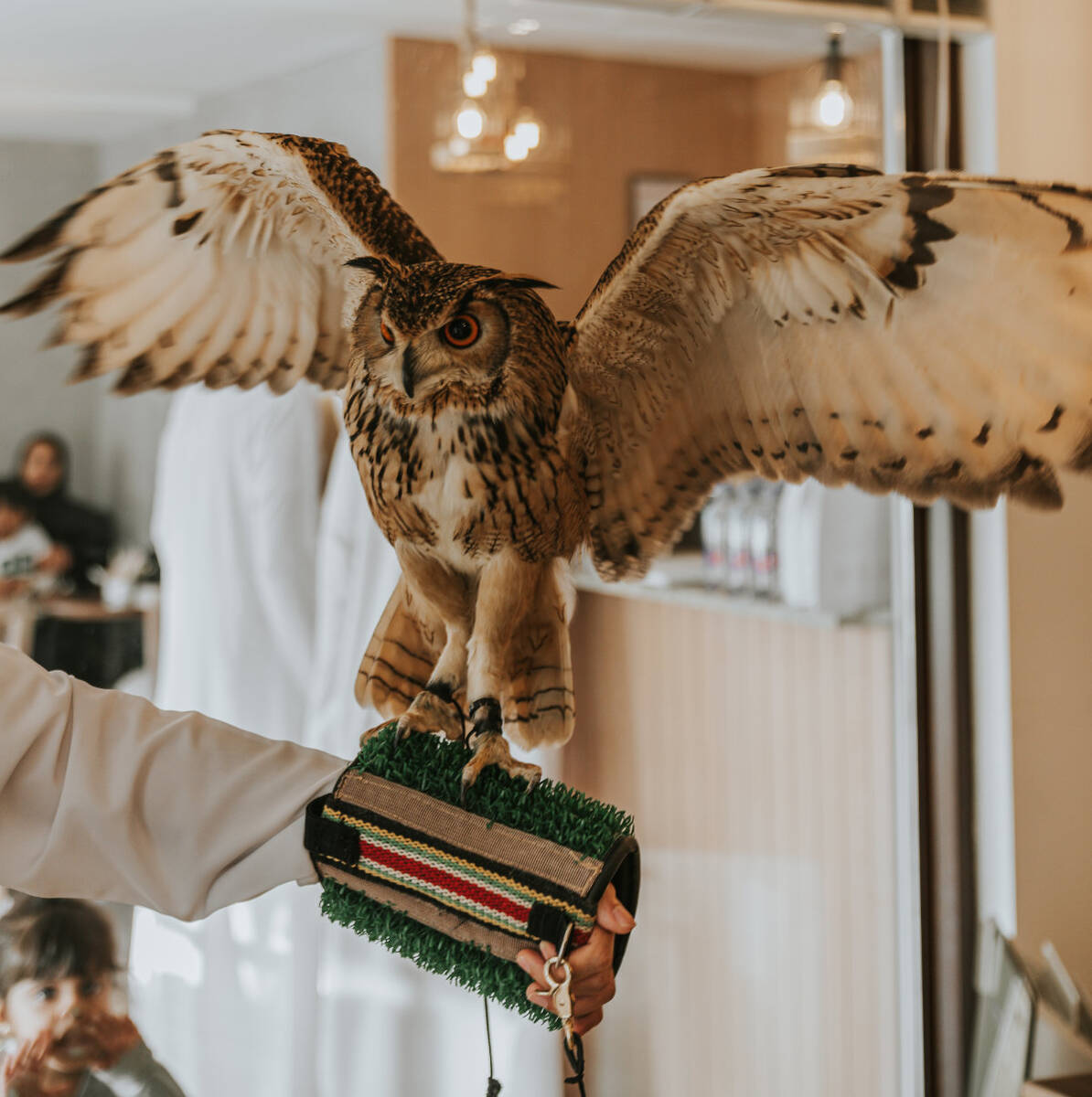
Drawn to owls for “their calm presence, intelligence, and symbolism across cultures,” Al-Shehhi says he adapted the concept from Japan into one rooted in education, ethical care, and Emirati hospitality.
“Boomah was born from that idea: to offer people a place where coffee, culture, and curiosity meet,” he told Arab News.
Inside, the mood is tranquil. Guests are introduced to trained caregivers who explain how to approach and interact with the birds, each of which is raised in a safe, temperature-controlled environment.
“Their well-being is always our top priority,” Al-Shehhi said. “We limit interaction time, maintain strict hygiene and temperature controls, and give the birds regular breaks away from visitors.”

People and their dogs gather to celebrate another dog's birthday on May 30, 2022 at Happy Bark Day, the first dog cafe in Dubai to serve food, coffee, and cake to dogs only. (AFP)
The experience often surprises first-time guests.
“Many children come in thinking owls are scary and leave with wide eyes and smiles, having learned how gentle and fascinating they are,” Al-Shehhi said. “For families, it becomes a memorable, bonding moment.”
Beyond the novelty of sipping tea in the company of owls, Boomah has also opened up conversations about conservation, responsible pet ownership, and animal welfare.
“People now see these animals not as exotic novelties but as living beings deserving care and protection,” Al-Shehhi said.
“Through simple, personal encounters, people learn empathy. And when empathy grows, compassion naturally follows.”
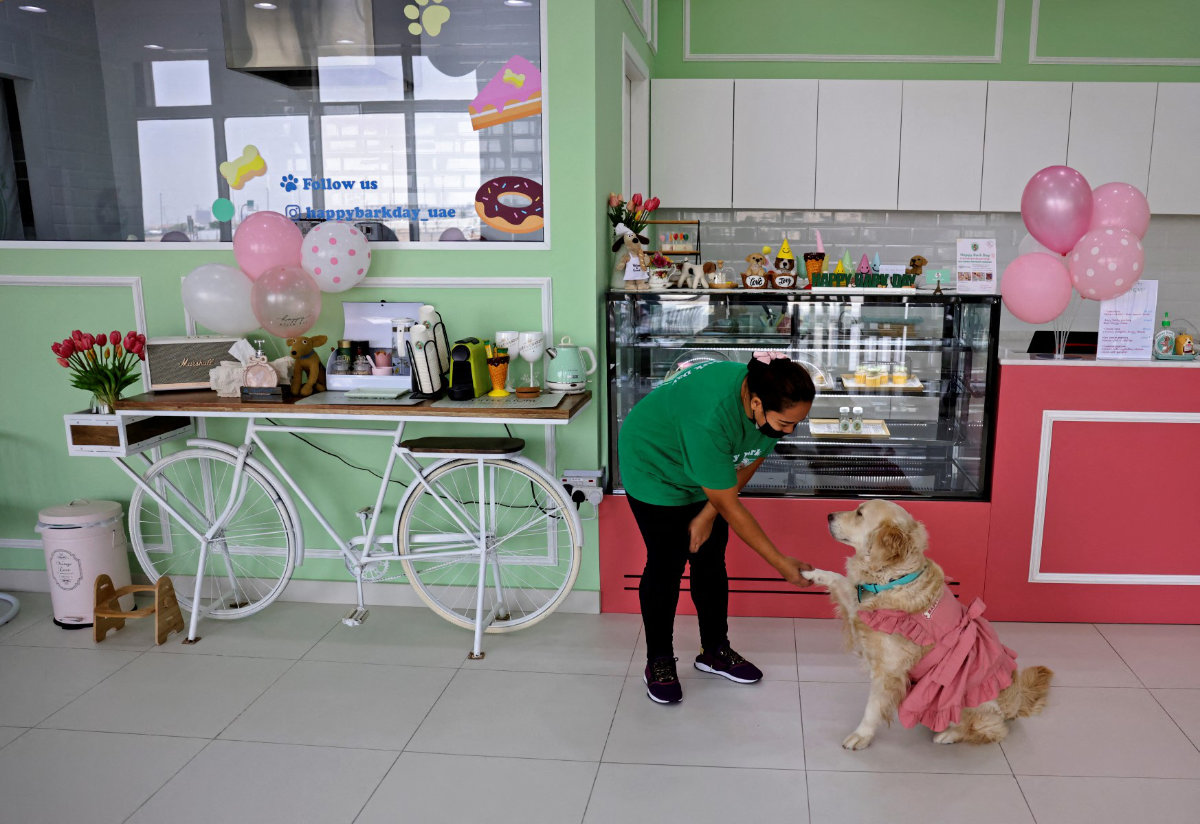
A staff member at Happy Bark Day, the first dog cafe in Dubai to serve food, coffee, and cake to dogs only, welcomes a customer on May 30, 2022. (AFP)
Across the UAE, the same affection extends to cat cafes, which have become weekend retreats for families and animal lovers.
Venues such as The Cat Cafe Dubai and Cat Cafe Vibrissae were among the first in the region, inviting visitors to unwind with rescue cats that roam freely among soft armchairs and window ledges.
Each cat is groomed and monitored by staff, while guests are encouraged to interact gently.
For many, these cafes offer a sense of comfort and purpose — a moment of calm that also supports adoption drives and awareness campaigns about animal welfare.
These cat cafes are contributing to a change in cultural attitudes around animals and cleanliness — a shift that is reflected in rising pet ownership across the Arab world.
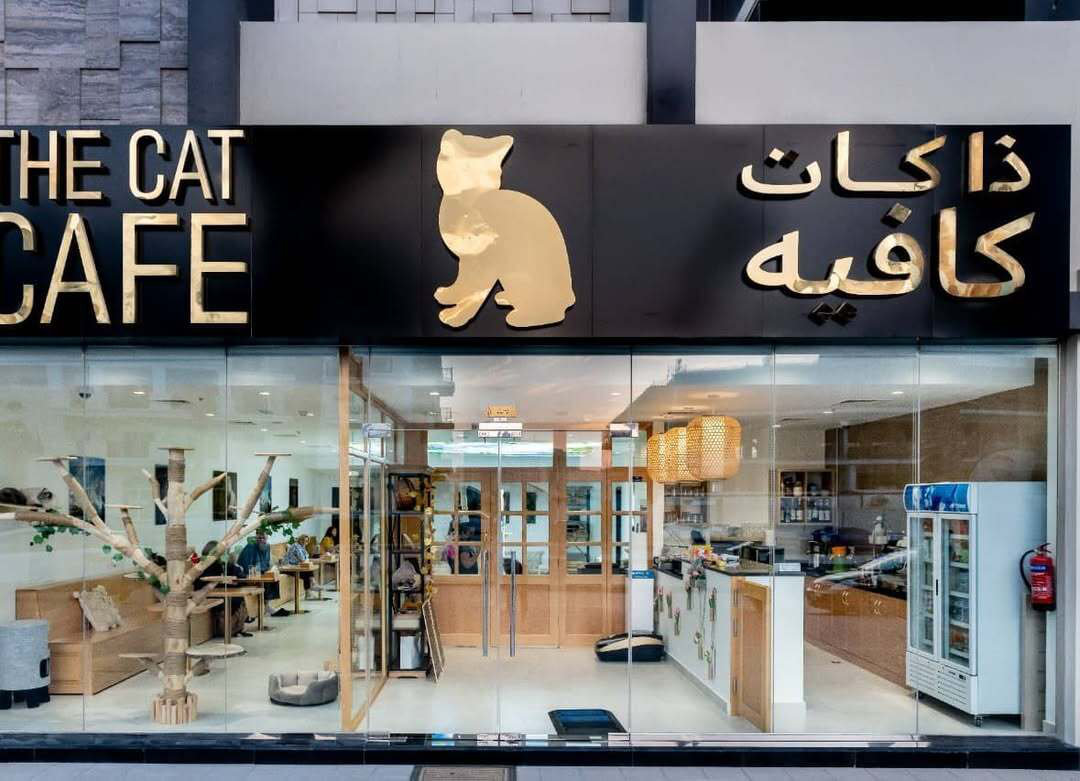
At The Cat Cafe Dubai, visitors are welcome to unwind with rescue cats that roam freely among soft armchairs and window ledges. (Instagram: thecatcafedubai)
•
In the UAE alone, an estimated 1.5 million people owned more than 2 million pets, mostly cats and dogs, in 2023, according to Gulf Business.
In neighboring Saudi Arabia, the number of domestic pets has increased from around 800,000 to 2.4 million in recent years, Euromonitor data shows.
A wider survey across the Middle East and North Africa found that 95 percent of respondents consider their pet a family member, with 58 percent expecting to spend more on pet care in the coming years, according to Nestu Health.
Moreover, the Fast Company Middle East reported that the regional pet care market has grown by 13 percent annually, reaching about $800 million in 2022, as attitudes toward animals continue to shift from ownership to companionship.
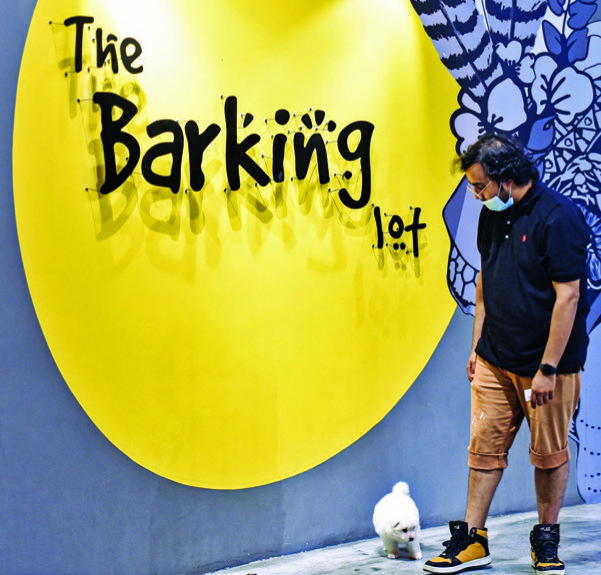
The Barking Lot — in Alkhobar and Riyadh — combine coffee culture with pet companionship. (Supplied)
Saudi Arabia is seeing a remarkable rise in animal-friendly cafes, exemplifying changing attitudes toward pets.
Pioneering spaces like The Barking Lot — in Alkhobar and Riyadh — combine coffee culture with pet companionship, catering especially to dog owners who want to enjoy food and drinks while their pets play or receive grooming services.
Cat lovers also have dedicated venues like Cat Lounge in Jeddah, where guests can interact with rescued felines in a relaxing cafe setting, blurring the line between socializing and animal welfare.
Paws Society in Jeddah and The Social Pup in Riyadh extend the concept further, offering play areas, grooming, daycare, and even cafes for owners to unwind as their pets socialize.
Pets Park Coffee Zone in Alkhobar also stands out for its tranquil pet zones and welcoming atmosphere for both humans and animals.
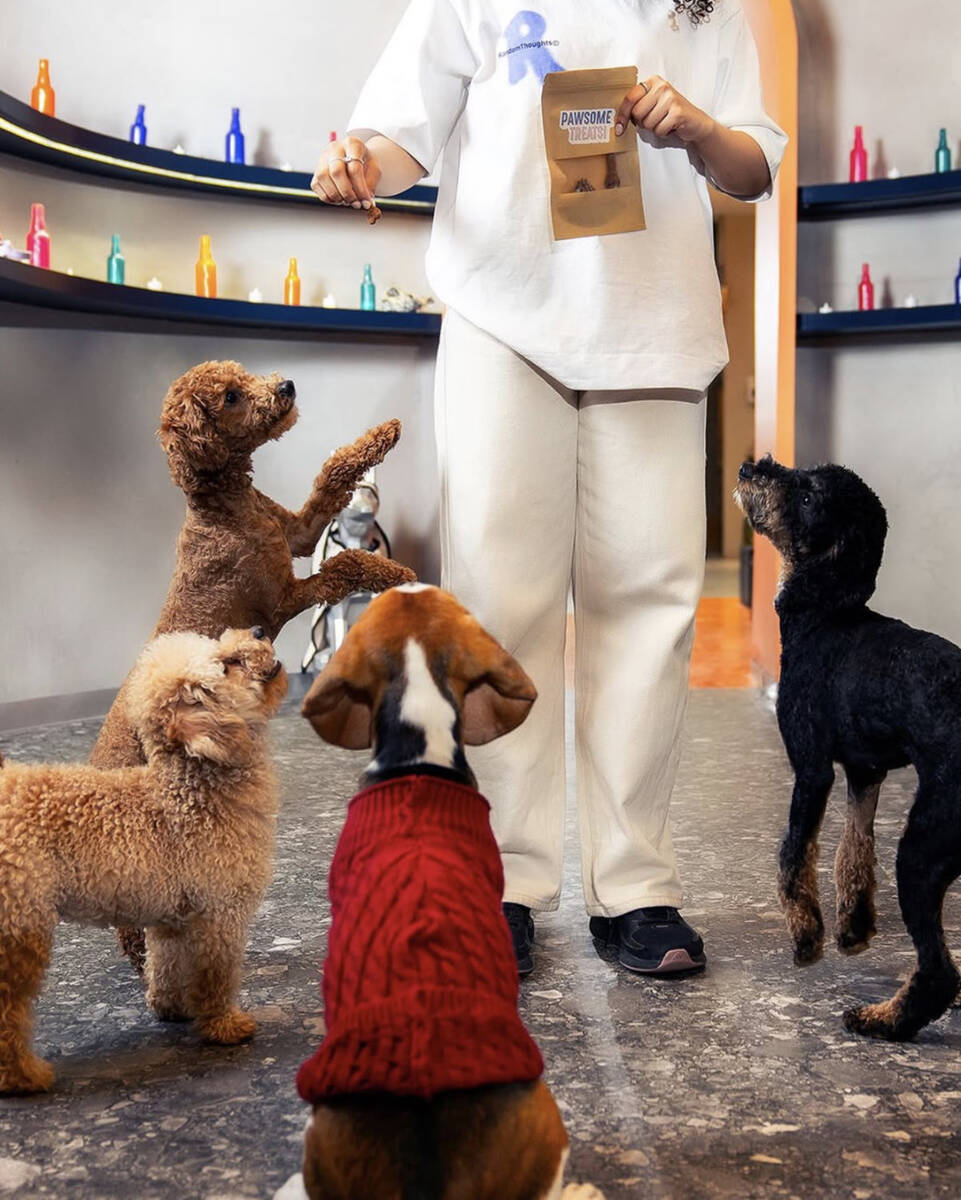
Pet dogs get a well-deserved "treat" at the The Social Pup in Riyadh. (Instagram: thesocialpup.sa)
And it’s not just the Gulf countries catering to this growing demand. In Lebanon’s capital, Beirut, Toi Moi et Le Chien — “You, Me and the Dog” — offers a space built on love, resilience, and kindness.
Its founder, Robert Adrian, who previously worked in fashion retail, said the idea came “during one of the most difficult moments” of his life.
“After losing my job, I found myself reflecting on what truly brings me peace, and it was always the unconditional love of dogs,” he told Arab News.
His sister shared that passion, and together they decided that if they ever opened a coffee shop, it would be “a place where both humans and dogs are genuinely welcome, equally loved, and free to share moments together.”
In June 2024, amid Lebanon’s ongoing crisis, they opened what they call “the first pet welcome, human friendly cafe in town.”
Adrian said: “We welcome all gentle souls: dogs, cats, birds, rabbits — every creature of kindness.”
Inside, the atmosphere is one of warmth and ease.
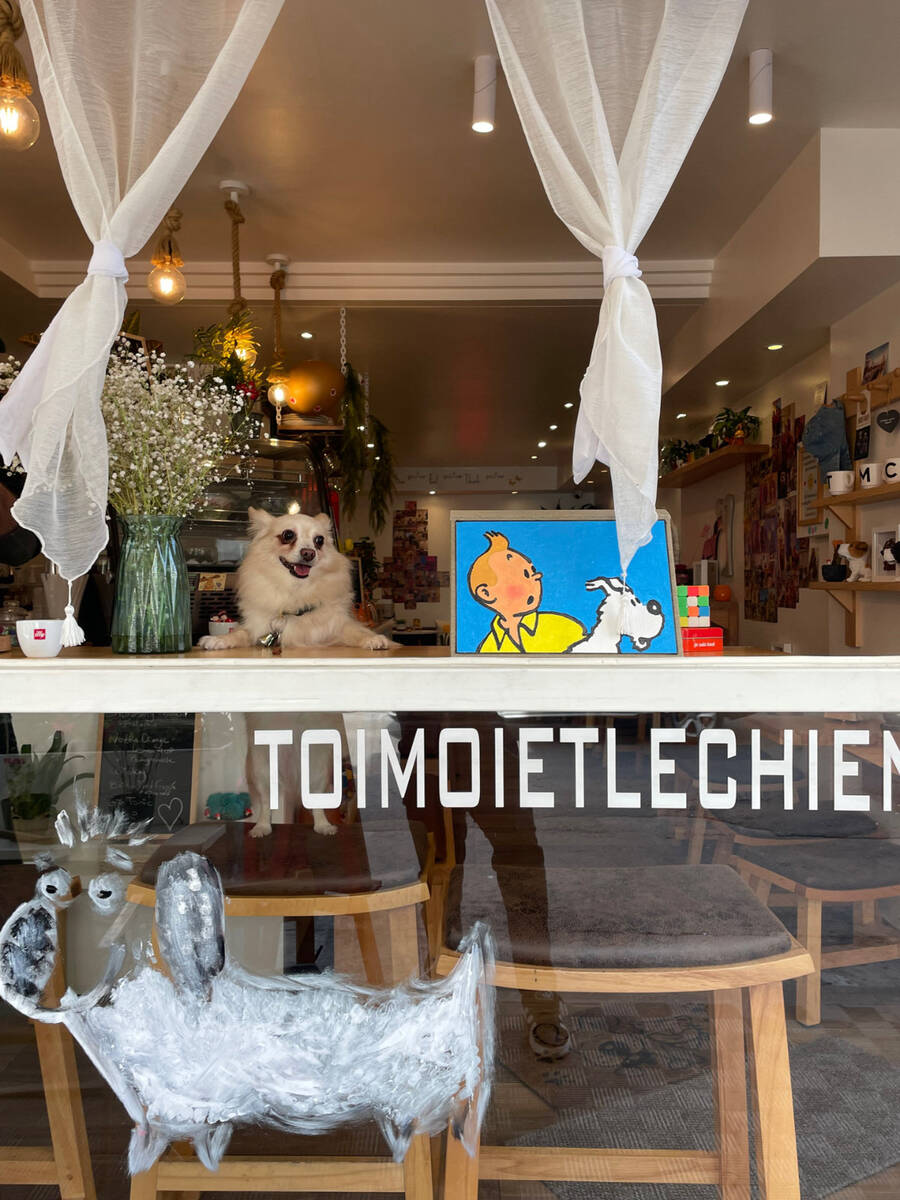
At the Toi Moi et Le Chien in Beirut, a dog is always ready to welcome coffee lovers. (Supplied)
“When you step into Toi Moi et Le Chien, you feel something different,” Adrian said.
“It’s not just a place to drink coffee — it’s a space where love breathes. Here, dogs are not just pets, they’re family. Humans find comfort, dogs find freedom, and together they create quiet moments that speak louder than words.”
The cafe supports adoption efforts and extends kindness to the people who need it most.
“We support adoption, we care for animals, and we even reach out to humans — the elderly, the forgotten — those who need love the most,” Adrian said. “But we do it silently, without cameras or propaganda, because true kindness doesn’t need a stage.”

At Beirut's Toi Moi Et Le Chien, dogs are not just pets, they’re family. (Instagram: toimoi.cafe)
Running such a place during turbulent times is no easy task, but Adrian remains guided by the same philosophy that built it.
“We built this place with clean hands, clean hearts, and deep respect for animals, for humans, and for the energy that surrounds us,” he said.
“Our values are simple yet powerful: respect, honesty, gratitude, and love for every living being.”
A few streets away, Orenda Cafe carries the same ethos.
“I wanted to create a cafe that nourishes both the body and the soul,” its founder, Huaida Rajab, told Arab News. “The animals are part of that vision — they bring warmth, calm, and connection.”
She added: “In Lebanon’s cafe scene, Orenda stands for mindful living, compassion, and community, where humans and animals share the same peaceful energy.”
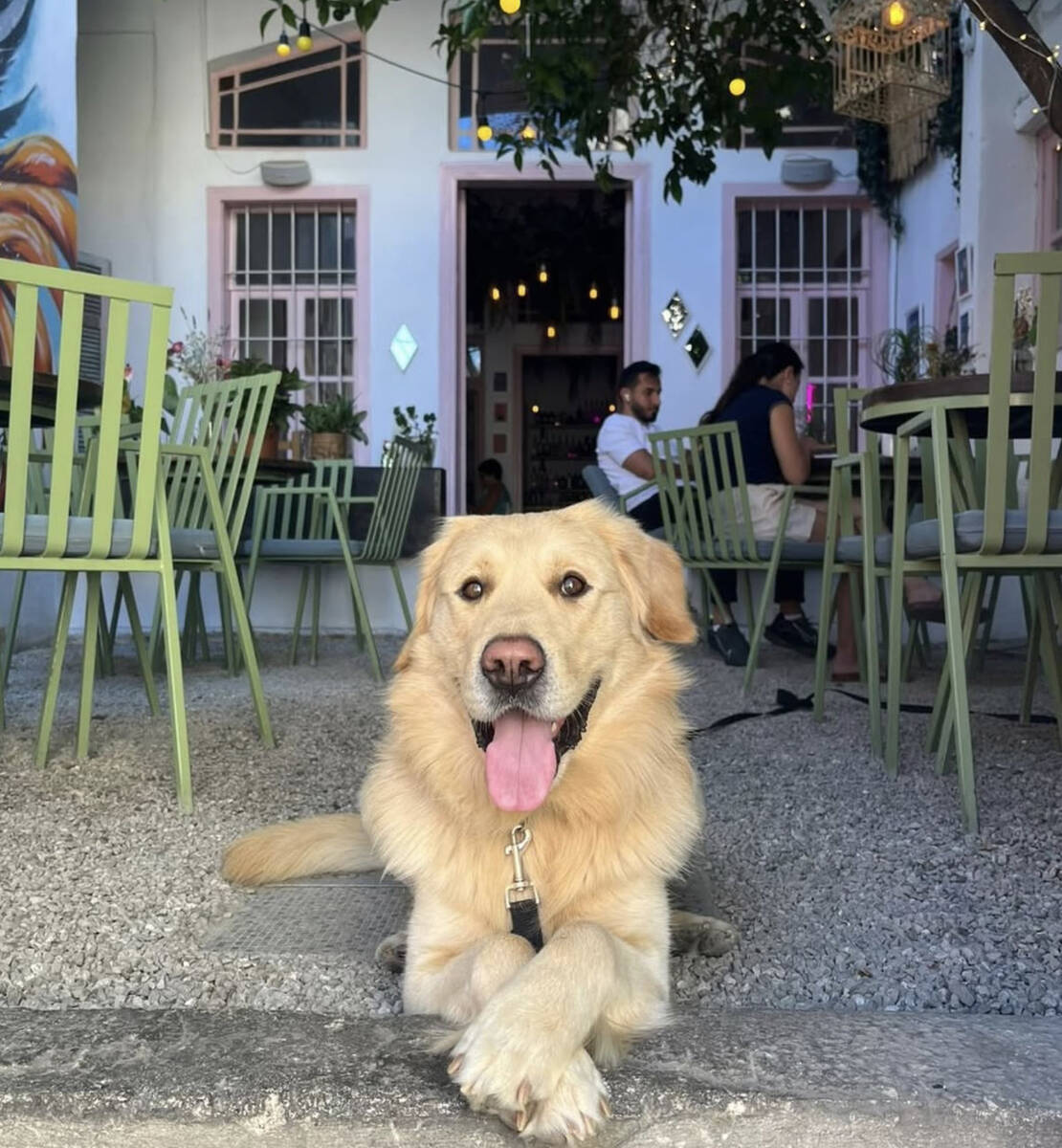
At Beirut's Orenda Cafe, pet dog Robin, the new front-paw manager, welcomes customers with a friendly caveat: No treats? No entry. (Instagram: orenda.lb)
Visitors describe the setting as soothing — sunlight spilling through green plants, soft chatter, and the gentle rhythm of pets resting at their owners’ feet.
“People come for both,” Rajab said.
“They fall in love with the atmosphere — the calm energy, the food, and the sense of connection. The animals add a special warmth, but the experience goes beyond that,” she told Arab News.
At Orenda, pets are treated as guests.
“We’re a pet-friendly space, which means people can enjoy their time here with their own pets, whether it’s a dog, a cat, or any calm companion,” she said.
“Each pet stays comfortably at their owner’s table, so everyone has their own space to relax without disturbing others.
IN NUMBERS
• 1.5 million estimated number of people in the UAE who own more than 2 million pets in 2023 (Source: Gulf Business)
• 2.4 million estimated number of domestic pets in Saudi Arabia, with the number increasing (Source: Euromonitor)
“Our team makes sure both the animals and their owners feel at ease — with water bowls, a calm environment, and a clear sense of respect for everyone sharing the space.”
Since opening, Rajab has noticed a shift in behavior.
“People are more comfortable bringing their pets out and treating them as part of daily life,” she said. “It’s beautiful to see how mindful and respectful our guests have become toward animals and each other.”
In a region known for its hospitality, that warmth is now reaching further — to every living being.
“Real change begins with sincerity, with people who truly love and respect animals, not just follow trends,” said Adrian of Toi Moi et Le Chien.
“And even if they are few, their light is enough to make a difference.”