

ADB approves $330 million loan to strengthen Pakistan’s power transmission network

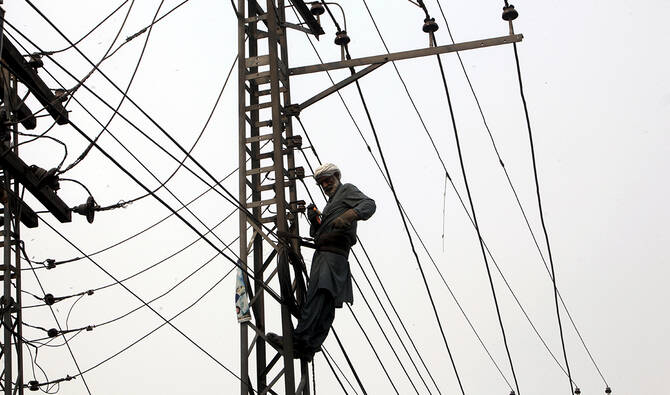
A power company employee works on power lines in Lahore, Pakistan, on November 6, 2015. (Reuters/File)
Short Url
Updated 20 November 2025
Follow

ADB approves $330 million loan to strengthen Pakistan’s power transmission network

  • Project involves construction of a new 290kilometer transmission line and grid infrastructure upgradation
  • ADB says loan will enable transfer of up to 3,200MWs to Islamabad, Faisalabad from hydropower plants in north

ISLAMABAD: The Asian Development Bank (ADB) on Thursday approved a $330 million loan for Pakistan to expand the national power transmission network under its Second Transmission Strengthening Project that aims to help Islamabad cut reliance on imported fuels and boost energy security, ADB said on Thursday.

The country of 250 million faces chronic power outages, soaring electricity costs and a ballooning circular debt in the power sector that has reached 1.7 trillion rupees ($5.9 billion), according to government data.

The ADB project entails the construction of a new 500-kilovolt, approximately 290-kilometer transmission line and upgrading grid infrastructure that serves Pakistan’s capital Islamabad and the city of Faisalabad.

It is expected to improve electricity reliability and could also benefit millions of households and industries while enhancing energy efficiency and supporting long-term economic growth in the South Asian nation.

“This project represents ADB’s strong partnership with Pakistan and our shared commitment to accelerate clean energy transition and integration, and to achieve a resilient and sustainable energy sector,” the bank quoted its Country Director for Pakistan Emma Fan as saying.

“By expanding transmission capacity and enabling the delivery of low-cost hydropower, the project aims to improve access to clean energy in the power mix, reduce system costs and support Pakistan’s long-term and sustainable economic development.”

ADB said the investments will enable the transfer of up to 3,200 megawatts of clean energy from hydropower plants in the north of Pakistan, highlighting that it will also help reduce reliance on imported fuels and support the country’s transition to a sustainable energy mix.

“ADB’s financing package comprises a $285 million loan from its ordinary capital resources and a $45 million concessional loan,” it added.

The loan will support state-owned enterprise reforms by “solidifying institutional, financial, operational and governance improvements” of the National Grid Company (NGC) of Pakistan Limited, ADB said.

Pakistan relies heavily on external borrowing and narrowly avoided default in 2023 after a political crisis compounded an economic downturn. A $7 billion International Monetary Fund (IMF) bailout helped unlock further loans from friendly nations, staving off collapse.

In Aug., ADB had approved a $410 million package to develop Pakistan’s Reko Diq copper and gold mine, which is one of the largest underdeveloped mines in the world. In late 2023, the bank had loaned Pakistan $250 million to expand its high-voltage transmission network in Punjab and Khyber Pakhtunkhwa provinces.


Pakistan combing for perpetrators after deadly Balochistan attacks

Updated 5 sec ago
Follow

Pakistan combing for perpetrators after deadly Balochistan attacks

  • Pakistan has been battling a Baloch separatist insurgency for decades, with frequent armed attacks on security forces, foreign nationals and non-locals
  • Militants stormed banks, jails, police stations and military installations, killing 31 civilians and 17 security personnel, the Balochistan chief minister says

QUETTA: Pakistan forces were hunting on Sunday for the separatists behind a string of coordinated attacks in restive Balochistan province, with the government vowing to retaliate after more than 190 people were killed in two days.

Around a dozen sites remained sealed off, with troops combing the area a day after militants stormed banks, jails, police stations and military installations, killing at least 31 civilians and 17 security personnel, according to the chief minister of Balochistan province.

At least 145 attackers were also killed, he added, while an official told AFP that a deputy district commissioner had been abducted.

That figure includes more than 40 militants that security forces said were killed on Friday.

Mobile internet service across the province has been jammed for more than 24 hours, while road traffic is disrupted and train services suspended.

After being rocked by explosions, typically bustling Quetta lay quiet on Sunday, with major roads and businesses deserted, and people staying indoors out of fear.

Shattered metal fragments and mangled vehicles litter some roads.

"Anyone who leaves home has no certainty of returning safe and sound. There is constant fear over whether they will come back unharmed," Hamdullah, a 39-year-old shopkeeper who goes by one name, told AFP in Quetta.

The chief minister, Sarfraz Bugti, told a press conference in Quetta that all the districts under attack were cleared on Sunday.

"We are chasing them, we will not let them go so easily," he said.

"Our blood is not that cheap. We will chase them until their hideouts."

The Baloch Liberation Army (BLA), the province's most active militant separatist group, claimed responsibility for the attacks in a statement sent to AFP.

The group, which the United States has designated a terrorist organisation, said it had targeted military installations as well as police and civil administration officials in gun attacks and suicide bombings.

Interior Minister Mohsin Naqvi, who flew to Quetta late Saturday to join funerals, claimed without offering any evidence that the attackers were supported by India.

"We will not spare a single terrorist involved in these incidents," he said.

In a press conference on Sunday, Pakistan Defence Minister Khawaja Asif likewise claimed the attackers enjoyed links to India and pledged to "completely eliminate these terrorists".

India denied any involvement.

"We categorically reject the baseless allegations made by Pakistan, which are nothing but its usual tactics to deflect attention from its own internal failings," said foreign ministry spokesman Randhir Jaiswal on Sunday.

'BROAD DAYLIGHT'

Pakistan has been battling a Baloch separatist insurgency for decades, with frequent armed attacks on security forces, foreign nationals and non-local Pakistanis in the mineral-rich province bordering Afghanistan and Iran.

Saturday's attacks came a day after the military said it killed 41 insurgents in two separate operations in the province.

The insurgents released a video showing group leader Bashir Zaib leading armed units on motorcycles during the attack.

Another clip claimed to show the abducted senior official from Nushki district.

In another district, militants freed at least 30 inmates from a district jail, while seizing firearms and ammunition. They also ransacked a police station and took ammunition with them.

"It was one of the most audacious attacks in the region in recent years, as unlike other attacks, it took place in broad daylight," Abdul Basit at the S. Rajaratnam School of International Studies in Singapore told AFP.

"It is alarming that militants, with coordinated manpower and strategic acumen, have now reached the provincial capital," he added.

Several of the BLA's videos featured women insurgents, while Defence Minister Asif said at least one of the suicide bombers was a young woman.

"They continue to showcase women strategically in high-visibility attacks," Basit said.

Pakistan's poorest province and largest by landmass, Balochistan lags behind the rest of the country in almost every index, including education, employment and economic development.

Baloch separatists accuse Pakistan's government of exploiting the province's natural gas and abundant mineral resources, without benefiting the local population. The government denies this.

The BLA has intensified attacks on Pakistanis from other provinces working in the region in recent years, as well as foreign energy firms.

Last year, the separatists attacked a train with 450 passengers on board, sparking a deadly two-day siege.