

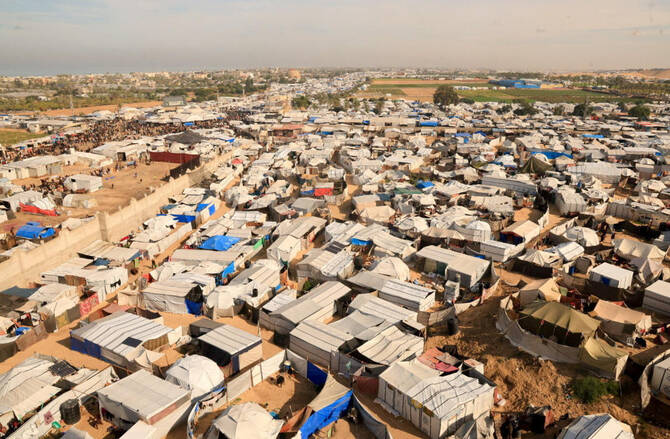

GAZA/CAIRO: Crammed into flimsy tent camps hard up against the seashore, Gazans have been flooded by heavy rain and storm surges in recent days, destroying some shelters, soaking mattresses and blankets and bringing new misery even after a ceasefire.
The Hamas-run Gaza government has estimated losses from the stormy weather at around $4.5 million, including 22,000 tents, spoiled food and medicines and damage to infrastructure, while local aid groups say 300,000 new tents are urgently needed.
Nearly all Gazans were forced from their homes during more than two years of Israel’s assault on the tiny, crowded enclave, triggered by the Hamas attack of October 7, 2023, with many now living in tents and other basic shelters.
SAVING BELONGINGS FROM THE WATER
For Abu Mohammed Al-Qarra, the rain and cold have been devastating, with water coming into his family’s tent on a beach just 20 meters (yards) from the waves, drenching their possessions and forcing them to spend a night frantically moving their things.
“There is no warmth, or anything. I have been up since five in the morning, and (now) I am at my neighbors’ place because I want to (rest) and forget the cold and the things that we are suffering from,” he said.
The Al-Qarra family ended up in the southern Gaza camp area of Al-Mawasi in the spring after an earlier truce collapsed and Israel’s military told civilians to head there, but struggled to find any remaining space to pitch their tent.
Eventually they settled on a spot close up against the sea, protected from surges by only a small sand wall maintained by the families living in that area.
“We were there in the middle of the night, moving and removing our clothes, they got wet, and our mattresses and our pillows. Everything,” he said.
The Gaza government media office head Ismail Al-Thawabta said flooding had destroyed more than 22,000 tents along with tarpaulins, mattresses and cooking equipment amounting to more than $2 million of damage. Emergency shelters also collapsed in areas, turning camps into pools of water and mud, he said.
Further expensive damage also hit water and sanitation systems including temporary water lines and sewage pits, as well as small solar installations that provide nearly all the electricity Gazans rely on.
HOSPITALS REPORT SURGING GASTRIC ILLNESS
Amjad Al-Shawa, the head of the Palestinian NGOs Network, which liaises with UN and international humanitarian agencies, said 1.5 million people in the enclave needed new tents.
“The tents that are already in Gaza have worn out, they will not protect people against the rain,” he said.
Even further inland in Gaza the rainfall has created major problems. Most people sheltering in tents have no proper toilet or sewage facilities but rely on small cesspits dug near their tents, which overflow in heavy rain.
Most people also live near unregulated garbage heaps because landfills and other facilities are inaccessible or destroyed.
Already overstretched hospitals have repeatedly warned that they are coping with surging rates of gastric illness and skin diseases due to the crowded and insanitary conditions made worse by widespread malnutrition that has weakened immune systems.
Large pools used to store rainwater before the war have filled with sewage and, with pipes and pumping systems smashed or damaged, risk overflowing into surrounding crowded areas of tents.
The United Nations deputy spokesperson, Farhan Haq, said on Tuesday that the situation in Gaza had sharply deteriorated after the rain flooded camps. He said aid teams were distributing tents, tarpaulins and other basic supplies while assessing the level of damage.


