

Israeli journalist who reported on alleged sexual abuse of prisoner faces threats, harassment

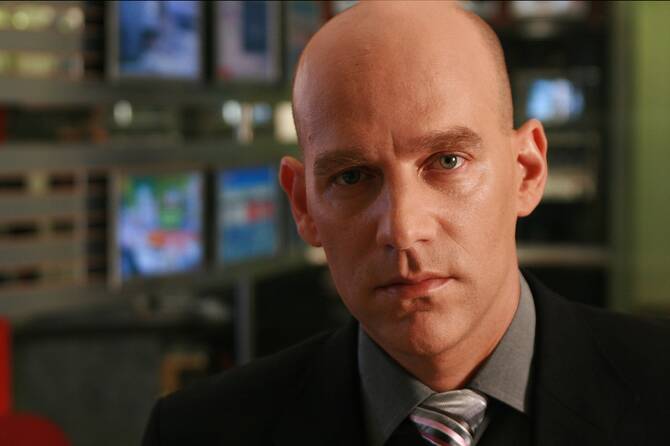
Discussing the ordeal on his 103 FM radio show, Peleg described the pressures he faces as symptomatic of “rising political extremism.” (Wikimedia Commons/File)
Short Url
Updated 18 November 2025
Follow

Israeli journalist who reported on alleged sexual abuse of prisoner faces threats, harassment

  • Since broadcast of the footage, Guy Peleg has faced sustained attacks by right-wing activists, media and politicians
  • Media watchdog Committee to Protect Journalists called the abuse ‘deploring,’ contributing to a climate of fear

LONDON: Israeli journalist Guy Peleg has faced sustained threats and harassment following his broadcast of leaked footage in 2024 that purportedly shows the sexual abuse of a Palestinian prisoner at the Sde Teiman detention center.

After airing the video — obtained from the Military Advocate General Corps — Peleg has been targeted by right-wing activists, politicians and media figures. Israeli Heritage Minister Amichay Eliyahu suggested on social media that Peleg should be jailed for distributing the footage.

Broadcast in August 2024 on an Israeli news channel, the footage showed reserve soldiers at the Sde Teiman military base in southern Israel taking aside a detainee, then surrounding him with riot shields to block visibility while he was allegedly beaten and stabbed in the rectum with a sharp object.

Prime Minister Benjamin Netanyahu dismissed the video as “cooked up” and “edited,” claiming it inflicted “unspeakable damage to the State of Israel and the Israel Defense Forces.”

The controversy has triggered a fierce debate over military accountability, culminating in the resignation of the military advocate general, Yifat Tomer-Yerushalmi.

In a statement on Monday, US-based media watchdog the Committee to Protect Journalists called the attacks against Peleg “deploring,” saying officials “should be safeguarding their (journalists) ability to report” instead of inciting retaliation and intimidation.

“The threats against Guy Peleg are unacceptable and contribute to a climate of fear around publishing critical reporting on Israel’s security establishment,” CPJ Regional Director Sara Qudah said.

On Nov. 12, right-wing activist Mordechai David, accompanied by others, confronted Peleg outside a building in Tel Aviv, taunting him and blocking access to his car.

“Why did you distribute a video about IDF soldiers? Guy Peleg, anywhere in the world you will need a police escort to get to your car so that you don’t get blocked,” David shouted, as seen in an online video.

In any earlier incident, a small group from the “Lions of the Right” demonstrated outside Peleg’s home in Herzliya, prompting police to provide him and his family with protection. Channel 12 subsequently assigned Peleg a security detail pending further notice.

According to Israeli newspaper Haaretz, David — who has a record of assaulting anti-government and pro-hostage deal demonstrators — was later questioned by police and prohibited from contacting Peleg for 15 days.

Discussing the ordeal on his 103 FM radio show, Peleg described the pressures he faces as symptomatic of “rising political extremism.” He added, “The problem is that he’s not alone (referring to David). The problem is that he is embraced by central ministers in the government.”

The incident comes amid growing concerns about press freedom in Israel, highlighted by official moves to restrict independent reporting and public criticism of the military.


BBC backs Israel’s participation in Eurovision Song Contest amid expanding boycott

Updated 06 December 2025
Follow

BBC backs Israel’s participation in Eurovision Song Contest amid expanding boycott

  • Ireland, Spain, the Netherlands and Slovenia withdraw, citing concerns about the war in Gaza, after organizers clear Israel to compete
  • Critics accuse organizers of double standards, given that Russia was banned from Eurovision in 2022 after invasion of Ukraine

LONDON: The BBC has backed the European Broadcasting Union’s decision to allow Israel to participate in the 2026 Eurovision Song Contest, despite mounting opposition and an expanding boycott by European countries and public broadcasters.

National broadcasters in Ireland, Spain, the Netherlands and Slovenia have formally withdrawn from next year’s event, citing what they described as Israel’s violations of international law during its ongoing war on Gaza, which has killed more than 70,000 people, left much of the territory in ruins and prompted accusations of war crimes.

The BBC, however, said it backed the decision to allow Israel to take part in the contest.

“We support the collective decision made by members of the EBU,” a BBC spokesperson said. “This is about enforcing the rules of the EBU and being inclusive.”

Israel’s participation in the 2026 event, set to take place in the Austrian capital Vienna in May, was confirmed during the EBU’s general assembly in Geneva on Thursday. 

However, pressure continued to build in opposition to the decision, with broadcasters from four countries pulling out and critics accusing organizers of double standards, given that Russia was banned from Eurovision in 2022 after the invasion of Ukraine.

Following the EBU decision, Irish public broadcaster RTE said it would neither participate in nor screen the contest. It said Ireland’s participation “remains unconscionable given the appalling loss of lives in Gaza and the humanitarian crisis there.” It also condemned the killing of journalists in Gaza and the denial of access to the international media. More than 200 Palestinian journalists have reportedly been killed since the start of the war.

Slovenian broadcaster RTV said it was withdrawing from the competition “on behalf of the 20,000 children who died in Gaza.” Chairperson Natalija Gorscak said the decision reflected growing public demand to uphold European values of peace and press freedoms, noting that the international media are still banned from Gaza.

She added that Israel’s 2025 Eurovision performance had been overtly political, and contrasted the decision about Israel with the ban on Russia’s participation following the invasion of Ukraine.

Dutch broadcaster AVROTROS also withdrew from the contest, describing the decision of the EBU as “incompatible with the public values that are essential to us.”

CEO Taco Zimmerman said: “Culture unites, but not at all costs. What happened last year touches our boundaries … Universal values like humanity and a free press have been seriously violated.”

The EBU did not hold a vote on Israel’s participation in the contest. Instead, member broadcasters voted in favor of new rules for contest voting to prevent governments or other groups from unfairly promoting songs to manipulate the result.

Austria, which is set to host the competition after Viennese singer JJ won this year with “Wasted Love,” supports Israel’s participation. Germany, too, was said to back Israel.