Egypt targets 5 million tonnes of local wheat next year

A farmer tends wheat at a field in Giza, Egypt. (Reuters/File)
Short Url
Updated 16 November 2025
Follow

Egypt targets 5 million tonnes of local wheat next year

  • Egypt typically imports about 10 million tonnes a year, with the state buyer obtaining roughly half of that for the country’s bread subsidy program on which 70 million people rely

CAIRO: Egypt has targeted procurement of 5 million tonnes of local wheat next season as it moves away from being one of the world’s top wheat importers to self-sufficiency, the Supply Ministry said on Sunday.

Egypt typically imports about 10 million tonnes a year, with the state buyer obtaining roughly half of that for the country’s bread subsidy program on which 70 million people rely.

In the first half of this year, however, imports were a quarter less than the same period last year, according to shipping and trading data reviewed by Reuters. The government’s share of those imports dropped by more than half to about 1.6 million tonnes, reflecting slower procurement since the state buyer changed from the General Authority for Supply Commodities to the Future of Egypt for Sustainable Development. The ministry said that it procured more than 4 million tonnes of wheat during the domestic harvest.

Reserves of strategic commodities are within safe buffers and as high as last year or higher in some commodities, the Supply Ministry added without providing more data.

In November 2024, Egypt’s wheat stocks covered five months of consumption, below the six-month threshold Egypt hopes to maintain. 

Last week Reuters reported that the Future of Egypt, which took over purchasing in December, had ditched the formal tenders of GASC in favor of informal negotiations, spurring mounting trade tensions and a drop in Egypt’s wheat imports.

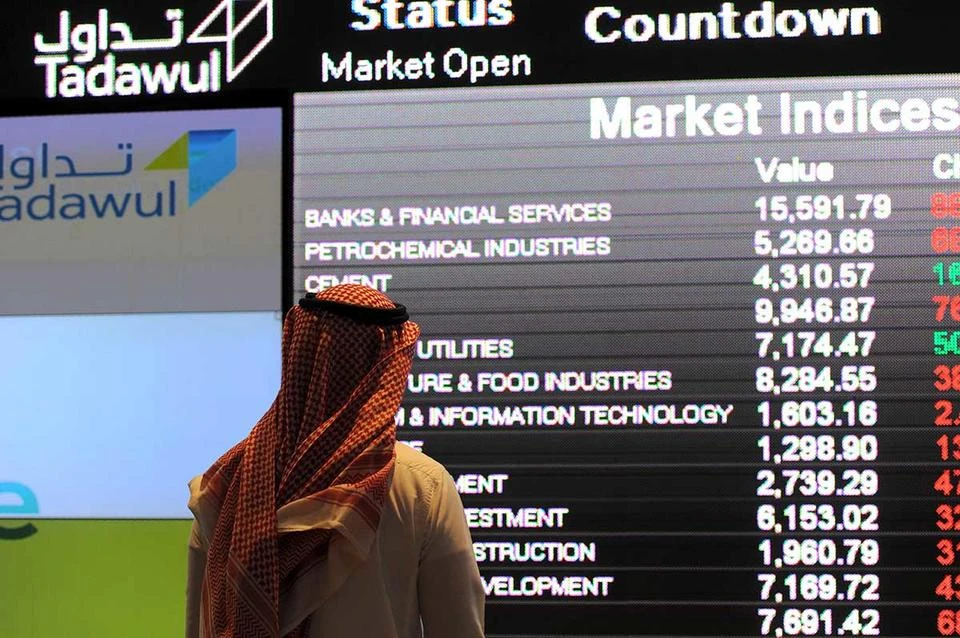
Saudi POS transactions see 20% surge to hit $4bn: SAMA

Updated 05 December 2025
Follow

Saudi POS transactions see 20% surge to hit $4bn: SAMA

RIYADH: Saudi Arabia’s total point-of-sale transactions surged by 20.4 percent in the week ending Nov. 29, to reach SR15.1 billion ($4 billion).

According to the latest data from the Saudi Central Bank, the number of POS transactions represented a 9.1 percent week-on-week increase to 240.25 million compared to 220.15 million the week before.

Most categories saw positive change across the period, with spending on laundry services registering the biggest uptick at 36 percent to SR65.1 million. Recreation followed, with a 35.3 percent increase to SR255.99 million. 

Expenditure on apparel and clothing saw an increase of 34.6 percent, followed by a 27.8 percent increase in spending on telecommunication. Jewelry outlays rose 5.6 percent to SR354.45 million.

Data revealed decreases across only three sectors, led by education, which saw the largest dip at 40.4 percent to reach SR62.26 million. 

Spending on airlines in Saudi Arabia fell by 25.2 percent, coinciding with major global flight disruptions. This followed an urgent Airbus recall of 6,000 A320-family aircraft after solar radiation was linked to potential flight-control data corruption. Saudi carriers moved swiftly to implement the mandatory fixes.

Flyadeal completed all updates and rebooked affected passengers, while flynas updated 20 aircraft with no schedule impact. Their rapid response contained the disruption, allowing operations to return to normal quickly.

Expenditure on food and beverages saw a 28.4 percent increase to SR2.31 billion, claiming the largest share of the POS. Spending on restaurants and cafes followed with an uptick of 22.3 percent to SR1.90 billion.

The Kingdom’s key urban centers mirrored the national decline. Riyadh, which accounted for the largest share of total POS spending, saw a 14.1 percent surge to SR5.08 billion, up from SR4.46 billion the previous week. The number of transactions in the capital reached 75.2 million, up 4.4 percent week-on-week.

In Jeddah, transaction values increased by 18.1 percent to SR2.03 billion, while Dammam reported a 14 percent surge to SR708.08 million.

POS data, tracked weekly by SAMA, provides an indicator of consumer spending trends and the ongoing growth of digital payments in Saudi Arabia. 

The data also highlights the expanding reach of POS infrastructure, extending beyond major retail hubs to smaller cities and service sectors, supporting broader digital inclusion initiatives. 

The growth of digital payment technologies aligns with the Kingdom’s Vision 2030 objectives, promoting electronic transactions and contributing to the nation’s broader digital economy.