

Saudi Arabia’s Yemen reconstruction program signs power deal, expands key infrastructure

Short Url
Updated 13 November 2025
Follow

Saudi Arabia’s Yemen reconstruction program signs power deal, expands key infrastructure

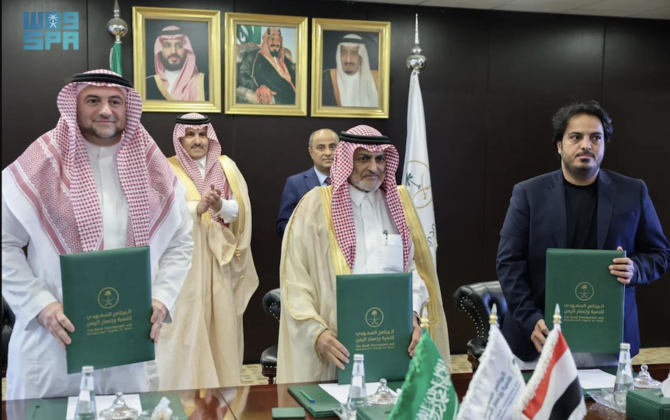
RIYADH: The Saudi Development and Reconstruction Program for Yemen on Thursday signed a memorandum of understanding with Yemen’s Ministry of Electricity and Energy and Gulf International Electric Power Co. to launch new power generation projects across several Yemeni governorates.

The signing ceremony, attended by Yemeni Prime Minister Salem Saleh bin Braik and Saudi Ambassador to Yemen Mohammed bin Saeed Al-Jaber, outlines cooperation to implement strategic power plants in Aden, Mukalla, Seiyun, and Taiz, with an initial production capacity of 300 megawatts, the Saudi Press Agency reported.

The memorandum includes provisions for training, sustainability, and implementation according to quality standards and timelines, aiming to improve electricity infrastructure, boost service delivery, and support economic reforms, SPA added.

The SDRPY has already contributed to expanding Yemen’s electricity production capacity and promoting renewable energy.

More than 12 million people have benefited from the program’s projects and initiatives, including the Saudi oil derivatives grant that powered 80 generation stations across Yemeni governorates.

To date, the program has implemented 265 projects across eight vital sectors including education, health, water, energy, transportation, and agriculture.

In a related development, SDRPY also announced the completion of the second phase of Al-Abir Road expansion and rehabilitation project in Hadramawt, extending 40 km from Al-Dhuwaibi to Ghuwairban.
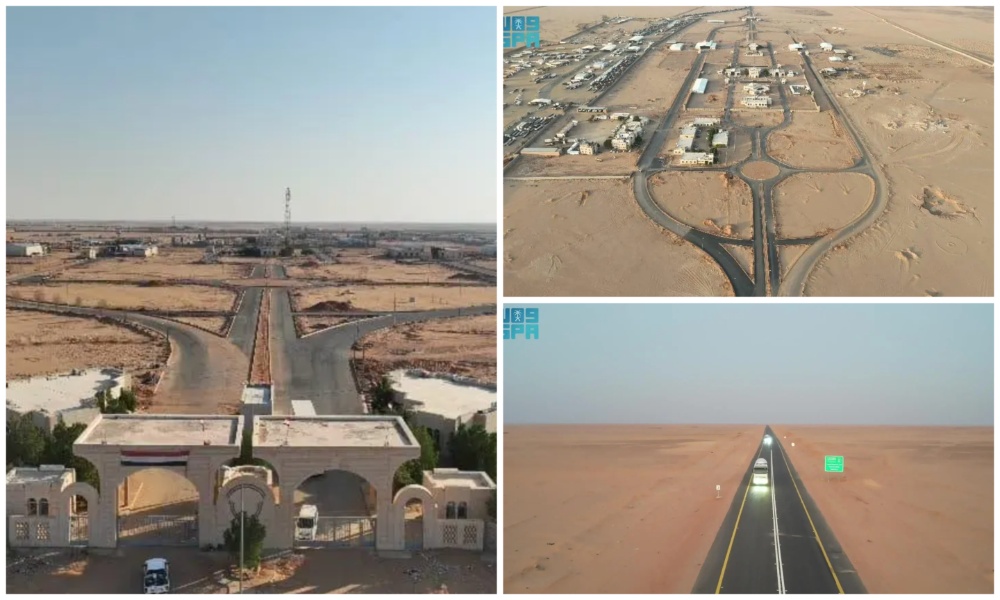


In a related development, SDRPY also announced the completion of the second phase of Al-Abir Road expansion and rehabilitation project in Hadramawt, extending 40 km from Al-Dhuwaibi to Ghuwairban. (SPA)

The first phase, spanning 50 km, was completed in May 2024, bringing the total completed length to 91 km.

Al-Abir Road serves as a critical transport corridor linking the governorates of Ma’rib, Hadramawt, and Shabwa, while connecting Yemen with Saudi Arabia and facilitating the movement of people and goods.

SDRPY is also nearing completion of the rehabilitation of Al-Wadi’ah border crossing, one of Yemen’s most important land entry points.

The project includes new and upgraded infrastructure, improved roads and plazas, enhanced power and water sources, and advanced monitoring systems to strengthen trade and travel between the two countries.


Rebuilding lives: Saudi initiative gives fresh hope to amputees

Updated 08 December 2025
Follow

Rebuilding lives: Saudi initiative gives fresh hope to amputees

  • Baitureh Health Association has provided life-changing support to more than 1,000 people
  • Prosthetic limbs can cost up to $76,000

MAKKAH: The Baitureh Health Association for the Care of Amputees has quickly become one of Saudi Arabia’s most impactful humanitarian initiatives, transforming support for people with lost limbs.

Established in 2020, the association deals with people’s physical, psychological and social needs and fills a long-standing gap in the national health system.

CEO Badr bin Alyan told Arab News that the initiative was created in response to a growing need, driven by amputations linked to accidents, blood disorders, occupational injuries and other causes.

Its operations were “based on service integration rather than fragmentation, enabling beneficiaries to return to their lives with confidence, ability and independence,” he said.

This holistic process covers everything from initial evaluations to psychological and physical rehabilitation, family support, prosthetic fitting and ongoing maintenance.

Its psychological support programs include group sessions led by certified mentors who have undergone similar experiences, as well as field visits to support patients before and after amputation.

More than 1,000 people across the Kingdom have so far benefitted from the association’s work, about 10 percent of them children, whom Alyan said were “the most sensitive and the most in need of intensive psychological and family support.”

Its specialist programs for children — My First Step and Therapeutic Entertainment — help young people adapt to prosthetics, overcome trauma and build confidence in a safe and supportive setting.

The association has completed more than 300 prosthetic fittings, including silicone cosmetic limbs, mechanical, hydraulic, electronic and 3D-printed models. 

Alyan said the type of prosthetic selected depended on a number of factors, such as age, lifestyle, type of amputation, activity level and psychological readiness.

Children also have to undergo frequent adjustments to their new limbs to account for their growth.

Each prosthetic cost between SR20,000 ($5,300) and SR285,000, Alyan said.

The association funds its work through sponsorships, community contributions and strategic partnerships.

Despite its success, Alyan said there were still challenges to be faced, including the lack of a consolidated base for the provision of psychological support and therapy services and prosthetics development and maintenance.

There was also a shortage of local experts, he said.

In response, the association set up a rehabilitation center, which Alyan said would help to localize prosthetics manufacturing, reduce costs and accelerate fitting processes and create opportunities for local experts to develop their knowledge and experience.

But providing prosthetics was only part of the association’s work, he said.

“Rebuilding a human life is the deeper goal.”