The RSF started moving on Kordofan at the same time as it took Al-Fashir late last month
According to Amy Pope, head of IOM, up to 50,000 people have been displaced from Kordofan
KHARTOUM: The paramilitary force battling the army in Sudan’s civil war is shifting its focus eastward after consolidating its grip over Darfur last month, reigniting violence and launching drone attacks across the country’s oil-producing southern areas.
Escalating drone strikes and new deployments of troops and weapons by the paramilitary Rapid Support Forces and the army suggest both sides are now centring their efforts on Kordofan, a region comprised of three states that serves as a buffer between the RSF’s western Darfur strongholds and the army-held states in the east.
The RSF accepted a ceasefire proposal by the United States last week after an international outcry over accounts that it had killed large groups of civilians as it overran Al-Fashir, the army’s last significant holdout in Darfur.
The army has not agreed to the ceasefire, which could provide a window for more deliveries of desperately needed humanitarian aid after 2-1/2 years of conflict, and fighting has not abated.
WITNESS ACCOUNTS OF REVENGE ATTACKS
The RSF started moving on Kordofan at the same time as it took Al-Fashir late last month, seizing the town of Bara in North Kordofan state, a crucial strategic link between Darfur and central Sudan. The army had recaptured the town just two months earlier.
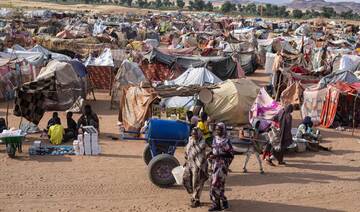
According to Amy Pope, head of the International Organization for Migration, up to 50,000 people have been displaced from Kordofan since then.
Echoing reports from Al-Fashir, where tens of thousands were also displaced but many more are unaccounted for, survivors from Bara, who gave only their first names for fear of retribution against their families, described revenge attacks and summary executions against those accused of supporting the army.
“They said you celebrated with the army ... we have to kill you,” said one escapee, Khalil, speaking to Reuters with his arm in a sling in army-controlled Omdurman, part of Sudan’s capital. He said he had sat in a row with eight other men, two of whom were killed, as an RSF soldier fired on them.
Another man, Ismail, described hiding inside a house as men were shot in the street, until he was able to pay a fighter to escort him and his family out of the city.
A third man, Mohamed, said that when RSF troops arrived at his house he could hear his father fighting back and being fatally shot outside the door. Bands of RSF fighters entered the house, beat him and others, and demanded money and gold, he said. He left the city on foot, hiding from fighters and vehicles. Emergency Lawyers, a Sudanese activist group, said hundreds were killed in Bara.
Reuters could not independently verify the accounts of the violence.
Asked for comment, the RSF said the army had blocked every attempt for peace. “Any place where the army is present is a legitimate target and we will attack in any area in Kordofan, Khartoum, or Port Sudan,” an RSF leader said.
The RSF did not address a request for comment on the accounts of killings in Bara. The RSF says reports of widespread abuses in Al-Fashir and elsewhere are exaggerated and that it is investigating any that may have happened.
SIGNS OF A MILITARY BUILD-UP
Fighting may now turn to North Kordofan’s capital, El Obeid, one of Sudan’s largest cities. Two eyewitnesses told Reuters they saw the army and allied forces amassing troops and equipment in the city earlier this week, while the RSF was deployed to the east.
The town of Babanusa in West Kordofan state, home to a major army base, is also surrounded by RSF soldiers, residents told Reuters. Civilians mostly fled the city during earlier fighting.
In South Kordofan, the RSF and allied fighters in the SPLM-N armed group are surrounding the army in the cities of Kadugli and nearby Al-Dalanj and fighting has escalated, according to an SPLM-N source.
A global hunger monitor assessed last week that Kadugli was experiencing famine as of September, and that Al-Dalanj was likely also in famine, mirroring the impact of the siege on Al-Fashir.
Witnesses and sources have reported signs of a broader military build-up. An army source and a source close to the SPLM-N said the armed group had received new weapons via South Sudan.
A witness in the army’s wartime capital of Port Sudan, on the Red Sea coast, reported an increase in cargo plane arrivals. Two army sources said the planes carried military cargo. Reuters could not independently verify the claims.
The war, which erupted out of a power struggle, has caused ethnically-charged bloodletting, widespread destruction and mass displacement, drawing in foreign powers and threatening to split Sudan. Both sides have increasingly relied on drone strikes in recent months, leading to heavy civilian casualties.
On November 3, a drone attack in Sheikan locality in North Kordofan killed 49 people, including women and children, Emergency Lawyers said, without naming who was behind the attack.
“Developments on the ground indicate clear preparations for intensified hostilities, with everything that implies for its long-suffering people,” UN human rights chief Volker Turk said on Friday.


![]()

Paramilitary force pushes east in new escalation of Sudan’s war

Short Url
https://arab.news/8sh2y
Paramilitary force pushes east in new escalation of Sudan’s war
- The RSF started moving on Kordofan at the same time as it took Al-Fashir late last month
- According to Amy Pope, head of IOM, up to 50,000 people have been displaced from Kordofan

Latest updates


© 2026 SAUDI RESEARCH & PUBLISHING COMPANY, All Rights Reserved And subject to Terms of Use Agreement.