

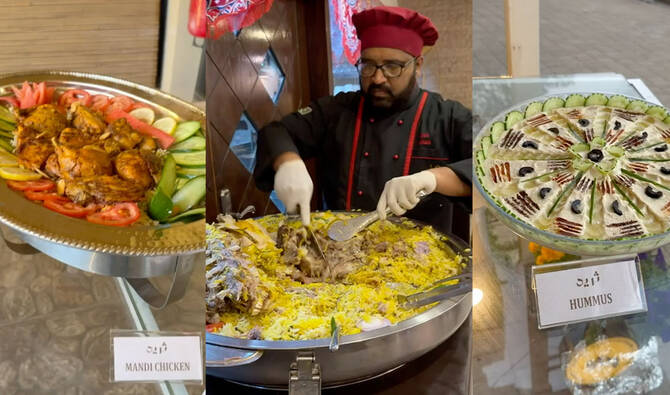

ISLAMABAD: The aroma of slow-cooked rice and roasted chicken filled the air at Bait Al Arab Mandi restaurant in Islamabad, where waiters carried steaming platters of mandi, a traditional Middle Eastern rice and meat dish, to diners gathered to break their Ramadan fast.
Scenes like this have become common at several restaurants in Pakistan’s capital, where Middle Eastern cuisine has been steadily gaining popularity among residents looking for new iftar options during the holy month.
Islamabad, home to foreign diplomats, international organizations and expatriates, has long offered a wide range of global cuisines, from Thai and Italian to Japanese and Korean. In recent years, however, restaurants serving Middle Eastern dishes, particularly Yemeni, Lebanese and Syrian specialties, have attracted a growing local clientele.
Restaurant operators say most customers are Pakistanis, reflecting an increasing interest in the flavors of the Middle East.
“It has mild spices and barbecue is very nice,” Muhammad Zeeshan, a regular customer at Bait Al Arab Mandi, said about Middle Eastern food.
Zeeshan travels from Wah Cantt, a city in Punjab province about 35 kilometers (22 miles) northwest of Islamabad, to dine at the restaurant two or three times a month.
For Khurram Shahzad, dishes such as mandi have become a favorite way to break the Ramadan fast.
“Their meat dish mandi is very rich in nutrition and less spicy, so a good option to break my fast with,” he told Arab News.
Across Islamabad, several restaurants now feature Middle Eastern dishes on their Ramadan menus, with mandi, grilled meats and Levantine specialties becoming popular choices for iftar gatherings.
Ali Haider, manager of Bait Al Arab Mandi, said Islamabad’s evolving food scene and customers’ curiosity about new cuisines have helped drive demand.
“That is new cuisine, and we are offering cuisine that is authentic Arabic cuisine,” Haider said.
A few kilometers away, another restaurant, Thareed, also serves Arabic and Mediterranean dishes.
Its Ramadan iftar buffet includes lamb mandi, grilled meats and fresh juices for around Rs3,500 ($12) per person, drawing families and groups of friends during the evening rush.
Some diners say the growing interest in Middle Eastern cuisine is partly due to its similarities with traditional food in Pakistan’s western regions.
“The Middle Eastern food is very similar to the cuisine that we have in the northern parts of Pakistan,” Bayazid Kasi, a customer at Thareed, told Arab News.
“If you talk about the province of KP [Khyber Pakhtunkhwa] or Balochistan, our food is very similar because we use very less spices.
“Plus, it’s all meat,” he added.
Others say they are drawn to the perceived health benefits of the cuisine.
Dr. Syed Masroor Ali, who worked as a physician in London for 50 years, said he regularly visits the Arz Lebanon restaurant in Islamabad for Lebanese dishes.
“Whenever I am in Pakistan in Ramadan, I visit this (Lebanese) restaurant almost every other day because they bake really healthy food,” he said, describing the cuisine as “amazing, heathy and tasty.”


