Early release granted to Bosnian Croat war criminal

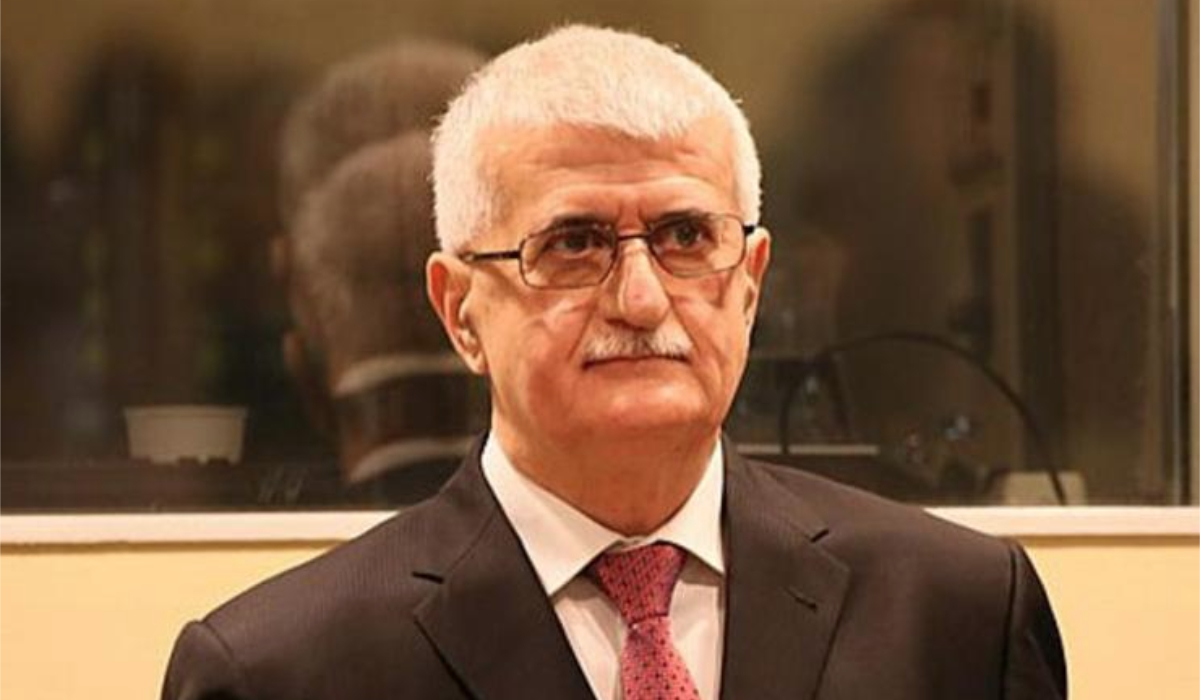
Bruno Stojic. (Supplied)
Short Url
Updated 10 November 2025
Follow

Early release granted to Bosnian Croat war criminal

  • “The gravity of Stojic’s crimes is high and weighs against granting early release. However, there are a number of positive factors that weigh in favor of early release,” she noted

THE HAGUE: A United Nations court on Monday granted early release to a former Bosnian Croat defense minister convicted of war crimes, including murdering and deporting Muslims in Bosnia in the early 1990s.
The International Residual Mechanism for Criminal Tribunals, based in The Hague, ordered Bruno Stojic released from detention in Austria to return to Croatia.
The 70-year-old had behaved well in prison, admitted the gravity of his crimes and was unlikely to reoffend, said presiding judge Graciela Gatti Santana in her decision.
“The gravity of Stojic’s crimes is high and weighs against granting early release. However, there are a number of positive factors that weigh in favor of early release,” she noted.
She cited “acceptance of personal responsibility for the crimes,” “expression of regret for the consequences” of his actions, “very good behavior in prison” and “good prospects of successful reintegration.”

Stojic was sentenced to 20 years in jail in 2013 along with former Bosnian Croat President Jadranko Prlic and four others.
He had already surrendered to the International Criminal Tribunal for the former Yugoslavia in April 2004. His sentence was due to expire in September 2027.
In 2013, when convicting Stojic and the others, judge Jean-Claude Antonetti said they had aimed to establish reunification with Croatia.
To achieve that, they wanted to “modify the ethnic composition” of the land claimed by Bosnian Croats.
This, Antonetti said, they achieved by force, intimidation and terror “by conducting mass arrests of Bosnian Muslims who were then either murdered, beaten, sexually assaulted, robbed of their property and otherwise abused.”
The bloody 1992-1995 war in Bosnia mainly pitted Bosnian Muslims against Bosnian Serbs, but for a period also saw vicious fighting between Bosnian Muslims and Bosnian Croats. Some 100,000 people lost their lives in the conflict.
In 1992, the Bosnian Croats established a Croatian entity, known as the HVO, which was both an army and a government. In August 1993, they proclaimed the Croatian “state” of Herceg-Bosna in Bosnia.
Stojic was encouraged to “continue, even following his early release, to reflect on his conduct and responsibility and to consider concrete steps he could take to facilitate reconciliation,” according to the court statement.

Italian PM pledges to deepen cooperation with African states

Updated 14 February 2026
Follow

Italian PM pledges to deepen cooperation with African states

  • The plan, launched in 2024, aims to promote investment-led cooperation rather than traditional aid

ADDIS ABABA: Italy pledged to deepen cooperation with African countries at its second Italy-Africa summit, the first held on African soil, to review projects launched in critical sectors such as energy and infrastructure during Italy’s first phase of the Mattei Plan for Africa.

The plan, launched in 2024, aims to promote investment-led cooperation rather than traditional aid.

Italy’s Prime Minister Giorgia Meloni addressed dozens of African heads of state and governments in Ethiopia’s capital, Addis Ababa, and reiterated that a successful partnership would depend on Italy’s “ability to draw from African wisdom” and ensure lessons are learned.

“We want to build things together,” she told African heads of state.  “We want to be more consistent with the needs of the countries involved.”

Ethiopian Prime Minister Abiy Ahmed said Italy had provided Africa with a gateway to Europe through these partnerships.

“This is a moment to move from dialogue to action,” he said. 

“By combining Africa’s energetic and creative population with Europe’s experience, technology, and capital, we can build solutions that deliver prosperity to our continents and beyond.”

After the Italy-Africa summit concluded, African leaders remained in Addis Ababa for the annual African Union Summit.

Kenyan writer and political analyst Nanjala Nyabola said tangible results from such summits depend on preparations made by countries.

African governments often focus on “optics instead of actually making summits a meaningful engagement,” she said.

Instead of waiting for a list of demands, countries should “present the conclusions of an extended period of mapping the national needs” and engage in dialogue to determine how those needs can be met.

Since it was launched two years ago, the Mattei Plan has directly involved 14 African nations and has launched or advanced around 100 projects in crucial sectors, including energy and climate transition, agriculture and food security, physical and digital infrastructure, healthcare, water, culture and education, training, and the development of artificial intelligence, according to the Italian government.