WASHINGTON: Senators are working through the weekend for the first time since the government shutdown began more than a month ago, hoping to find a bipartisan resolution that has eluded them as federal workers have gone unpaid, airlines have been forced to cancel flights and SNAP benefits have been delayed for millions of Americans.
As Saturday’s session got underway, it was uncertain whether Republicans and Democrats could make any headway toward reopening the government and breaking a partisan impasse that has now lasted 39 days.
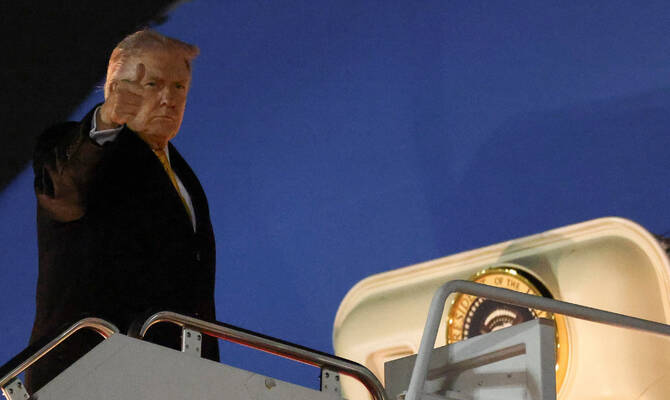
President Donald Trump made clear he is unlikely to compromise any time soon with Democrats who are demanding an extension of Affordable Care Act tax credits, posting on social media that it is “the worst Healthcare anywhere in the world.” He suggested Congress send money directly to people to buy insurance.
Senate Majority Leader John Thune, R-S.D., said Trump’s proposal would not be part of a solution to ending the shutdown, but added “it is a discussion that the president and all of us want to have.” Thune said he planned to keep the Senate in session until the shutdown has ended and that “ideally, it would be great to set it up so we could vote today.”
Senate Republican leaders have signaled an openness to an emerging proposal from a small group of moderate Democrats to end the shutdown in exchange for a later vote on the “Obamacare” subsidies.
Sen. Jeanne Shaheen, D-N.H., who is leading the talks among moderates, said Friday evening that Democrats “need another path forward” after Republicans rejected an offer from Democratic leader Chuck Schumer of New York to reopen the government and extend the subsidies for a year. “We’re working on it,” she said.
Moderates continue to negotiate
Shaheen and others, negotiating among themselves and with some rank-and-file Republicans, have been discussing bills that would pay for parts of government — food aid, veterans programs and the legislative branch, among other things — and extend funding for everything else until December or January. The agreement would only come with the promise of a future health care vote, rather than a guarantee of extended subsidies.
It was unclear whether enough Democrats would support such a plan. Even with a deal, Trump appears unlikely to support an extension of the health benefits. House Speaker Mike Johnson, R-Louisiana, also said this week that he would not commit to a health vote.
Republican leaders only need five additional votes to fund the government, and the group involved in the talks has ranged from 10 to 12 Democratic senators.
Some Republicans have said they are open to extending the COVID-19-era tax credits as premiums could skyrocket for millions of people, but they want new limits on who can receive the subsidies. They lined up Saturday to take to the Senate floor and argue that subsidies for the plans should be routed through individuals.
“We’re going to replace this broken system with something that is actually better for the consumer,” said Sen. Lindsey Graham, R-S.C.
Republicans eye new package of bills
Trump wants Republicans to end the shutdown quickly and scrap the filibuster, which requires 60 Senate votes for most legislation, so they can bypass Democrats altogether. Vice President JD Vance, a former Ohio senator, endorsed the idea in an online post Saturday, saying Republicans who want to keep the filibuster are “wrong.”
Republicans have rejected Trump’s call, and Thune is eyeing a bipartisan package that mirrors the proposal the moderate Democrats have been sketching out. What Thune, who has refused to negotiate, might promise on health care is unknown.
The package would replace the House-passed legislation that the Democrats have rejected 14 times since the shutdown began Oct. 1. The current bill would only extend government funding until Nov. 21, though senators indicated their version would likely go through January.
A choice for Democrats
A test vote on new legislation could come in the next few days if Thune decides to move forward.
Then Democrats would have a crucial choice: Keep fighting for a meaningful deal on extending the subsidies that expire in January, while prolonging the pain of the shutdown? Or vote to reopen the government and hope for the best as Republicans promise an eventual health care vote, but not a guaranteed outcome.
Schumer on Saturday persisted in arguing that Republicans should accept a one-year extension of the subsidies before negotiating the future of the tax credits.
“Doing nothing is derelict because people will go bankrupt, people will lose insurance, people will get sicker,” Schumer said in a floor speech. “That’s what will happen if this Congress fails to act.”
Earlier, Vermont Sen. Bernie Sanders, an independent who caucuses with the Democrats, said they need to stand strong after overwhelming Democratic victories on Election Day.

Trump signals no shutdown compromise with Democrats as senators hold a rare weekend session
Short Url
https://arab.news/c8wpz
Trump signals no shutdown compromise with Democrats as senators hold a rare weekend session
- Senate Republican leaders have signaled an openness to an emerging proposal from a small group of moderate Democrats to end the shutdown in exchange for a later vote on the “Obamacare” subsidies
Journalists in Bangladesh demand protection amid rising attacks
- Media industry in the South Asian country is being systematically targeted
- Interim government blamed for failing to adequately respond to the incidents
DHAKA: Journalists, editors and owners of media outlets in Bangladesh on Saturday demanded that authorities protect them following recent attacks on two leading national dailies by mobs.
They said the media industry in the South Asian country is being systematically targeted in the interim government headed by Nobel Peace Prize laureate Muhammad Yunus. They said the administration failed to prevent attacks on the Daily Star, the country’s leading English-language daily, and the Prothom Alo, the largest Bengali-language newspaper, both based in Dhaka, the capital.
In December, angry mobs stormed the offices of the two newspapers and set fire to the buildings, trapping journalists and other staff inside, shortly after the death of a prominent Islamist activist.
The newspaper authorities blamed the authorities under the interim government for failing to adequately respond to the incidents despite repeated requests for help to disperse the mobs. Hours later, the trapped journalists who took shelter on the roof of the Daily Star newspaper were rescued. The buildings were looted. A leader of the Editors Council, an independent body of newspaper editors, was manhandled by the attackers when he arrived at the scene.
On the same day, liberal cultural centers were also attacked in Dhaka.
It was not clear why the protesters attacked the newspapers, whose editors are known to be closely connected with Yunus. Protests had been organized in recent months outside the offices of the dailies by Islamists who accused the newspapers of links with India.
On Saturday, the Editors Council and the Newspapers Owners Association of Bangladesh jointly organized a conference where editors, journalist union leaders and journalists from across the country demanded that the authorities uphold the free press amid rising tensions ahead of elections in February.
Nurul Kabir, President of the Editors Council, said attempts to silence media and democratic institutions reflect a dangerous pattern.
Kabir, also the editor of the English-language New Age daily, said unity among journalists should be upheld to fight such a trend.
“Those who want to suppress institutions that act as vehicles of democratic aspirations are doing so through laws, force and intimidation,” he said.
After the attacks on the two dailies in December, an expert of the United Nations said that mob attacks on leading media outlets and cultural centers in Bangladesh were deeply alarming and must be investigated promptly and effectively.
“The weaponization of public anger against journalists and artists is dangerous at any time, and especially now as the country prepares for elections. It could have a chilling effect on media freedom, minority voices and dissenting views with serious consequences for democracy,” Irene Khan said in a statement.
Yunus came to power after former Prime Minister Sheikh Hasina fled the country amid a mass uprising in August, 2024. Yunus had promised stability in the country, but global human rights groups including Human Rights Watch and Amnesty International have blamed the government for its failure to uphold human and other civil rights. The Yunus-led regime has also been blamed for the rise of the radicals and Islamists.
Dozens of journalists are facing murder charges linked to the uprising on the grounds that they encouraged the government of Hasina to use lethal weapons against the protesters. Several journalists who are known to have close links with Hasina have been arrested and jailed under Yunus.
They said the media industry in the South Asian country is being systematically targeted in the interim government headed by Nobel Peace Prize laureate Muhammad Yunus. They said the administration failed to prevent attacks on the Daily Star, the country’s leading English-language daily, and the Prothom Alo, the largest Bengali-language newspaper, both based in Dhaka, the capital.
In December, angry mobs stormed the offices of the two newspapers and set fire to the buildings, trapping journalists and other staff inside, shortly after the death of a prominent Islamist activist.
The newspaper authorities blamed the authorities under the interim government for failing to adequately respond to the incidents despite repeated requests for help to disperse the mobs. Hours later, the trapped journalists who took shelter on the roof of the Daily Star newspaper were rescued. The buildings were looted. A leader of the Editors Council, an independent body of newspaper editors, was manhandled by the attackers when he arrived at the scene.
On the same day, liberal cultural centers were also attacked in Dhaka.
It was not clear why the protesters attacked the newspapers, whose editors are known to be closely connected with Yunus. Protests had been organized in recent months outside the offices of the dailies by Islamists who accused the newspapers of links with India.
On Saturday, the Editors Council and the Newspapers Owners Association of Bangladesh jointly organized a conference where editors, journalist union leaders and journalists from across the country demanded that the authorities uphold the free press amid rising tensions ahead of elections in February.
Nurul Kabir, President of the Editors Council, said attempts to silence media and democratic institutions reflect a dangerous pattern.
Kabir, also the editor of the English-language New Age daily, said unity among journalists should be upheld to fight such a trend.
“Those who want to suppress institutions that act as vehicles of democratic aspirations are doing so through laws, force and intimidation,” he said.
After the attacks on the two dailies in December, an expert of the United Nations said that mob attacks on leading media outlets and cultural centers in Bangladesh were deeply alarming and must be investigated promptly and effectively.
“The weaponization of public anger against journalists and artists is dangerous at any time, and especially now as the country prepares for elections. It could have a chilling effect on media freedom, minority voices and dissenting views with serious consequences for democracy,” Irene Khan said in a statement.
Yunus came to power after former Prime Minister Sheikh Hasina fled the country amid a mass uprising in August, 2024. Yunus had promised stability in the country, but global human rights groups including Human Rights Watch and Amnesty International have blamed the government for its failure to uphold human and other civil rights. The Yunus-led regime has also been blamed for the rise of the radicals and Islamists.
Dozens of journalists are facing murder charges linked to the uprising on the grounds that they encouraged the government of Hasina to use lethal weapons against the protesters. Several journalists who are known to have close links with Hasina have been arrested and jailed under Yunus.
© 2026 SAUDI RESEARCH & PUBLISHING COMPANY, All Rights Reserved And subject to Terms of Use Agreement.


