SAMARKAND: UNESCO on Thursday elected Egyptian Khaled el-Enany as its new chief, with the ex-minister tasked with steering the UN cultural agency through the political and financial consequences of US President Donald Trump’s withdrawal from the organization.
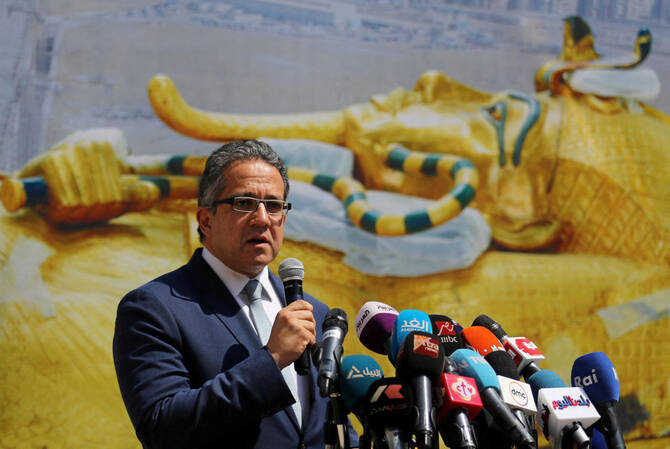
Enany, 54, an Egyptologist who served as Egypt’s culture and antiquities minister from 2016 until 2022, was overwhelmingly chosen by member states to take over from France’s Audrey Azoulay as director general at the UNESCO general conference in the Uzbek city of Samarkand.
He will take office on November 15 becoming the first representative of an Arab state and second from Africa to lead the organization, which oversees the coveted world heritage list.
His election marked a diplomatic victory for Egypt under President Abdel Fattah El-Sisi, which wants to extend its international influence, despite criticism of its rights record. The country hosted the signing of a Gaza ceasefire agreement in October.
But Enany faces an immediate challenge after Trump’s move, effective in December 2026, to pull the United States out of UNESCO, on the alleged grounds that it is biased against Israel and promotes “divisive” causes.
Trump had already ordered a withdrawal in 2017 during his first term. President Joe Biden reestablished US membership.
Israel also walked out of the body in 2017 and in May, Nicaragua left after UNESCO presented a press freedom award to an opposition newspaper.
The US pullout harms UNESCO’s prestige and depletes its finances as it accouts for eight percent of the total budget. European countries are unwilling to stump up more funds at a time of increased pressure for defense spending.
After his election, Enany said he wanted a “strong and united UNESCO, a non-politicized organization that chooses consensus over divisions” and also vowed to make the budget “a priority.”
Seeking to emphasize that its remit covers more than heritage, UNESCO is looking to advance in areas ranging from expanding access to education to embracing the healthy use of artificial intelligence.
Making up the funding gap could see greater use of the private sector, whose contributions represented only eight percent of the budget in 2024.
While praised by insiders as a hugely experienced professional capable of forging consensus, there has been controversy over the damage to Cairo’s historic City of the Dead necropolis during urban development in 2020 while Enany was minister.


![]()

Egyptian takes reins at UN cultural agency rocked by Trump pullout
Short Url
https://arab.news/neqn8
Egyptian takes reins at UN cultural agency rocked by Trump pullout
- Enany was overwhelmingly chosen by member states to take over from France’s Audrey Azoulay
- He will take office on November 15 becoming the first representative of an Arab state


Latest updates


Recommended


© 2026 SAUDI RESEARCH & PUBLISHING COMPANY, All Rights Reserved And subject to Terms of Use Agreement.