Former Iraq PM Al-Maliki could heavily influence election despite troubled past

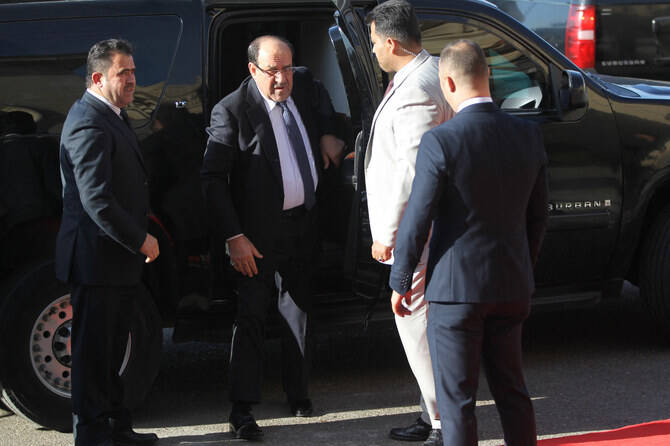
Former Prime Minister Nouri al-Maliki remains a potent force in Iraqi politics despite long-standing accusations that he fuelled sectarian strife and failed to stop Daesh from seizing large areas of the country a decade ago. (AFP/File)
Short Url
Updated 05 November 2025
Follow

Former Iraq PM Al-Maliki could heavily influence election despite troubled past

  • Maliki, in his mid-70s, was pressured to step down in 2014 by an unusually broad array of critics
  • His political roots stretch back decades, shaped by opposition to Saddam Hussein’s authoritarian rule

BAGHDAD: Former Prime Minister Nouri Al-Maliki remains a potent force in Iraqi politics despite long-standing accusations that he fueled sectarian strife and failed to stop Daesh from seizing large areas of the country a decade ago.
As leader of the influential State of Law, a Shiite Muslim coalition, he is seen as having enough clout to decide who will become Iraq’s next prime minister after a parliamentary election on November 11.
Maliki, in his mid-70s, was pressured to step down in 2014 by an unusually broad array of critics — the US, Iran, Sunni leaders and Iraq’s top Shiite cleric — after Daesh’s rapid territorial gains in 2014.
His divisive years as premier were blamed by many Iraqis for fostering sectarian strife between majority Shiites and minority Sunnis, while chronic problems like joblessness, poor public services and graft were left to fester.

MALIKI SIGNED SADDAM’S EXECUTION ORDER
Yet despite the criticism, Al-Maliki — a shrewd political operator — staged a comeback in the years that followed, quietly building influence through ties to armed militias, the security services and the judiciary, analysts say.
His political roots stretch back decades, shaped by opposition to Saddam Hussein’s authoritarian rule and a long exile that forged his ideological convictions.
Sentenced to death under Saddam for his role in the outlawed Shiite Islamic Dawa Party, Al-Maliki spent nearly 25 years in exile, mostly in Syria and Iran, agitating for the dictator’s downfall.
Like many exiles, he returned to Iraq after Saddam’s fall — the end of a Sunni-led regime that had long oppressed Shiites and Kurds.
Maliki signed Saddam’s execution order in red ink, paving the way for masked gunmen to place a noose around his neck and pull a lever that quickly ended his life.
Maliki, a friend of Shiite power Iran, had fulfilled his life-long goal of wresting power from the country’s Sunnis, but his drive to entrench Shi’ite dominance proved his downfall.
He was blamed by Sunni leaders for not doing enough to crack down on Shi’ite militias and focusing instead on asserting authority over restless Sunni provinces such as Anbar in western Iraq.
Maliki, who served as premier from 2006-2014, denied that he has a sectarian outlook.
“I am not fighting in Anbar because they are Sunnis, as I have also fought Shi’ite militias. Al Qaeda and militias are one — they both kill people and blow them up. Both rely on perverts and deviants,” Al-Maliki told Reuters in 2014.

MALIKI’S POLICIES HELPED ALIENATE SUNNIS, CRITICS SAY
His term in office was marred by sectarian bloodshed and an anti-American and anti-government insurgency, and accusations that he marginalized Sunnis, one factor in the rise of Sunni Daesh.
To detractors, the dour Al-Maliki threw down the gauntlet with stunning speed in 2011 when his Shi’ite-led government demanded the arrest of a Sunni Muslim vice president — seemingly moments after the departure of US troops in December of that year.
The move called into question Maliki’s commitment to any sort of democracy. The man who plotted from exile against Saddam for years now drew comparisons with his former enemy.
Critics say Maliki’s sectarian policies drove Sunnis into the arms of Daesh.
Maliki left office reluctantly in 2014 after security forces crumbled and fled in the face of a lightning advance by Daesh, which declared a medieval-style caliphate.
In 2015, an Iraqi parliamentary panel called for Al-Maliki and dozens of other top officials to stand trial over the fall of the northern city of Mosul to Daesh.

MALIKI HAILS FROM POLITICALLY ENGAGED SOUTHERN IRAQI FAMILY
A little-known politician in Iraq before the US-led invasion, Al-Maliki was a compromise pick to lead a wobbly coalition government in 2006.
Initially seen as a Shiite Islamist, Maliki’s initial willingness to put aside sectarianism and quell violence was called into question in a leaked US government memo.
“Despite Maliki’s reassuring words, repeated reports from our commanders on the ground contributed to our concerns about Maliki’s government,” National Security Adviser Stephen Hadley wrote to President George W. Bush in the memo.
He went on to list problems including non-delivery of services to Sunni areas and the removal of Iraq’s most effective commanders on a sectarian basis.
Maliki was born in 1950 in Janaja, a southern village among date groves on the Euphrates, into a politically engaged family — his grandfather wrote poetry inciting rebellion against Iraq’s British occupiers and his father was a fervent Arab nationalist.
Maliki was briefly arrested in 1979 and then fled, narrowly escaping Saddam’s police. His family’s land was seized and dozens of his relatives were killed over the next decade. He did not see his home village again until after the 2003 invasion.
He became deputy head of the committee that purged former officials in Saddam’s widely feared Baath Party.


Zindani govt begins reshaping security leadership

Yemeni Prime Minister Shaya Al-Zindani. (File/SABA News Agency)
Updated 7 sec ago
Follow

Zindani govt begins reshaping security leadership

  • US backing for the Yemeni Presidential Leadership Council’s efforts

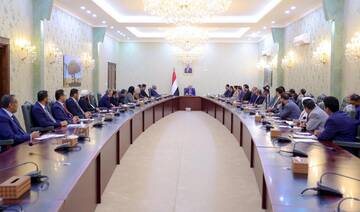
ADEN: Yemen’s government under Prime Minister Shaya Al-Zindani has begun implementing a series of decisions to restructure the leadership of the security services, in a move seen as a significant step toward reorganizing state institutions in the temporary capital, Aden.

It comes amid renewed US support for the Presidential Leadership Council’s efforts to bolster stability, combat terrorism and safeguard international maritime routes.

The chairman of Yemen’s Presidential Leadership Council, Rashad Al-Alimi, issued two presidential decrees appointing Brig. Gen. Abdulsalam Qaid Abdulqawi Al-Jamali as commander of the Special Security Forces and Brig. Gen. Abdulsalam Abdulrab Ahmed Al-Omari as head of the Civil Defense Authority, with both officers promoted to the rank of major general.

The decisions are part of a broader Yemeni effort to rebuild the leadership structure of security institutions, while strengthening the state’s capacity to enforce security and stability in liberated areas amid the country’s multiple security challenges.

Alongside the presidential decrees, Yemeni Interior Minister Ibrahim Haidan issued a series of leadership changes within Aden’s security services, including the reassignment of several security officials, as part of a plan aimed at improving operational efficiency and strengthening coordination among units.

The decisions included reassigning Brig. Gen. Jalal Al-Rubaie from his post as commander of the National Security Forces to lead the Special Security Forces in Aden, as well as appointing Brig. Gen. Mohammed Abdo Al-Subeihi as deputy director general of Aden Police and assistant for security affairs.

The appointments also included Brig. Gen. Jalal Fadl Al-Qutaibi as assistant director general of Aden Police for human resources and financial affairs; Brig. Gen. Mohammed Khaled Haidara Al-Turki as assistant director general for operations; Brig. Gen. Hassan Mohsen Saleh Al-Omari as director of the Criminal Investigation Department, with Col. Fouad Mohammed Ali appointed as his deputy; and Lt. Col. Mayas Haidara Al-Jaadani as director of the Anti-Narcotics Department.

The Yemeni Ministry of Interior said the measures are intended to reorganize field operations, raise security readiness levels, accelerate response time to threats and improve institutional discipline within security agencies. It believes the changes will help consolidate stability in the temporary capital of Aden and improve security and service performance in the city.

Yemeni-American Partnership

The government’s steps coincided with a meeting between Al-Alimi and US Ambassador to Yemen Steven H. Fagin, during which they reviewed the latest developments at the local level.

The two sides also discussed the US and international support required to strengthen Yemen’s capacity to confront security and terrorist threats, protect vital facilities and secure international shipping lanes, noting that this is an issue of regional and global priority amid escalating tensions

According to an official media source, Al-Alimi reiterated his appreciation of the Yemeni-American partnership and praised Washington’s role in supporting the implementation of resolutions to prohibit the smuggling of Iranian arms to the Houthi militia, drying up their funding sources and curbing destabilizing operations.

Al-Alimi highlighted the importance of reinforcing joint deterrence against regional threats, including the need to strictly enforce international sanctions and to pursue financing, smuggling and arms networks, in support of the government’s efforts to extend state control across all Yemeni territory.

He added that the security of the Red Sea and Bab Al-Mandab Strait is a global concern that requires broad international coordination.

Al-Alimi said that the Yemeni government is exerting efforts to normalize economic and service conditions, and to implement plans designed to integrate forces and unify security and military decision-making processes. He added that the Kingdom of Saudi Arabia supported these efforts, as it has played a pivotal role in advancing stability and rebuilding state institutions.