

Saudi Arabia leads GCC region’s fixed-income issuances in Q3

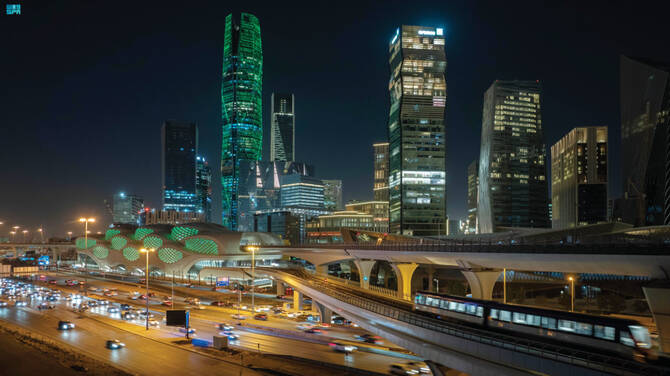
The debt market in the region — particularly in Saudi Arabia — has expanded significantly in recent years, driven by economic diversification efforts that have strengthened investor demand for fixed-income instruments. (SPA)
Short Url
Updated 01 November 2025
Follow

Saudi Arabia leads GCC region’s fixed-income issuances in Q3

  • UAE-based issuers raised $5.82 billion through 57 offerings, marking a 47.3 percent decline

RIYADH: Saudi Arabia dominated the Gulf Cooperation Council region’s primary debt market in the third quarter of 2025, raising $20.32 billion through 36 issuances, representing a 62.7 percent year-on-year increase in value, according to a new analysis. 

In its latest report, Kuwait Financial Center, also known as Markaz, said that primary issuances of bonds and sukuk across the GCC totaled $38.74 billion through 137 issuances during the third quarter, marking a 32.4 percent increase from the same period in 2024, when issuances reached $29.29 billion. 

The debt market in the region — particularly in Saudi Arabia — has expanded significantly in recent years, driven by economic diversification efforts that have strengthened investor demand for fixed-income instruments. 


The financial sector led all GCC bond and sukuk issuances in the third quarter, with a total value of $21.53 billion, followed by government issuances at $11.1 billion. (Spplied)

“As for issuance preferences, the third quarter of 2025 saw an increased appetite for sukuk issuances in the GCC, representing 52.6 percent of total issuances for the year. This is a change in issuance preferences from the third quarter of 2024, where more conventional bonds were issued,” said Markaz. 

According to the report, UAE-based issuers raised $5.82 billion through 57 offerings in the third quarter, marking a 47.3 percent decline compared with the same period in 2024.  Qatar ranked third in terms of issuance value, with $5.69 billion raised through 29 issuances, followed by Kuwait, where issuers raised $3.42 billion through eight issuances, reflecting a 118.4 percent increase year on year. 

FASTFACTS

• Primary issuances of bonds and sukuk across the GCC totaled $38.74 billion through 137 issuances during the third quarter, marking a 32.4 percent increase from the same period in 2024, when issuances reached $29.29 billion.

• Total GCC corporate primary issuances grew 4 percent in the third quarter to $26.59 billion. Conventional issuances decreased 18.6 percent to $18.37 billion, while sukuk issuances rose sharply — up 202.7 percent during the quarter — reaching a total value of $20.37 billion for the year to date.

Issuances in Bahrain surged 539 percent from a year earlier to $2.55 billion across four issuances, while Omani entities recorded the lowest total, raising $0.94 billion through three issuances.

Markaz added that total GCC corporate primary issuances grew 4 percent in the third quarter to $26.59 billion. Conventional issuances decreased 18.6 percent to $18.37 billion, while sukuk issuances rose sharply — up 202.7 percent during the quarter — reaching a total value of $20.37 billion for the year to date.

The financial sector led all GCC bond and sukuk issuances in the third quarter, with a total value of $21.53 billion, followed by government issuances at $11.1 billion, the report said.


World Bank approves $430m program to advance Tunisia’s energy transition 

Updated 12 November 2025
Follow

World Bank approves $430m program to advance Tunisia’s energy transition 

RIYADH: The World Bank has approved a $430 million financing package to help Tunisia modernize its power sector and accelerate the shift toward cleaner energy, as the North African country seeks to cut emissions.  

The five-year Tunisia Energy Reliability, Efficiency, and Governance Improvement Program — known as TEREG — includes $30 million in concessional financing and aims to improve the performance of the state-owned utility Societe Tunisienne de l’Electricite et du Gaz, or STEG, while expanding renewable capacity and strengthening sector governance, the lender said in a statement. 

The program aligns with Tunisia’s target of attracting $2.8 billion in private investment to develop 2.8 gigawatts of new solar and wind power capacity by 2028, a plan expected to generate more than 30,000 jobs, mainly during the construction phase of renewable energy projects. 

It also supports the North African country’s goal of reducing carbon intensity by 45 percent by 2030 compared with 2010 levels. 

“By fostering renewable energy development, TEREG will strengthen Tunisia’s position in clean energy, creating economic opportunities and ensuring long-term energy security,” said Alexandre Arrobbio, World Bank country manager for Tunisia. 

He said the project reflected their strong partnership with Tunisia and supported its sustainable development goals. 

“It builds on our long-standing engagement in Tunisia’s energy sector and complements ongoing initiatives like the Tunisia-Italy Electricity Integration Project, the Energy Sector Improvement Project, and advisory services from the International Finance Corporation and the Multilateral Investment Guarantee Agency, aligning with Tunisia’s Country Partnership Framework and its commitments under the Paris Agreement.” 

Amira Klibi, senior energy specialist at the World Bank and task team leader for the project, said this is the first program to benefit from the institution’s Framework for Financial Incentives, receiving rewards for its size and long-term benefits due to its impact on reducing greenhouse gas emissions. 

“The program’s reforms — such as reducing technical and commercial losses and increasing the share of renewables — are expected to deliver lasting improvements in the operational and financial performance of the sector, making electricity more affordable and reliable for households and businesses across Tunisia,” Klibi added. 

According to the statement, the program seeks to boost STEG’s operational and financial efficiency, encourage private-sector participation, and reduce the carbon footprint of power generation, while ensuring reliable electricity access for households and enterprises. 

It also aims to cut electricity supply costs by 23 percent, raise STEG’s cost recovery rate from 60 percent to 80 percent, and lower state energy subsidies by 2.045 billion Tunisian dinars ($693 million).