CHICAGO: Illinois advocates sued federal authorities Friday over alleged “inhumane and torturous” conditions at a Chicago-area federal immigration facility.
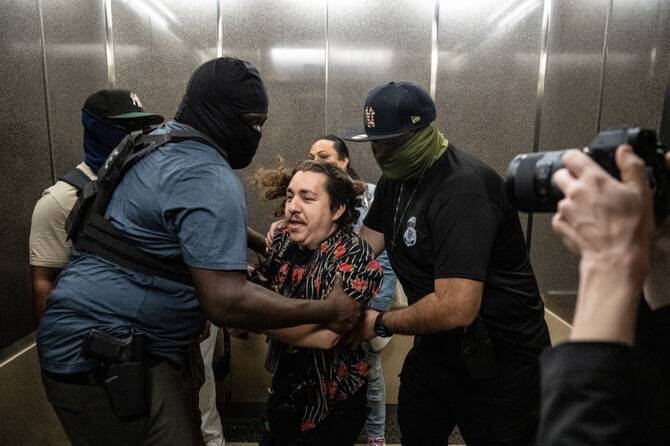
Attorneys with the ACLU of Illinois and the MacArthur Justice Center say US Immigration and Customs Enforcement agents have denied people being held at the Broadview facility private calls with attorneys and have blocked members of Congress, faith leaders and journalists from entering the building, creating a “black box” they say has allowed authorities to act “with impunity.”
Agents have also allegedly coerced people held at the processing center to sign paperwork they don’t understand, leading them to unknowingly relinquish their rights and face deportation, according to the lawsuit.
Representatives of ICE and The Department of Homeland Security did not immediately respond to emails seeking comment Friday.
Alexa Van Brunt, director of the MacArthur Justice Center’s Illinois office and lead attorney for the lawsuit, said community members are “being kidnapped off the streets, packed in hold cells, denied food, medical care, and basic necessities, and forced to sign away their legal rights.”
“Everyone, no matter their legal status, has the right to access counsel and to not be subject to horrific and inhumane conditions,” she said.
Attorneys accuse ICE, DHS and US Customs and Border Protection of violating detainees’ Fifth Amendment right to due process and First Amendment right to legal counsel, and have asked the court to force the agencies to improve the facility’s conditions.
Advocates have for months raised concerns about conditions at the facility, which has drawn scrutiny from members of Congress, political candidates and activist groups.
Lawyers and relatives of people held at the facility have called it a de facto detention center, where up to 200 people have been held at a time without access to legal counsel.
DHS previously dismissed the claims, saying those held at the facility have proper meals, medical treatment and access to communication with family members and lawyers.
The Broadview center has also drawn demonstrations, which have led to the arrests of numerous protesters. The protests are at the center of a separate lawsuit from a coalition of news outlets and protesters who claim federal agents violated their First Amendment rights by repeatedly using tear gas and other weapons on them.
US District Judge Sara Ellis sided with the coalition earlier this month, requiring federal agents in the Chicago area to wear badges and banning them from using certain riot control techniques against peaceful protesters and journalists. Later, Ellis also required body cameras for agents who have them after raising concerns about her initial order not being followed.


![]()

Advocates allege ‘inhumane’ conditions at Chicago-area ICE facility in new lawsuit
Short Url
https://arab.news/ya2fh
Advocates allege ‘inhumane’ conditions at Chicago-area ICE facility in new lawsuit
- Agents have also allegedly coerced people held at the processing center to sign paperwork they don’t understand
- Lawyers and relatives of people held at the facility have called it a de facto detention center


Latest updates




Recommended


© 2026 SAUDI RESEARCH & PUBLISHING COMPANY, All Rights Reserved And subject to Terms of Use Agreement.