Prevention over treatment: Saudi Arabia’s strategies for developing a healthy society

1 / 4
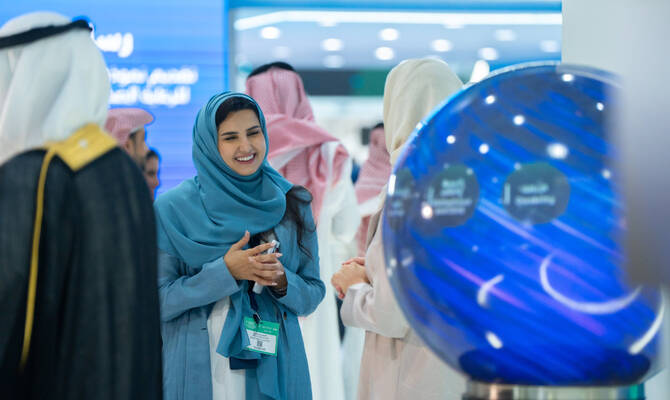
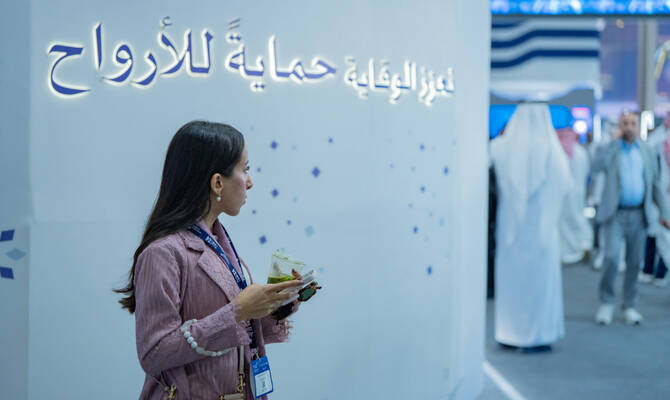
The Global Health Exhibition runs from Oct. 27 to Oct. 30 in Riyadh. (AN photo by Huda Bashatah)
2 / 4
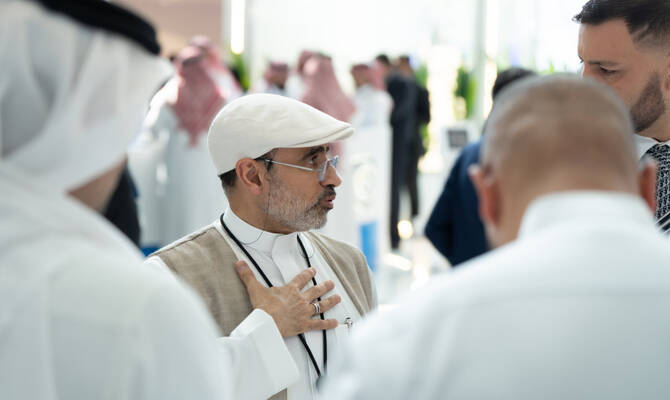
The Global Health Exhibition runs from Oct. 27 to Oct. 30 in Riyadh. (AN photo by Huda Bashatah)
3 / 4
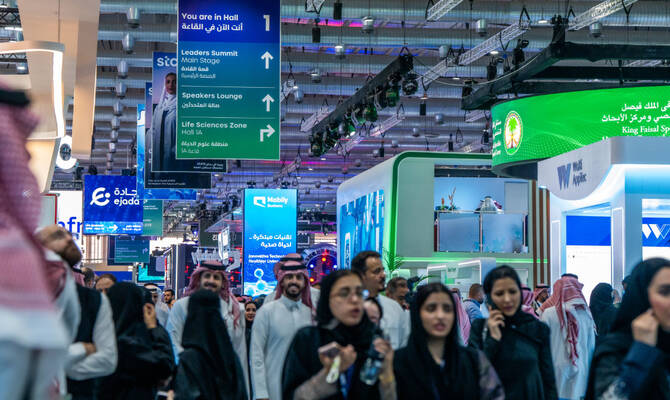
The Global Health Exhibition runs from Oct. 27 to Oct. 30 in Riyadh. (AN photo by Huda Bashatah)
4 / 4
The Global Health Exhibition runs from Oct. 27 to Oct. 30 in Riyadh. (AN photo by Huda Bashatah)
Short Url
Updated 29 October 2025
Follow

Prevention over treatment: Saudi Arabia’s strategies for developing a healthy society

  • Physicians, investors and other decision-makers gathered to bring the best solutions for the future of healthcare in Saudi Arabia

RIYADH: As Saudi Arabia continues to develop its healthcare sector, questions remain over how health practitioners can keep up with growing challenges and secure a healthy society.

During the eighth edition of the Global Health Conference in Riyadh on Wednesday, various discussions around the topic were presented.

Physicians, investors and other decision-makers gathered to bring the best solutions for the future of healthcare in Saudi Arabia.

Dr. Walid Ftehi, founder, chairman of the board and CEO of International Medical Center, spoke to Arab News about what he called “a holistic concept of medicine.”

He said: “When I came back from the States, I wanted to make sure I would raise the level of healthcare and introduce the holistic concept of medicine. 


Dr. Ashraf Amir, Chief Medical Officer at IMC spoke to Arab News about the Kingdom's efforts in preventative healthcare. (AN photo by Huda Bashatah)

“That is why our mission from day number one (was) to pioneer a unique approach of healing the mind, body and soul by applying the best global healthcare standards and pursuing divine ethics.”

For Ftehi, it is critical to pay attention to the body as a whole (the mind, the body and the soul) and not only to physical aspects.

He spoke about how Saudi Arabia’s Vision 2030 is improving understanding of healthcare and focusing on core values such as prevention, health promotion and the encouragement of a healthy lifestyle.

“More than 90 percent of (diseases) are nothing but a result of our own choices in life,” he said.

“If we change the lifestyle of people: What they eat, what they do, what they drink, how (they) think, how they feel, then you get to take care of more than 80 to 90 percent of the diseases, the chronic diseases: obesity, diabetes and hypertension.”

Dr. Ashraf Amir, chief medical officer at IMC, echoed his sentiments, and highlighted the importance of prevention over treatment to overcome health challenges in the country.

“It’s very important to highlight the strategic directions that we are implementing through our Vision 2030 and the wonderful transformation of our healthcare system to adapt a new concept in our practice as a physician toward quality of life,” Amir told Arab News.

“So, we are now moving from intervention to prevention, from disease to health, from illness to wellness.

“Now, as a physician, I’m not only here to treat the disease, but also to prevent the disease and, moreover, to improve the quality of life of our patients.”

He also discussed the Ministry of Health’s goals to extend the life expectancy of the Kingdom’s population.

“A couple of years ago, (life expectancy) was 76, and our objective in the Ministry of Health to be achieved as a KPI by the year 2045 is 80 years of age.

“How far (have we gone) to be successful in this journey? We reached today, 79 years.”


Ramadan brings local communities together to engage in volunteering activities

Updated 10 March 2026
Follow

Ramadan brings local communities together to engage in volunteering activities

  • For the Jeddah Volunteer group, local volunteers head out to lower-income neighborhoods to distribute meals
  • Supervisor Ahmed Al-Hamdan told Arab News that the iftar project is among the group’s most significant Ramadan initiatives

JEDDAH: Since the start of Ramadan, charities, mosques, restaurants, generous individuals and young volunteers across Saudi Arabia are coming together to make a tangible difference to the lives of those in need.

Volunteering activities usually peak in the weeks preceding Ramadan, with several initiatives taking place across the country.

“Every Ramadan, we are proud to see citizens and residents step up as volunteers across the Kingdom of Saudi Arabia, in Riyadh, Jeddah, Damam, Tabuk, Hail, Najran, Qassim and the rest of cities, embodying the spirit of giving and solidarity during this holy month. The people’s dedication and compassion have been a true reflection of Saudi Arabia’s values,” Sheikh Mansour Al-Shareef, imam of Al-Tawheed Mosque in Jeddah, told Arab News.

Al-Shareef underscored the spiritual essence of volunteerism, saying: “Volunteerism in Ramadan is not only about helping the needy but also about showing unity within communities.”

He noted the remarkable rise in community engagement in recent years. “Volunteering is on the rise with individuals from all walks of life contributing their time and resources to foster social solidarity, particularly during Ramadan.”

For the Jeddah Volunteer group, local volunteers head out to lower-income neighborhoods to distribute meals.

Supervisor Ahmed Al-Hamdan told Arab News that the iftar project is among the group’s most significant Ramadan initiatives.

He noted that the program aims to strengthen social solidarity and ease the burden on needy families, adding that every day during Ramadan, more than 100 volunteers arrive at the various iftar sites by the afternoon Asr prayer.

They work together to prepare special meals which include water, dates and rice, and later they distribute meals by hand. For many, the reward of helping those in need is what drives them to participate in volunteer campaigns.

It is becoming an act of duty for volunteer Noura Abdulaziz, who has been involved in such initiatives for the last two years.

She said: “I dedicate myself to this cause because it is the month of giving and it is our duty to give a hand in this special month. I really enjoy every minute of it.”

She pointed out that she sacrificed her time spent with her family to hand out meals to those who are in need.

“The number of iftars I have with my family is minimal, but they have no complaints as they understand the greater purpose,” she said.

Under the slogan “Ramadan Kareem,” fulfilling its annual commitment to community service, Kayani Event Management launched its annual “Iftar for the Fasting” campaign in the heart of Al-Balad district (historic Jeddah) for the fifth consecutive year, creating a scene of social solidarity within the ancient city.

The aim was to deliver Iftar meals to needy families and charitable organizations in the area, reinforcing the spirit of compassion embodied by the holy month.

Rana Bajouda, CEO of Kayani, told Arab News: “Our continuation for the fifth year is a confirmation of our commitment to our neighbors and our people in Jeddah, and our belief that giving is the true engine of success for any organization.”

From individual acts to organized government efforts, the General Directorate of Education in the Makkah Region launched a broad community initiative to provide Iftar meals for fasting visitors to the Holy Mosque, aiming to distribute 5,000 meals daily throughout the holy month of Ramadan.

Behind this initiative stands a team of 500 volunteers from the education sector, who work side by side, in a scene of faith that embodies the spirit of cohesion and clearly reflects the leading community role of the education sector in serving those who visit the Grand Mosque.