Pakistan warns of strikes ‘deep into Afghanistan’ if cross-border attacks continue

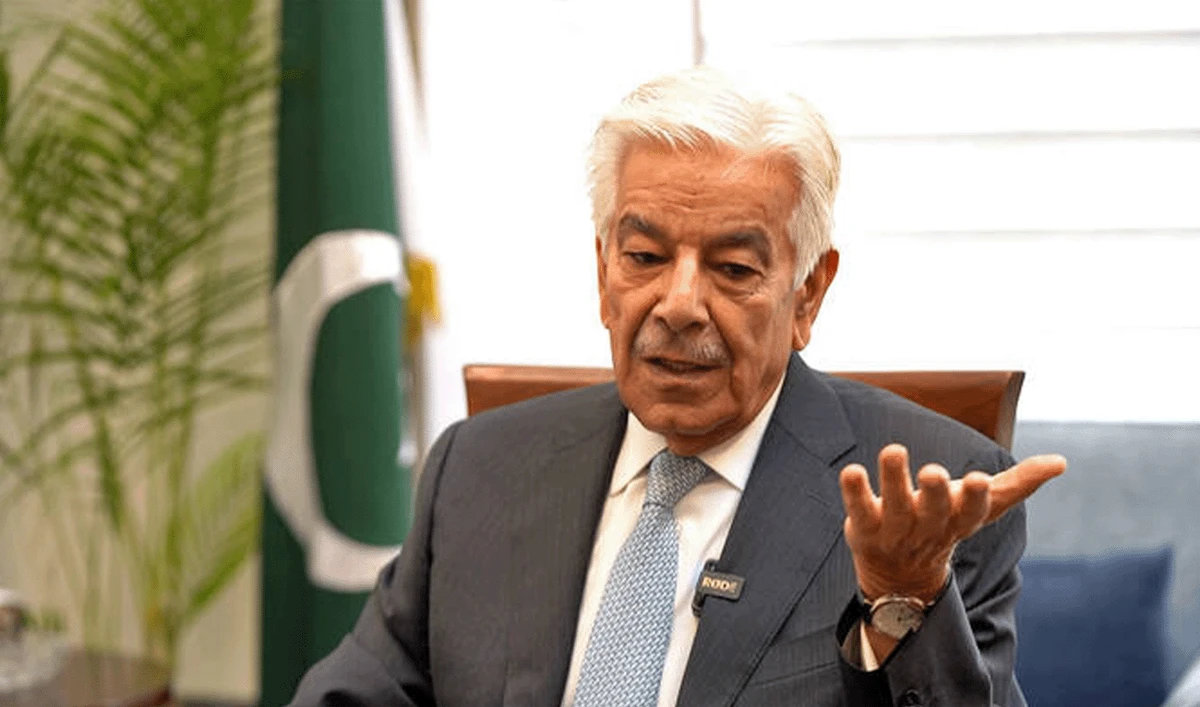
Pakistan’s Defense Minister Khawaja Asif speaks with Arab News Pakistan in Islamabad, Pakistan, on June 17, 2025. (AN photo)
Short Url
Updated 29 October 2025
Follow

Pakistan warns of strikes ‘deep into Afghanistan’ if cross-border attacks continue

  • Defense Minister says Afghan Taliban sustaining a “war economy” and pushing Afghanistan toward another conflict
  • Islamabad blames internal rifts within Afghan Taliban, alleges Indian interference for breakdown of Istanbul peace talks

ISLAMABAD: Pakistan’s Defense Minister Khawaja Asif on Wednesday warned that Islamabad would carry out strikes “deep into Afghanistan” if militant attacks from Afghan soil continued, a day after peace talks between the two sides collapsed in Türkiye.

Talks in Istanbul, facilitated by Türkiye and Qatar, ended Tuesday without an agreement. Information Minister Attaullah Tarar said the four-day discussions failed to yield a “workable solution,” accusing Kabul of evading commitments to curb militants operating from Afghanistan to launch attacks on Pakistan.

The negotiations followed a sharp rise in cross-border clashes earlier this month, the heaviest fighting in years. Pakistan said it had carried out air strikes near Kabul against the Tehreek-e-Taliban Pakistan (TTP), claiming the group enjoys sanctuary in Afghanistan. Taliban forces retaliated with assaults on Pakistani military posts along the disputed 2,600-km (1,600-mile) frontier.

Islamabad has demanded assurances that Afghan territory would not be used by the TTP or other militants staging raids into Pakistan, while the Taliban government urged Pakistan to respect its sovereignty and halt cross-border strikes. Kabul denies it harbors militants. 

“We will carry out strikes,” Asif told reporters at the Parliament House when asked what options Pakistan would avail if cross-border attacks from Afghanistan continued. 

“We will certainly do it if their territory is used and if our territory is violated, if we have to go deep into Afghanistan to retaliate, we certainly will.”

The defense minister’s statement followed hours after his earlier one on X, in which he warned that Pakistan would “obliterate” the Taliban if cross-border militancy did not end. 

“Let me assure them [Afghan authorities] that Pakistan does not require to employ even a fraction of its full arsenal to completely obliterate the Taliban regime and push them back to the caves for hiding,” Asif said in a post on X. 

“If they wish so, the repeat of the scenes of their rout at Tora Bora with their tails between the legs would surely be a spectacle to watch for the people of the region.”

“We have borne your treachery and mockery for too long, but no more,” he added. “Any terrorist attack or any suicide bombing inside Pakistan shall give you the bitter taste of such misadventures.”

Asif’s reference to Tora Bora alluded to the US bombardment of Taliban and Al-Qaeda fighters in Afghanistan’s White Mountains in late 2001, when many militants fled into Pakistan following the fall of the Taliban regime after the September 11 attacks.

Asif accused the Taliban of “blindly pushing Afghanistan into yet another conflict” to sustain a war economy, and alleged that archrival and neighboring India was exploiting divisions within the regime.

“The government in Kabul has been penetrated by India, and India has started a proxy war against Pakistan through Kabul,” he told a local TV channel on Tuesday. 

Pakistan has long blamed India for backing militant networks, including the TTP, a charge New Delhi denies.

The tensions come amid a spike in militant violence inside Pakistan in recent months, particularly in the northwest, where attacks by the TTP have killed scores of soldiers and civilians.

The Taliban returned to power in Afghanistan in 2021 after the US withdrawal, and relations with Islamabad have steadily deteriorated as Pakistan accuses Kabul of sheltering anti-state fighters, which it denies.

Speaking about the negotiations, a Pakistani security official on condition of anonymity said the Afghan delegation appeared divided among rival power centers in Kandahar, Kabul and Khost, complicating any written guarantees on militant sanctuaries.
IMF board to approve Pakistan reviews today ‘if all goes well,’ say officials

Updated 08 December 2025
Follow

IMF board to approve Pakistan reviews today ‘if all goes well,’ say officials

  • IMF’s executive board is scheduled to meet today to discuss the disbursement of $1.2 billion
  • Economists say the money will boost Pakistan’s forex reserves, send positive signals to investors

KARACHI: The International Monetary Fund’s (IMF) executive board is scheduled to meet today, Monday, to approve the release of about $1.2 billion for Pakistan under the lender’s two loan facilities, said IMF officials who requested not to be named.

The IMF officials confirmed the executive board was going to decide on the Fund’s second review under the $7 billion Extended Fund Facility (EFF) and first review under the $1.4 billion Resilience and Sustainability Facility (RSF), a financing tool that provides long-term, low-cost loans to help countries address climate risks.

“The board meeting will be taking place as planned,” an IMF official told Arab News.

“The board is on today yes as per the calendar,” said another.

A well-placed official at Pakistan’s finance ministry also confirmed the board meeting was scheduled today to discuss the next tranche for Pakistan.

The IMF executive board’s meeting comes nearly two months after a staff-level agreement (SLA) was signed between the two sides in October.

Procedurally, the SLAs are subject to approval by the executive board, though it is largely viewed as a formality.

“If all goes well, the reviews should pass,” said the second IMF official.

On approval, Pakistan will have access to about $1 billion under the EFF and about $200 million under the RSF, the IMF said in a statement in October after the SLA.

The fresh transfer will bring total disbursements under the two arrangements to about $3.3 billion, it added.

Experts see smooth sailing for Pakistan in terms of the passing of the two reviews, saying the IMF disbursements will help the cash-strapped nation to strengthen its balance of payments position.

Samiullah Tariq, group head of research at Pakistan Kuwait Investment Company Limited, said the IMF board’s approval will show that Pakistan’s economy is on the right path.

“It obviously will help strengthen [the country’s] external sector, the balance of payments,” he told Arab News.

Until recently, Pakistan grappled with a macroeconomic crisis that drained its financial resources and triggered a balance of payments crisis.

Pakistan has reported financial gains since 2022, recording current account surpluses and taming inflation that touched unprecedented levels in mid-2023.

Economists also viewed the IMF’s bailout packages as crucial for cash-strapped Pakistan, which has relied heavily on financing from bilateral partners such as Saudi Arabia, China and the United Arab Emirates, as well as multilateral lenders.

Saudi Arabia, through the Saudi Fund for Development, last week extended the term of its $3 billion deposit for another year to help Pakistan boost its foreign exchange reserves, which stood at $14.5 billion as of November 28, according to State Bank of Pakistan statements.

“In our view this [IMF tranche] will be approved,” said Shankar Talreja, head of research at Karachi-based brokerage Topline Securities Limited.

“This will help strengthen reserves and will eventually help a rating upgrade going forward,” he said.

The IMF board’s nod, Talreja said, would also send a signal to the international and local investors regarding the continuation of the reform agenda by Pakistan’s government.