

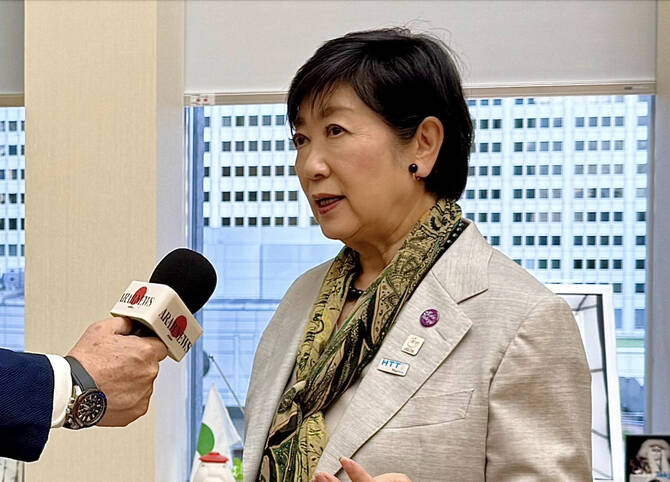

TOKYO: Tokyo Gov. Koike Yuriko will join the Future Investment Initiative in Riyadh on Tuesday as she embarks on a tour taking her to Saudi Arabia, the UAE, Kuwait and Egypt.
The trip aims to highlight the Japanese capital’s dynamic appeal, while also offering the governor the chance to explore a region she believes is flourishing with new investment opportunities.
She will attend the FII’s ninth edition to present Tokyo’s initiatives to establish itself as a leading hub for innovation and finance in Asia.
Koike also hopes to develop meaningful connections and foster a sense of shared prosperity and mutual gain for both Tokyo and the Arab nations.
She arrived in the UAE’s Abu Dhabi on Sunday and attended the 2025 Asia-Pacific Cities Summit and Mayors’ Forum, which runs from Oct. 27-29 and is hosted by Expo City Dubai at the Dubai Exhibition Centre.
Koike was a key speaker on Monday at the forum, which is held under the patronage of Crown Prince of Dubai and UAE Deputy Prime Minister and Minister of Defense Sheikh Hamdan bin Mohammed bin Rashid Al-Maktoum.
More than 150 mayors, leaders and speakers from over 300 cities around the world were invited to the summit.
Koike’s itinerary also includes Jeddah, Kuwait City, and Giza in Egypt. The importance of this trip is underlined by her participation in international conferences, speeches and discussions with governments and non-profit foundations.
“This region is currently attracting global attention for its economic growth and investment opportunities,” the governor told Arab News Japan. “Through this trip, I will work to enhance Tokyo’s presence as a leading global city, while applying the insights gained from international urban collaboration with the administration of the Tokyo Metropolitan Government.”
Koike will be accompanied by Takahashi Yoichi, the renowned manga artist behind Captain Tsubasa (known as Captain Majid in the Arab region). He will contribute to the cultural exchange aspect of the trip, using his influence and art to bridge cultural gaps and foster understanding between Japan and the Arab region.
The tour will include Saudi Arabia’s second-largest city, Jeddah, when the governor will exchange ideas with local government officials.
“Together, we will explore opportunities for inter-city collaboration in areas such as economic and industrial development,” she said, emphasizing the potential for mutual growth and collaboration.
Koike will arrive in Kuwait on Oct. 29, where she will meet with government officials to discuss tackling common challenges across industries, startups and women’s empowerment.
“We aim to exchange perspectives on potential future collaboration between our cities and within international networks, fostering partnerships among cities committed to sustainable growth,” she said.
The governor often visits Cairo, where she attended university, and this year marks the 35th anniversary of the friendship city agreement between the Cairo governorate and the Japanese capital.
“At the invitation of the Egyptian government, I am honored to attend the opening ceremony of the Grand Egyptian Museum in Giza,” Koike said. “I hope the cultural programs and other events featured in the ceremony will serve as an inspiration for advancing Tokyo’s initiatives.”
She added: “To all my dear friends across the Arab region, thank you so much for the generous invitations to take part in such meaningful meetings and visits. Throughout human history, this region has been buffeted by the storms of civilization, weathering the rise and fall of empires and dynasties. As a result, I believe it has cultivated a rich diversity of cultures and a profound wisdom for navigating change — qualities that are truly exceptional among world regions.
“While studying at university in Egypt, I encountered a different culture and learned the importance of embracing differences. That experience has been a great source of strength as I have faced various challenges as governor. The Arab people are dear friends to me, and I believe this visit will further deepen the bonds between Tokyo and the Arab world.”
The governor’s tour, which began on Oct 26, will end on Nov. 3 when she heads back to Tokyo.


