

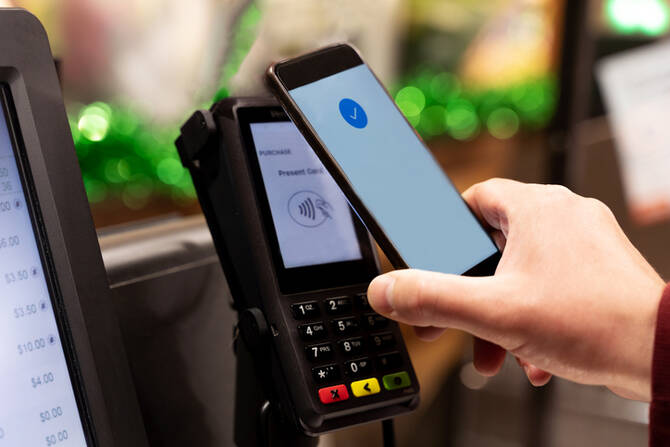

RIYADH: Saudi Arabia is accelerating its journey toward becoming a cashless society, propelled by a booming fintech sector, rising consumer adoption of digital services, and a proactive regulatory framework.
From Riyadh’s tech districts to small shops in remote towns, the Kingdom is swiftly shifting from coins and notes to codes and clicks.
With Vision 2030 as the blueprint, Saudi Arabia is leveraging its young, digitally connected population and progressive regulatory framework to fast-track its evolution into a cashless economy.
“The branch-based and cash-based banking model is transforming into a world of mobile banking, artificial intelligence-enabled services, open banking, and digital financing solutions,” Khalid Al-Sharif, CEO of Abdul Latif Jameel Finance, told Arab News, adding: “The Kingdom’s shift to a cashless economy offers a significant opportunity for financial institutions to rethink and embrace digital-first business models to remain competitive.”
Fintech revolution
As of 2023, the number of fintech companies in Saudi Arabia hit 216, surpassing the target of 150 by 44 percent. Direct jobs in the sector have crossed 6,500, more than double the initial projections.
Venture capital investment in Saudi fintechs surged sixfold in 2023 compared to the previous year, with companies raising SR2.5 billion ($666 million) across 10 funding rounds. The Kingdom’s fintech assets under management are projected to approach $64 billion in 2024, signaling substantial momentum.
“The fintech sector in the Kingdom is positioned for rapid growth in the coming years, driven by multiple factors, including increased digital banking adoption, a young and tech-savvy population, and the government’s push for diversification under Vision 2030,” Imad Kaddoura, partner at PwC Middle East, told Arab News.
He continued: “By collaborating on areas such as digital wallets, AI-driven financial services, and blockchain-based solutions, Saudi Arabia can position itself as a regional leader in fintech.”
Digital banking redefined
The Kingdom’s banking sector is undergoing a digital revolution. The emergence of digital-only banks and mobile-first services is reshaping how consumers engage with financial institutions.
With a youthful, connected population, the appetite for frictionless banking is surging. Saudi digital banks are tapping into AI, machine learning, and data analytics to deliver hyper-personalized services, breaking down traditional barriers to banking.
These innovations are streamlining operations while reaching underserved communities. Opening accounts, accessing loans, or managing personal finances is becoming faster, easier, and more inclusive.
“Achieving financial inclusion for everyone in a cashless society is imperative,” said Al-Sharif. “The advancement of alternative credit scoring, digital lending platforms, and mobile-based services is helping to bridge the gap.”
Mobile payments

The Saudi Central Bank has been working to strengthen the Kingdom’s digital payment infrastructure. File
The adoption of mobile payment solutions has skyrocketed, with services like stc pay, Apple Pay, and Mada Pay leading the charge. From groceries to utility bills, consumers are embracing contactless options for everyday transactions.
“In 2023, electronic payments engaged in 70 percent of all retail consumer transactions in Saudi Arabia, up from 62 percent in 2022,” Al-Sharif noted. “This signals a remarkable change in consumer preferences and a broader transition toward a fully digital economy.”
This shift is driven by both private sector innovation and regulatory support. The Saudi Central Bank, also known as SAMA, continues to strengthen the digital payment infrastructure and security, while aiming to achieve 80 percent non-cash transactions by 2030 — a goal now well within reach.
Retailers, restaurants, and service providers are rapidly embracing digital payments, integrating cashless solutions into daily business operations.
Blockchain and open banking
Saudi banks and fintech firms are also experimenting with blockchain in regulatory sandboxes launched by SAMA. These controlled environments enable firms to test innovations while ensuring regulatory compliance — a model that’s attracting global fintech players and investors alike.
“Saudi Arabia’s regulatory landscape has evolved rapidly to support a dynamic fintech ecosystem — but with innovation comes complexity,” Said Murad, senior partner at Global Ventures, told Arab News.
“What sets Saudi Arabia apart is its proactive, collaborative regulatory approach. Initiatives like the Regulatory Sandbox by Fintech Saudi and SAMA provide a critical runway for fintechs to test and iterate,” he added.
Open banking is further redefining financial services by enabling secure, consent-based data sharing between banks and third-party providers.
“Open banking is not a disruption — it’s a redefinition of how financial services are built, delivered, and experienced in Saudi Arabia,” Murad said. “By enabling secure, consent-based data sharing ... it’s reshaping the competitive landscape.”
Read More: Saudi Arabia sees 73% surge in e-commerce sales using MADA cards
Driving inclusion and growth
The cashless transition is not just about convenience — it has deep social and economic ramifications.
By broadening access to banking services, Saudi Arabia is fostering financial inclusion, bringing unbanked and underbanked populations into the fold.
“Digital financial services can extend access to millions who have historically been underserved by traditional banking,” Murad noted. “Fintech innovation is already playing a central role. Hakbah, for example, is redefining savings in the digital era by modernizing Jameya — the traditional group savings model — into a platform that’s accessible, secure, and user-friendly.”
He added: “By digitizing familiar behaviors, Hakbah empowers individuals, particularly the underbanked, to build financial resilience and long-term security.”
Kaddoura went on to say: “Financial inclusion in a fully digital economy relies on a few key elements. It’s essential to increase mobile banking access and improve digital literacy, particularly for underserved populations.”
Digital payments and alternative lending platforms are also making it easier for entrepreneurs to access capital, manage transactions, and grow their businesses. Meanwhile, the growing fintech ecosystem is helping create jobs, attract tech talent, and position Saudi Arabia as a regional financial powerhouse.
Safeguarding the digital shift

Cybersecurity is more important than ever. Shutterstock
Despite this progress, challenges remain. As the financial system becomes more digitized, cybersecurity and consumer trust become critical.
“While digital payments bring numerous advantages, they also introduce cybersecurity and fraud risks that must be carefully managed,” Al-Sharif warned.
“We implement robust security measures including advanced encryption, AI-driven fraud detection, and multi-factor authentication to protect our clients’ information.”
Murad echoed this concern: “As digital payments become the norm, cybersecurity and fraud prevention must become foundational pillars of the financial ecosystem. The same infrastructure that enables speed, scale, and convenience also introduces new vectors for cyberattacks.”
Beyond security, talent development is another key concern.
“Financial institutions need to focus on long-term digital strategies, invest in talent development, and collaborate with regulatory bodies to adopt disruptive technologies while maintaining financial sector stability,” Kaddoura said.
Financial literacy also plays a pivotal role. “Underserved communities still require financial solutions that accommodate their needs,” said Al-Sharif. “Educational programs are essential to empower consumers to make informed financial decisions.”
The death of money? Not quite, but close enough to cause concern

Digital-first economy
Saudi Arabia’s journey toward a cashless society is seen as being part of a societal and economic transformation.
“The shift toward a cashless economy is more than a technological evolution — it’s a catalyst for economic growth, operational efficiency, and financial inclusion,” Murad said. “A cashless Saudi Arabia is about building a digital-first economy that is more efficient, inclusive, and resilient.”
With Vision 2030 as the guiding force, fintech innovation as the engine, and an increasingly digital-savvy population as the driver, Saudi Arabia is redefining the future of finance and setting a regional benchmark along the way.


