Japan consulate in Jeddah celebrates cinema with Red Sea Film Festival guests

1 / 2
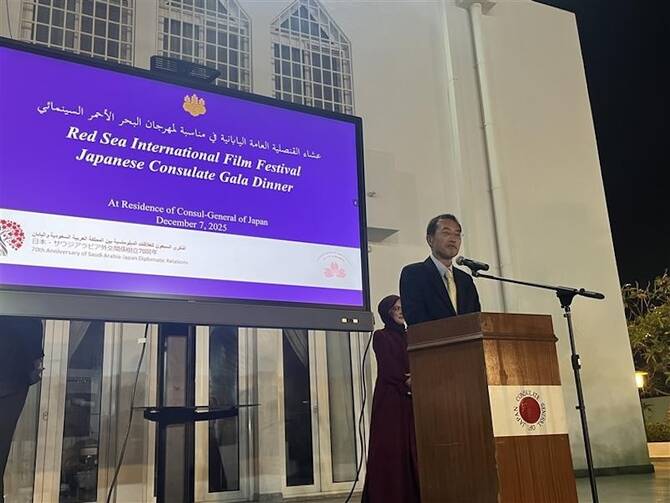
Daisuke Yamamoto, consul general of Japan in Jeddah, speaks at a special reception for guests of the Red Sea International Film Festival. (AN photo)
2 / 2
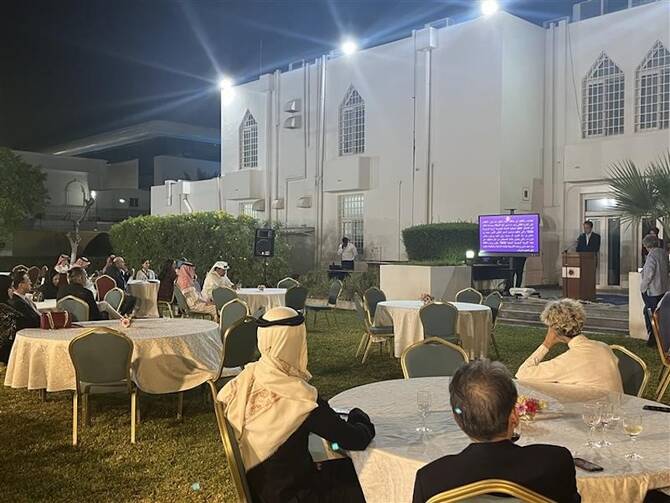
The event brought together around 50 attendees, including government officials, several consuls general, representatives from the Jeddah Historic District Program, festival guests and Saudi cultural figures. (AN photo)
Short Url
Updated 08 December 2025
Follow

Japan consulate in Jeddah celebrates cinema with Red Sea Film Festival guests

JEDDAH: As part of the celebrations marking 70 years of diplomatic relations between Japan and Saudi Arabia, the Consulate General of Japan in Jeddah hosted a special reception on Sunday evening for guests of the Red Sea International Film Festival.

The gathering, held at the consul general’s residence, highlighted the strengthening cultural ties between the two nations and Japan’s growing presence at the festival.

Speaking to Arab News on the sidelines of the event, Daisuke Yamamoto, consul general of Japan in Jeddah, said: “We are happy to have a gathering today. This is the first time Japan has held this kind of event related to the Red Sea Film Festival. Although it is the festival’s fifth edition, Japanese representation in previous years was limited. I encouraged our film industry to engage more, and I am happy that five Japanese films are being screened this year.”

While noting the absence of Japanese actors at the festival, he said the presence of producers and directors marks an important step forward. “There are already discussions about potential collaborations, and this reception is an excellent opportunity to build on the proposal we received from the Red Sea organizers.”

Yamamoto highlighted the longstanding partnership between Japan and Saudi Arabia in key sectors such as petrochemicals and the automotive industry, and expressed hope that cinema will become a new bridge for cooperation.

“I have known Saudi Arabia for many years and have seen remarkable, positive changes. We hope the Japanese film industry can be part of this dynamic transformation as well,” he added.

The event, organized in cooperation with the Red Sea Film Foundation, brought together about 50 attendees, including government officials, several consuls general, representatives from the Jeddah Historic District Program, festival guests and Saudi cultural figures.

Welcoming the guests, Yamamoto expressed his appreciation to the Ministry of Culture, the Jeddah Historic District authorities, and the Red Sea Film Foundation for their close cooperation throughout the year.

He noted the increasing cultural engagement between the two countries, including the hosting of several Japanese cultural programs in the historic district.

“Cinema is a noble art and a global cultural window that connects peoples and fosters cultural exchange, thus promoting openness to cultural diversity,” Yamamoto said in his address.

This aligns with the goals of Saudi Vision 2030, he added. “Our two friendly countries are collaborating to achieve this vision through the ‘Saudi-Japanese Vision 2030’ Committee, and the Ministry of Culture, through its Jeddah Historical District, is implementing it with insightful and open leadership to the fullest extent.”

Well-known Saudi actor, writer and producer Abdullah Al-Sadhan, who attended the reception, praised both the festival and the Japanese Consulate for their hospitality.

“It’s always a pleasure to return to the Red Sea International Film Festival and see how it continues to grow,” he said, adding: “This gathering by the Japanese consulate reflects a genuine interest in building bridges with our film community. Events like this open the door for stronger cooperation between Saudi and Japanese creators, which can only enrich the industry on both sides.”

Maiyada Mahdaly, secretary of the consul general, said: “Through this event, we celebrated the vibrant spirit of cinema and the growing cultural connection between our countries. We also welcomed talents from Saudi Arabia, Japan and beyond to honor creativity, collaboration and the power of storytelling that transcends borders.”


Rebuilding lives: Saudi initiative gives fresh hope to amputees

Updated 08 December 2025
Follow

Rebuilding lives: Saudi initiative gives fresh hope to amputees

  • Baitureh Health Association has provided life-changing support to more than 1,000 people
  • Prosthetic limbs can cost up to $76,000

MAKKAH: The Baitureh Health Association for the Care of Amputees has quickly become one of Saudi Arabia’s most impactful humanitarian initiatives, transforming support for people with lost limbs.

Established in 2020, the association deals with people’s physical, psychological and social needs and fills a long-standing gap in the national health system.

CEO Badr bin Alyan told Arab News that the initiative was created in response to a growing need, driven by amputations linked to accidents, blood disorders, occupational injuries and other causes.

Its operations were “based on service integration rather than fragmentation, enabling beneficiaries to return to their lives with confidence, ability and independence,” he said.

This holistic process covers everything from initial evaluations to psychological and physical rehabilitation, family support, prosthetic fitting and ongoing maintenance.

Its psychological support programs include group sessions led by certified mentors who have undergone similar experiences, as well as field visits to support patients before and after amputation.

More than 1,000 people across the Kingdom have so far benefitted from the association’s work, about 10 percent of them children, whom Alyan said were “the most sensitive and the most in need of intensive psychological and family support.”

Its specialist programs for children — My First Step and Therapeutic Entertainment — help young people adapt to prosthetics, overcome trauma and build confidence in a safe and supportive setting.

The association has completed more than 300 prosthetic fittings, including silicone cosmetic limbs, mechanical, hydraulic, electronic and 3D-printed models. 

Alyan said the type of prosthetic selected depended on a number of factors, such as age, lifestyle, type of amputation, activity level and psychological readiness.

Children also have to undergo frequent adjustments to their new limbs to account for their growth.

Each prosthetic cost between SR20,000 ($5,300) and SR285,000, Alyan said.

The association funds its work through sponsorships, community contributions and strategic partnerships.

Despite its success, Alyan said there were still challenges to be faced, including the lack of a consolidated base for the provision of psychological support and therapy services and prosthetics development and maintenance.

There was also a shortage of local experts, he said.

In response, the association set up a rehabilitation center, which Alyan said would help to localize prosthetics manufacturing, reduce costs and accelerate fitting processes and create opportunities for local experts to develop their knowledge and experience.

But providing prosthetics was only part of the association’s work, he said.

“Rebuilding a human life is the deeper goal.”