RIYADH: The advent of artificial intelligence has the potential to enrich the experience of museumgoers, according to two experts who spoke to Arab News.
Josh Horowitz, an adjunct professor at Carnegie Mellon University and software developer, has developed a project that allows people to explore heritage sites digitally.
Real-time data is fed into AI systems to produce “projection-mapped actuated surfaces” for better interaction and documentation of heritage sites.
Horowitz told Arab News: “AI is spreading like wildfire in our daily lives. We need to create an interactive environment where physical space and digital space can yield opportunities and go from narrating community stories to creating these stories.”
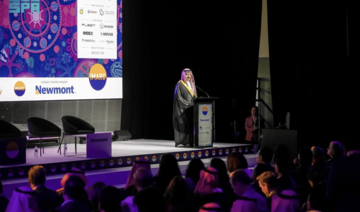
Exhibiting at the Digital Heritage Conference in Riyadh on Tuesday was WonderWay, a company that developed Ayapi, which it calls a “pocket museum companion.”
Ayapi allows users to ask about artwork, historic artifacts and even philosophical ideas. Multiple languages are also available.
Helene Alonso, founder of WonderWay and former director of interactive experiences at the American Museum of Natural History, told Arab News: “Everything I worked on pertains to … teaching and following curiosities.”
The inspiration for the project came from wanting to immortalize her relationship with her late father and her desire to document every photograph and memory.
She said Ayapi allowed someone to “walk through a historic site where every object whispers its secrets directly to you.”
Alonso added that using the tool felt like walking along a pathway with a friend who was speaking to you all about the lived experiences of the place and its people.
She said it was a place “where ancient artifacts become storytellers; where global heritage speaks your mother tongue.”
Visitors are encouraged to ask Ayapi any questions, inviting them to open-ended conversations about curated content.
The tool is available in 20 languages so far and is constantly expanding its collection of museum archives.
Ayapi also adapts to each individual person’s age, background, and language.
Alonso said: “As a woman from Venezuela, I see the world in one way, but everyone has their own way of viewing the world.”
She referred to the tool as a “bridge between generations,” and the company claims that 67 percent of people using it reported spending more time observing artwork than they normally would.