WASHINGTON: Former President Joe Biden on Monday completed a round of radiation therapy treatment for the aggressive form of prostate cancer he was diagnosed with after leaving office, a spokesperson said.
Biden had been receiving treatment at Penn Medicine Radiation Oncology in Philadelphia, said aide Kelly Scully.
The 82-year-old Democrat left office in January, six months after he dropped his bid for reelection following a disastrous debate against Republican Donald Trump amid concerns about Biden’s age, health and mental fitness. Trump defeated Democrat Kamala Harris, who was Biden’s vice president.
In May, Biden’s postpresidential office announced that he had been diagnosed with prostate cancer and that it had spread to his bones. The discovery came after he reported urinary symptoms.
Prostate cancers are graded for aggressiveness using what is known as a Gleason score. The scores range from 6 to 10, with 8, 9 and 10 prostate cancers behaving more aggressively. Biden’s office said his score was 9, suggesting his cancer is among the most aggressive.
Last month, Biden had surgery to remove skin cancer lesions from his forehead.


![]()


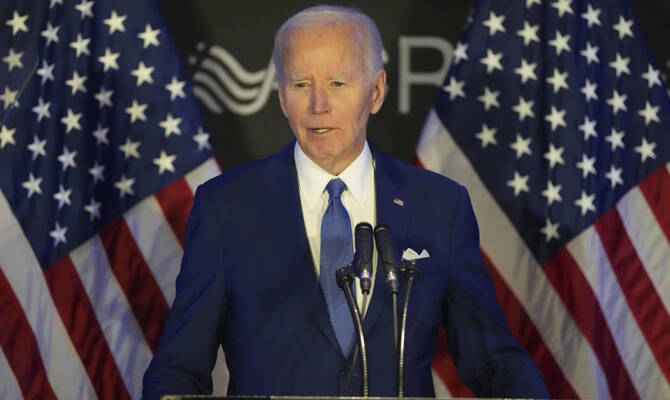
Biden completes a round of radiation therapy as part of his prostate cancer treatment
Short Url
https://arab.news/m45su
Biden completes a round of radiation therapy as part of his prostate cancer treatment
- Prostate cancers are graded for aggressiveness using what is known as a Gleason score


Pakistanis fleeing Iran describe strikes shaking ground under their feet
QUETTA: Pakistanis fleeing Iran described explosions and missile strikes across Tehran shaking the ground under their feet and engulfing buildings in fire and smoke in a city emptied of many of its residents. The conflict has widened sharply, with a US submarine sinking an Iranian warship off Sri Lanka on Wednesday and NATO air defenses destroying an Iranian missile fired toward Turkiye.
Governments have been scrambling to evacuate stranded citizens, with most of the region’s airspace closed due to the risk of missiles hitting passenger planes.
“I was in the classroom when a powerful explosion rocked our university building,” Hareem Zahra, 23, a student at the Tehran University of Engineering, told Reuters after crossing Pakistan’s land border with Iran.
“We saw thick smoke coming from many buildings on fire,” she said, adding Tehran was under attack until the moment she left.
TEHRAN LOOKED DESERTED
Nearly 1,000 students, businessmen and pilgrims have fled Iran since the war started out of a total 35,000 Pakistanis in the country, Mudassir Tipu, Pakistan’s ambassador to Tehran, said.
“There are now serious challenges. As you know there is no Internet in most parts of Iran,” he said. Iran has retaliated with a barrage of ballistic missiles targeting Israel and Washington’s allies in the Gulf, including Qatar, Kuwait, the UAE, and Saudi Arabia, following US and Israeli air strikes that killed Supreme Leader Ayatollah Ali Khamenei on Saturday.
Tehran has looked deserted since the conflict began, said Nadir Abbas, 25, a student of Persian literature at a university in the Iranian capital.
“I saw a drone hit a basketball court where six girl players lost their lives.”
Reuters could not verify his account.
’DESTRUCTION EVERYWHERE’ Islamabad is walking a diplomatic tightrope as it attempts to maintain warming ties with Washington while expressing solidarity with Iran.
Pakistan is home to the second-largest Shiite population in the world after Iran and being drawn into the conflict could lead to instability at home as well as complications evacuating its citizens.
“The first attack happened right next to my hospital,” said Sakhi Aun Mohammad, a student at Tehran University of Medical Sciences. After he reached the border, an Iranian friend called to check if he was safe, saying: “’Thank God, you have gone to Pakistan, all of you are safe, but your hostel has been attacked’.” A Pakistani diplomat who is still in Tehran said attacks took place every four or five hours, adding one missile struck a building next to his office. “At times you will feel as if something exploded right at your feet,” he said. “The last time I got out was at night. Buildings had collapsed, some others were on fire. There is destruction everywhere.”
He added: “It is almost like a ghost town.”
Governments have been scrambling to evacuate stranded citizens, with most of the region’s airspace closed due to the risk of missiles hitting passenger planes.
“I was in the classroom when a powerful explosion rocked our university building,” Hareem Zahra, 23, a student at the Tehran University of Engineering, told Reuters after crossing Pakistan’s land border with Iran.
“We saw thick smoke coming from many buildings on fire,” she said, adding Tehran was under attack until the moment she left.
TEHRAN LOOKED DESERTED
Nearly 1,000 students, businessmen and pilgrims have fled Iran since the war started out of a total 35,000 Pakistanis in the country, Mudassir Tipu, Pakistan’s ambassador to Tehran, said.
“There are now serious challenges. As you know there is no Internet in most parts of Iran,” he said. Iran has retaliated with a barrage of ballistic missiles targeting Israel and Washington’s allies in the Gulf, including Qatar, Kuwait, the UAE, and Saudi Arabia, following US and Israeli air strikes that killed Supreme Leader Ayatollah Ali Khamenei on Saturday.
Tehran has looked deserted since the conflict began, said Nadir Abbas, 25, a student of Persian literature at a university in the Iranian capital.
“I saw a drone hit a basketball court where six girl players lost their lives.”
Reuters could not verify his account.
’DESTRUCTION EVERYWHERE’ Islamabad is walking a diplomatic tightrope as it attempts to maintain warming ties with Washington while expressing solidarity with Iran.
Pakistan is home to the second-largest Shiite population in the world after Iran and being drawn into the conflict could lead to instability at home as well as complications evacuating its citizens.
“The first attack happened right next to my hospital,” said Sakhi Aun Mohammad, a student at Tehran University of Medical Sciences. After he reached the border, an Iranian friend called to check if he was safe, saying: “’Thank God, you have gone to Pakistan, all of you are safe, but your hostel has been attacked’.” A Pakistani diplomat who is still in Tehran said attacks took place every four or five hours, adding one missile struck a building next to his office. “At times you will feel as if something exploded right at your feet,” he said. “The last time I got out was at night. Buildings had collapsed, some others were on fire. There is destruction everywhere.”
He added: “It is almost like a ghost town.”
Latest updates


© 2026 SAUDI RESEARCH & PUBLISHING COMPANY, All Rights Reserved And subject to Terms of Use Agreement.