



GUJRAT: Nearly 24 years after leaving his village, Yasir Tufail walked toward his old school in Karianwala, a small settlement in Pakistan’s eastern Gujrat district where he had studied until ninth grade, carrying ambitions that stretched far beyond the classroom.
As he made his way through the narrow streets, he was no longer the boy with a backpack on his shoulders, but a NASA Deputy Portfolio Manager who had spent years contributing to some of the agency’s most ambitious missions, including the James Webb Space Telescope, a project that has transformed humanity’s view of the cosmos.
Moving through the familiar pathways, Tufail recalled childhood nights when power outages plunged the village into darkness and the sky above came alive with stars. It was there that he first noticed “what looked like a moving star.”
“It was actually a satellite,” Tufail said in a conversation with Arab News last month, adding he had thought it was a star because it shone like one.
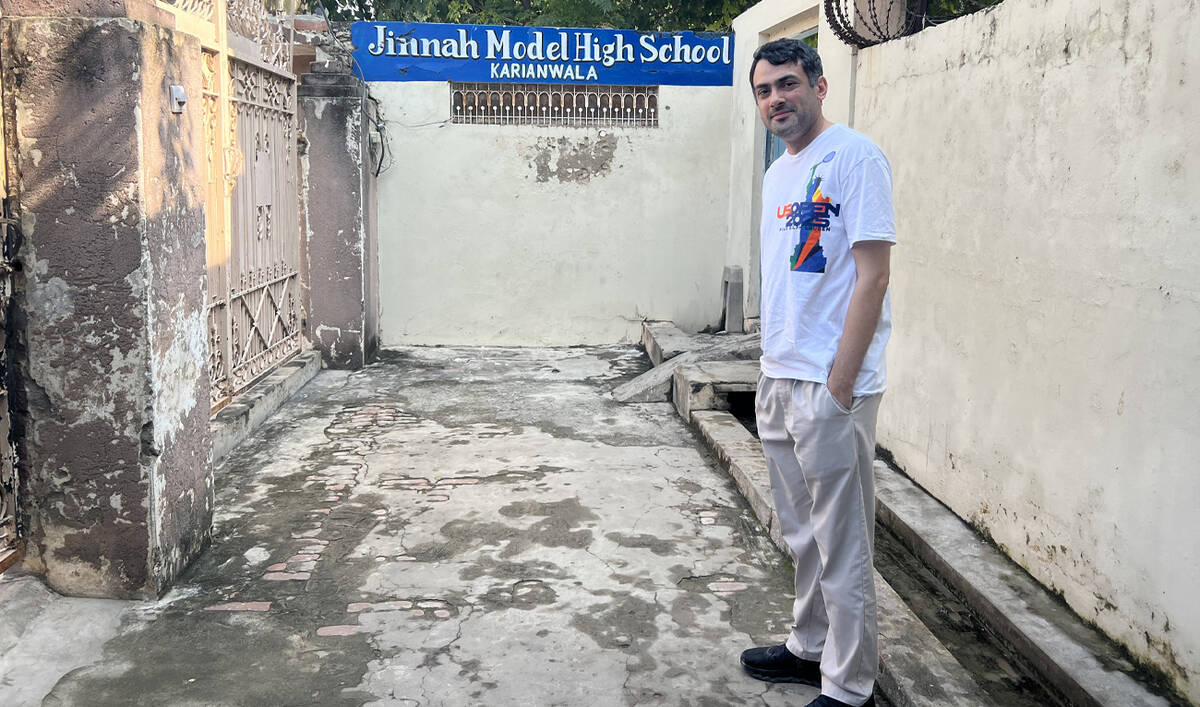
NASA’s deputy portfolio manager, Yasir Tufail, poses for a photograph outside Jinnah Model High School Karianwala in Gujrat district of Punjab province, Pakistan, on September 29, 2025. (AN Photo)
That childhood wonder eventually carried him to the world’s top space agency. His family moved to the United States in 2001, when he was just 14, making him trade the open skies of Gujrat for the bright lights of New York City.
He called it a “culture shock,” remembering all the light pollution. “When I looked at the sky, there was nothing,” he said.
Despite the emptiness above, Tufail’s dreams began to take shape. During high school, he came across a commemorative poster of the Columbia space shuttle disaster in 2003, the tragedy that claimed seven astronauts, including Indian-American Kalpana Chawla.
“That’s when my interest in space started,” he recalled.

A photograph shared on October 27, 2024, shows NASA CODEX mission Project Manager Yasir Tufail (right) having a chat with Korean team members during the environmental testing phase at the Goddard Space Flight Center in Maryland, US. (Photo courtesy: Yasir Tufail)
The moment set his trajectory. Drawn to understand how spacecraft are built and what drives such missions, Tufail went on to study astronautical engineering at the Capitol Technology University in Maryland.
In 2009, during his third year, one of his professors selected him to work on NASA’s Wide-field Infrared Survey Explorer (WISE) mission, which helped discover minor planets and star clusters. Soon, his university friends playfully nicknamed him the “WISE guy.”
After graduation, Tufail joined NASA full-time, contributing to several major projects. One of his early assignments, the Global Precipitation Measurement (GPM) satellite mission, holds special meaning for him, not just for its scientific impact but also for its unexpected cultural connection.
“Believe it or not, after eight years, I was actually working on GPM,” he said, referring to the 2014 Bollywood film Swades, in which actor Shah Rukh Khan’s character, a NASA engineer, was depicted as the mission’s project manager. “The coincidence made me feel like life was imitating art.”
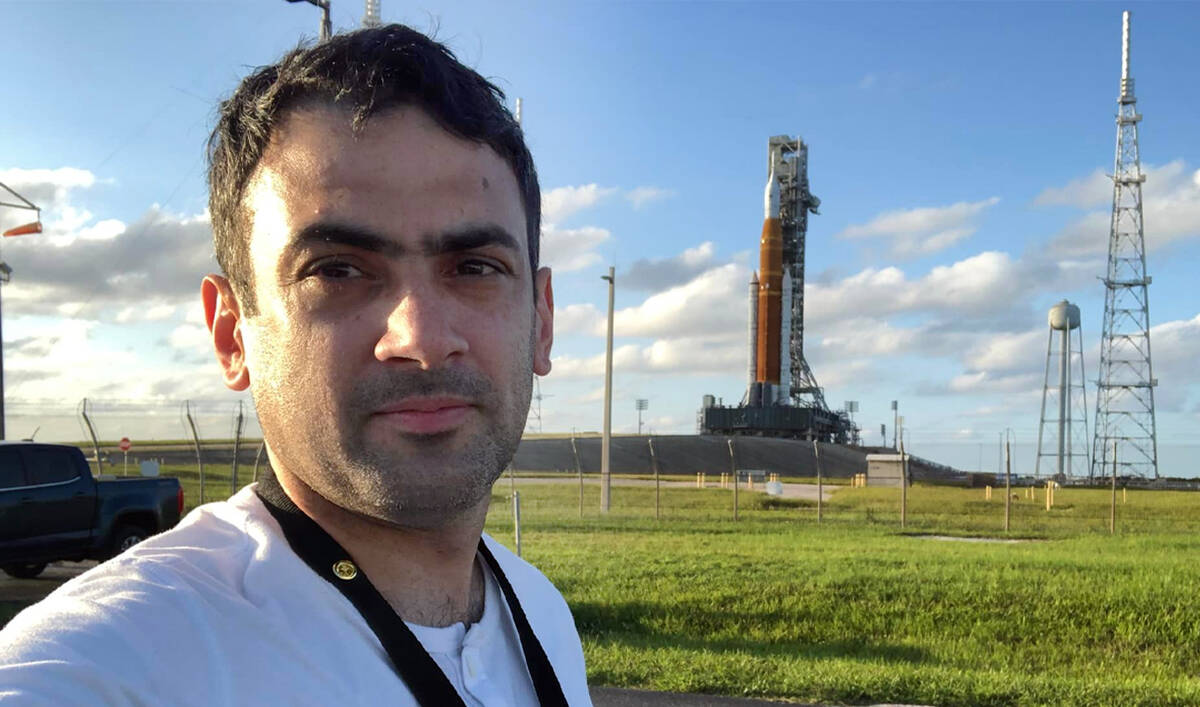
Yasir Tufail stands beside NASA’s “Artemis 1” mission ahead of its launch from the John F. Kennedy Space Center in Florida, US, on November 16, 2022. (Photo courtesy: Yasir Tufail)
But it was the James Webb Space Telescope that he said truly defined his career. Over seven years, Tufail held multiple engineering roles, integrating and testing instruments to ensure the observatory’s readiness for space.
When the first stunning images from James Webb were unveiled in July 2022, he watched with pride, knowing he had helped make those revelations possible. The telescope, launched in December 2021, now provides the deepest-ever view of the early universe — and Tufail’s fingerprints are quite literally on its design.
During his visit to Pakistan last year, he delivered talks at top universities, including LUMS and NUST, sharing his journey with aspiring students.
“If you want to do something in your life, you have to really struggle for that,” he told students. “And that can only come if you are passionate about it.”
His example has inspired others, including his own family. His younger brother has since joined NASA as a quality assurance engineer on the Dragonfly mission, which will explore Saturn’s largest moon, Titan, continuing a family legacy in space science.
Tufail himself continues to push boundaries at NASA, managing projects that probe fundamental questions about the universe while nurturing another lifelong dream: becoming an astronaut
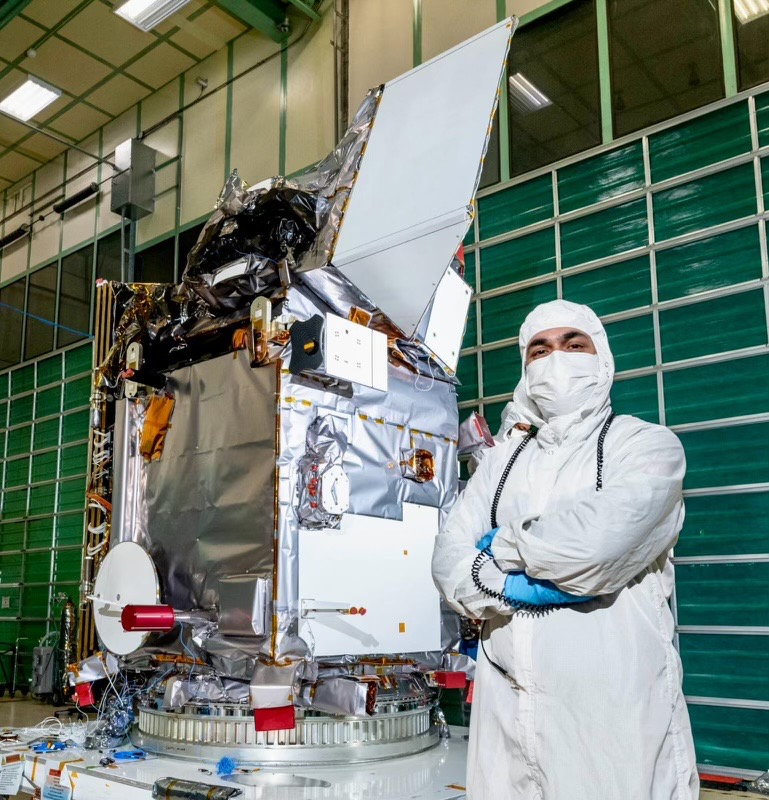
Ayyaz Tufail, younger brother of NASA Deputy Portfolio Manager Yasir Tufail, standing beside NASA’s Plankton, Aerosol, Cloud, ocean Ecosystem (PACE) observatory at the Astrotech Space Operations Facility near the John F. Kennedy Space Center in Florida, US, ahead of its launch on February 8, 2024. (Photo courtesy: Yasir Tufail)
He is currently pursuing a private pilot’s license and a scuba diving certification, both prerequisites for astronaut training.
“I still want to be an astronaut,” he said. “You never know, maybe one day I’ll get to go to space.”


