
GAZA STRIP: As the Gaza war dragged on, a diminished Hamas faced growing internal challenges to its control of Gaza from long-standing rivals, many of them affiliated with powerful local clans.
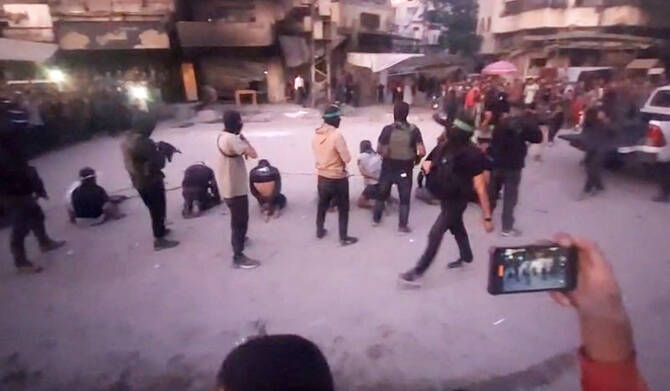
Since Friday’s ceasefire took hold, Hamas has sought to reassert itself, killing dozens of opponents in a crackdown after appearing to get a US nod to temporarily police the shattered enclave.
The following are some of the key clans and figures whose members have clashed with Hamas forces over the past two years.
Abu Shabab clan: Yasser Abu Shabab, based in the Rafah area, is the most prominent anti-Hamas clan leader. He operates in a part of southern Gaza still occupied by Israeli forces.
According to a source, his group has recruited hundreds of fighters by offering attractive salaries. Hamas accuses him of collaborating with Israel, a charge he denies.
His personal force is estimated to be around 400 men.
Doghmosh clan: The Doghmosh clan is one of the largest and most powerful in the Gaza Strip and has historically been well-armed.
Mumtaz Doghmosh, a key clan leader, previously led the Popular Resistance Committees’ armed wing in Gaza City. He later formed the “Army of Islam,” which declared allegiance to Daesh.
BACKGROUND
Yasser Abu Shabab, based in Rafah, is the most prominent anti-Hamas clan leader.
Mumtaz Doghmosh’s whereabouts have been unknown since before the war erupted on Oct. 7, 2023. Hamas fighters clashed with members of Doghmosh on Sunday and Monday.
Al-Majayda clan: This large and powerful clan is centered in Khan Younis in the southern Gaza Strip. Its members have clashed with Hamas fighters in recent months.
Earlier this month, Hamas raided the clan’s area to arrest men it said were wanted for killing Hamas members. A shootout ensued, resulting in several deaths on both sides, Hamas and clan members said.
On Monday, the head of the clan issued a statement on social media affirming support for the security campaign launched by Hamas to maintain law and order in Gaza, urging clan members to cooperate.
Rami Hellis: The Hellis clan is a large clan in Gaza City, centered in the Shejaia suburb. A few months ago a senior member of the clan, Rami Hellis and Ahmed Jundeya, a member of another large Shejaia clan, formed a group that operates in defiance of Hamas within parts of Shejaia that are still under Israeli army control.