Saudi Arabia’s cloud kitchen evolution: from hidden kitchens to branded empires

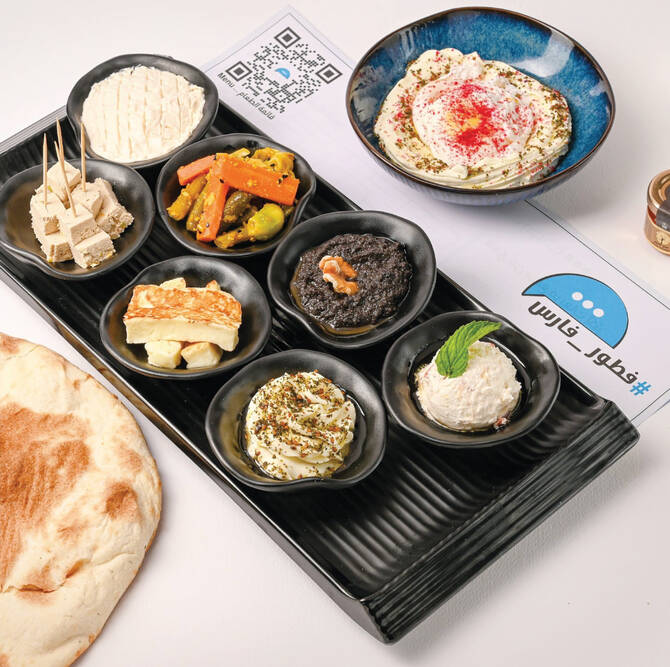
Faris Breakfast reminds us why mornings still belong to the classics even in the age of cloud kitchens. (Supplied)
Short Url
Updated 12 October 2025
Follow

Saudi Arabia’s cloud kitchen evolution: from hidden kitchens to branded empires

  • Saudi entrepreneurs are rethinking how restaurants operate and how kitchens can do more with less

ALKHOBAR: With delivery now dominating the food game, Saudi entrepreneurs are rethinking how restaurants operate and how kitchens can do more with less. 

From asset optimization to rapid brand launches, the cloud kitchen playbook is getting sharper. For Saudi entrepreneur Faris Al-Turki, the move to cloud kitchens wasn’t about chasing a trend; it was about unlocking the full value of what already existed.

“We invested millions into the branch,” said Al-Turki, founder of Faris Breakfast. “But it was only used in the mornings. So, we asked: Why not turn it into a cloud kitchen the rest of the day?”

That shift, using idle kitchens to launch virtual brands and serve new segments, has opened up a path to increased revenue without new real estate.

“Even if it adds a bit of cost,” he said, “our fixed costs are already there. So we might as well expand — different meals, different audiences, same kitchen.”

It’s a hybrid model that keeps overhead low and output high and reflects a broader transformation underway in the Kingdom’s food scene.

But turning physical space into digital brands comes with new pressures, especially when there’s no street visibility or foot traffic.

“One of the biggest challenges is that you don’t have a physical store with a clear logo in a busy area,” Al-Turki said. “You’re completely dependent on ads, influencer marketing, paid placements inside apps.”

That means most customers only encounter the brand in-app, making marketing a survival tool. “If they don’t see your name on the list, they won’t even know your food exists, no matter how good it is.”

While Al-Turki is maximizing physical space, others are skipping it altogether.

Foodtech platform Kaykroo, which entered the Saudi market in 2021, is operating at a different scale. The Dubai-born company runs over 77 digital-first brands in Saudi Arabia alone, with a presence in Riyadh, Jeddah, Dammam and more.

“We’re well past the early rollout phase,” said Fawaz Al-Otaibi, co-founder and KSA CEO of Kaykroo. “Our platform model allows us to scale quickly while tailoring brands to local consumer demand.”

Instead of leasing kitchen space to outside operators, Kaykroo owns and runs its entire portfolio, combining culinary R&D, logistics, and data science under one umbrella. 

Our platform model allows us to scale quickly while tailoring brands to local consumer demand.

Fawaz Al-Otaibi, co-founder and KSA CEO of Kaykroo

Since launching, the company has sustained a double-digit CAGR in delivery orders, with a significant portion of sales coming from repeat customers. “That reflects the loyalty we’ve built in the Saudi market,” Al-Otaibi added.

For Kenzy Al-Harbi, the cloud kitchen model was a strategic gateway. At just 18 years old, the Madinah-based entrepreneur launched Earth Art, a delivery-only food brand inspired by visual aesthetics and high-end comfort food.

“I chose the cloud kitchen model because it’s much cheaper than a traditional restaurant,” Al-Harbi said. “It gave me a way to test the idea and build the brand without taking a big risk.”

With no storefront to rely on, she focused on packaging, social media, and storytelling to build loyalty. “I invested in visual branding and nice packaging. I wanted people to feel the brand experience even without visiting a branch.”

Still, Al-Harbi says platform commissions eat into margins, and make efficiency critical.

“The hardest part is managing costs, especially the commission that delivery platforms take,” she explained. “I had to create bundles and offers to increase order value, and optimize inventory so I wasn’t wasting money.”

While platforms like Jahez and HungerStation help reach customers, they also serve as gatekeepers. Visibility, rankings, and promotions all come at a cost. “You have to pay just to show up,” Al-Turki added. “And if you want to be near the top of the app, that usually means discounts or free delivery.”

For these operators, tracking performance is no longer optional; it’s built into the workflow.

“I noticed customers love seasonal items or dishes tied to occasions,” Al-Harbi said. “That insight pushed me to update my menu regularly. I also adjusted prices based on what was selling and when.”

Al-Turki agreed: “The market’s moving fast. People want variety, they want convenience, and they want speed. You have to adapt constantly — menus, marketing, even kitchen workflows.”

Kaykroo takes that even further, with teams monitoring customer behavior across all 77 plus brands to optimize offers, locations, and operating hours.

As cloud kitchens multiply, questions around regulation, consolidation, and long-term viability are beginning to surface. “There’s definitely growing competition,” Al-Harbi said. “And I think we’ll start seeing clearer regulations to protect both businesses and customers.” Al-Turki sees a shift already underway. “Dine-in traffic is going down. People want to eat where they are. At home, at work, with friends. That’s not a trend, that’s reality.”

Al-Otaibi, who plays a role in shaping policy frameworks for the sector, expects more structure. 

As the industry matures, strong operators will survive and grow, and weak ones will phase out or consolidate.

Al-Harbi’s advice to first-time founders: “Start small, test your concept, and don’t overspend. Focus on quality and the customer experience — and never stop improving.”

Al-Turki keeps it blunt. “It’s not easy; you’re in a constant fight to stay visible and stay relevant. But if you’re lean, creative, and persistent, the opportunity is there.” As the Kingdom’s F&B scene evolves, one thing is clear: In the race to capture the delivery-first consumer, the winners won’t just cook well, they’ll think fast, market smarter, and adapt without waiting for permission.


Accelerating growth boosts investor confidence

Updated 06 December 2025
Follow

Accelerating growth boosts investor confidence

  • Startups attract fresh capital to scale AI, health tech, and infrastructure

RIYADH: Startups across the Middle East and North Africa are accelerating growth through strategic funding rounds, partnerships, and technological innovation. 

From agriculture tech and AI-led cybersecurity to digital health and home renovation, this week’s developments reflect the region’s expanding startup ecosystem and investor confidence across key verticals.  

Saudi agritech startup Nabt has raised $3.4 million in a seed extension round, bringing its total funding to $5 million.  

The round was led by SHG Group, with participation from Merak Capital and several angel investors, signaling strong investor confidence in the company’s long-term growth strategy.  

The funding announcement took place during a signing ceremony at the Sunbola program event under the Ministry of Environment, Water, and Agriculture.  

Founded to build both physical and digital infrastructure for the fresh-produce sector, Nabt connects farmers directly with commercial buyers through fulfillment centers that handle sorting, cold storage, and last-mile logistics.  

The company recently launched the Nabt Online Auction to support large-scale produce trading across the Kingdom, and Nabt Intel, which provides real-time pricing and market-demand data. 

CEO Abdullah Al-Otaibi said: “In just two years, Nabt has proven that building transparent and efficient infrastructure for fresh produce is not only possible but essential.”  

The new capital will support expansion into additional Saudi cities and further develop Nabt’s infrastructure and services to boost food security and farmer profitability across the country.   

COGNNA raises $9.2m 

COGNNA, a Saudi cybersecurity company founded in 2022, has closed a $9.2 million series A round led by Impact46 and co-led by BNVT Capital, with participation from Vision Ventures and Tali Ventures.  

The company offers AI-driven security operations tailored for enterprises and SMEs through its Agentic SOC platform.  

Combining AI automation with human oversight, COGNNA’s platform helps organizations simplify compliance and proactively defend against cyber threats. 

Chief Technology Officer Ziyad Al-Sheri stated: “Through our AI-led platform, we are building an Agentic SOC that doesn’t just respond to threats — it anticipates them.”  

The funding will be used to accelerate global expansion, enhance R&D in AI automation, and scale operational teams and infrastructure to meet growing demand. 

The company plans to allocate capital across product development, marketing, hiring, and international operations.  

Funch raises $500k 

Funch, a Dubai-based AI-native lunch subscription startup, has secured $500,000 in a pre-seed round led by Angelspark, with participation from investors including Mostafa Kandil, Mahesh Murthy, and Tushar F.  

Founded in 2025 by Ahmad Joehnny and Ghada Zanaty, the platform offers flexible, credit-based lunch subscriptions for 19 Emirati dirhams per day with no delivery fees. 

Founded in 2025 by Ahmad Joehnny and Ghada Zanaty, Funch offers flexible, credit-based lunch subscriptions with no delivery fees. (Supplied)

Funch replaces traditional meal plans with a system where users can pause, skip, or cancel orders while using credits only when meals are delivered.

“Our model is built around pre-planned orders, enabling us to operate with higher efficiency, reduce waste, and cut emissions with fewer trips,” said co-founder and chief operating officer Ghada Zanaty.  

The company leverages AI to forecast demand, optimize routes, rotate menus, and streamline logistics, and will use the funding to scale across Dubai and develop its AI systems further. 

Paymob teams up with Robusta 

Egyptian fintech Paymob and software development firm Robusta Technology Group have announced a strategic partnership to accelerate digital transformation across Egypt and the wider region.  

The collaboration will integrate Paymob’s digital payments infrastructure with Robusta’s AI-driven product development and analytics capabilities.  

The joint initiative aims to deliver intelligent digital experiences for SMEs and enterprises, supporting Egypt’s Vision 2030 goals. 

Both companies plan to expand regionally and develop future offerings combining automation, analytics, and seamless payment systems to improve operational efficiency for merchants and startups.  

Reno raises $4m

UAE-based renovation technology platform Reno has raised $4 million in a mix of equity and debt funding.  

The round included investments from Sanabil 500, Hub71, and Plus VC, as well as Zero 100 VC, FlyerOne Ventures,  and Sandstorm VC. AngelSpark and Swiss Founders Fund also invested.

Founded in 2024 by Marc Michel, Amr Hosny, and Farah Karabeg, Reno offers a tech-enabled, end-to-end solution for interior design and renovation services in both residential and commercial sectors.  

Reno aims to streamline the renovation process through a unified digital platform, allowing customers to manage projects from planning through execution.  

The company plans to use the new capital to expand across the GCC region, enhance its technological infrastructure, and further develop its customer experience. 

Glenwood PE and Mubadala invest in Korean desalination firm NanoH2O

Glenwood Private Equity and Abu Dhabi’s Mubadala Investment Company, along with co-investors, have completed a co-investment in NanoH2O, a Seoul-based reverse osmosis membrane manufacturer previously operating as LG Water Solutions under LG Chem.  

All closing conditions and regulatory approvals for the investment have been fulfilled.  

NanoH2O, which became an independent entity in 2024, supplies desalination and brackish water treatment solutions to municipal and industrial clients worldwide. More than 95 percent of its revenue is generated outside South Korea. 

“We have strong conviction in NanoH2O’s technology leadership and long-term growth potential,” said Mohamed Al-Badr, head of Asia at Mubadala.  

The firm aims to support NanoH2O’s global expansion, particularly in the MENA region, amid growing concerns over water security and decarbonization.