

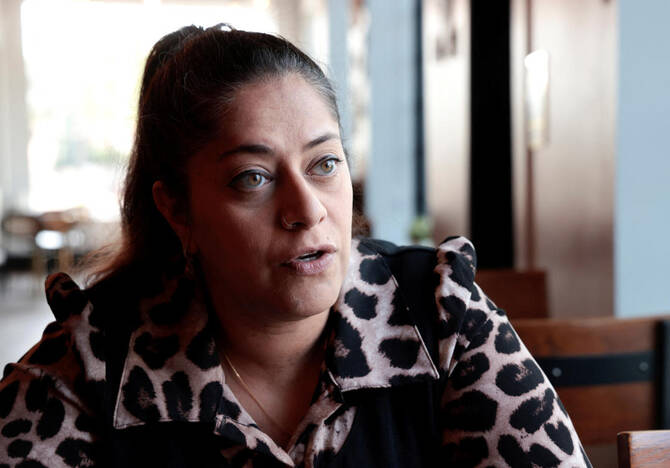

DEARBORN, USA: Lifelong Democrat Samra’a Luqman became a vocal backer of Donald Trump in 2024, helping to rally support for him among the pivotal Arab American community in Dearborn, Michigan, in the hope that he could end the Gaza war.
Now, after Trump helped to broker a ceasefire deal, Luqman feels thrilled and a bit vindicated after months of backlash from neighbors angry over Trump’s support for Israel.
“It’s almost an ‘I told you so moment,’” said Luqman, who is Yemeni American. “No other president would have been able to force Bibi to approve the ceasefire,” she said, referring to Israeli Prime Minister Benjamin Netanyahu.
Luqman and other Arab American Trump supporters who spoke to Reuters expressed guarded optimism about the recently announced agreement, but said they worried that Israel could violate the ceasefire, as it has done in the past in Gaza and Lebanon.
“We’re all holding our breath,” said Mike Hacham, a Lebanese American political consultant and Dearborn resident who campaigned hard for Trump in 2024. “I gotta give credit where credit is due ... but this isn’t a peace deal. It’s just the end of a bloody war and those lives that were lost on the Israeli side and the Palestinian side aren’t going to be brought back.”
GUARDED OPTIMISM OVER GAZA BUT MISTRUST OF ISRAEL
Israeli airstrikes in Qatar and other Arab nations in recent months fueled deep mistrust of Israel among Michigan’s more than 300,000 people of Arab heritage. But the agreement is the biggest step yet to end two years of war that Palestinian health authorities have said killed more than 67,000 people in Gaza.
In addition to a ceasefire, the deal calls for releasing the last 20 of 250 hostages seized by Hamas when it started the war with the October 7, 2023, attacks that killed more than 1,200 people, according to the Israeli government. It comes after months of deepening frustration among Arab Americans over what they see as Trump’s failure to rein in Netanyahu and end the war. Trump’s renewed ban on travel from several majority-Muslim countries and crackdowns on freedom of speech targeting pro-Palestinian protesters have also unnerved many, according to more than a dozen Arab American voters who backed Trump in Michigan last year and spoke to Reuters in recent weeks. Many of those interviewed also felt disappointed that their community’s support — thousands of votes that helped to push Trump to victory in Michigan — did not translate into more senior high-profile posts for Arab Americans and Muslims in his administration. It remains unclear whether the ceasefire deal will sway skeptical voters as Trump’s Republicans face competitive congressional and gubernatorial elections in Michigan next year, as well as the 2028 presidential election.
Hacham said Trump would be hailed as a “champion of peace” after brokering the Gaza ceasefire, but added that Arab American voters could turn against him and other Republicans if it fails.
“We are willing to abandon the Republicans and move back to the Democrats,” Hacham said. “We’ve shown Donald Trump that we have the power to swing whichever way we want.”
ANGER OVER GAZA FUELED SWITCH TO TRUMP
Trump won Michigan by more than 80,000 votes in 2024, reversing his 154,000-count loss to Democrat Joe Biden in 2020. An October 2024 Arab American Institute poll had shown Trump favored by 42 percent of Arab Americans nationwide versus 41 percent for Kamala Harris — down 18 percentage points from Biden’s share in 2020. In addition to anger over the Gaza war, Trump’s 2024 campaign tapped into concerns raised by some conservative community members about Democrats’ defense of transgender rights, Luqman said. She expected those voters probably would stick with Republicans. But a larger group of Arab Americans voted for Trump in 2024 “out of spite” at Democrats, and their continued support for the Republican Party likely depends on what happens with Gaza, Luqman said.
“I don’t think they’ve found their political home with the Republicans just yet,” she said, adding that Trump’s pressure on Netanyahu could “solidify support for JD Vance in the next election and for the midterms for any Republicans that run.”
Imam Belal Alzuhairi joined Trump on stage in Michigan just days before the 2024 election, alongside 22 other clerics, convinced that he offered the best chance for peace, but he said many Yemeni Americans later grew disenchanted after Trump reimposed a travel ban on many Muslim countries. “Now, a lot of people are very upset. They are fearing for themselves and their families. There’s a mistrust after the travel ban,” he said.
After facing personal backlash for his endorsement, the Yemeni American cleric says he is pulling out of “soul-consuming” politics to focus on religion and his family.
TRUMP ADMINISTRATION MOVES TO TAMP DOWN FRUSTRATION Special envoy Richard Grenell, a Michigan native tapped by Trump to lead his outreach to Arab American and Muslim voters, returned to the Detroit area last month for his first in-person meetings with community leaders since November. His mission? To tamp down the mounting frustration and prevent Arab Americans from swinging to the Democratic Party, as they did after Republican President George W. Bush’s invasion of Iraq in 2003.
Alzuhairi, Luqman and a dozen others grilled Grenell at a coffeehouse in Dearborn over the travel ban and US arms sales to Israel. At a separate session, he was asked why the administration is not doing more to help Christians in Iraq.
Grenell, former acting director of intelligence during Trump’s first term, told Reuters the dialogue was important.
“I continue to believe that the Arab and Muslim communities in Michigan are the key to winning the state,” Grenell said. “I know these leaders well and they want and deserve access to political decision makers.” Although Grenell faced tough questions from Arab American leaders during four events in the Detroit area, he said he would remain closely engaged, and emphasized Trump’s commitment to peace around the world.
“You can’t show up right before an election and expect to be a credible voice for any community,” he told Reuters.
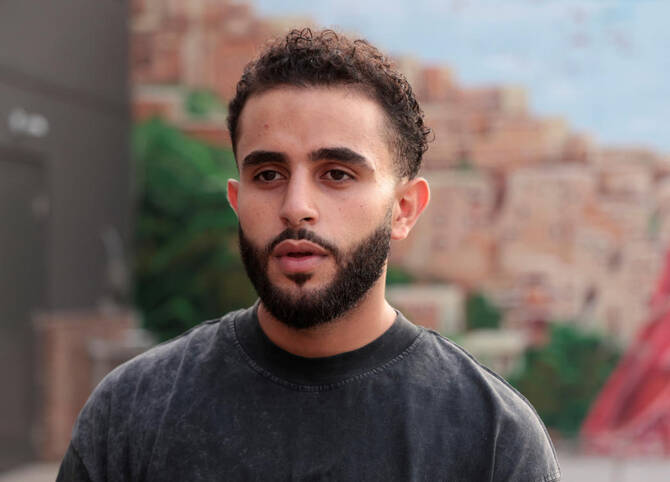
Ali Aljahmi, a 20-year-old Yemeni American who helped to galvanize young Arab Americans for Trump with a video viewed nearly 1 million times on X, credited him for coming to Dearborn twice during the 2024 campaign. But it’s too soon to predict the next election, said Aljahmi, whose family operates four restaurants in the Detroit area.
“Trump promised a lot,” he said. “Okay, you came and showed your face, but I still think it’s a mixture. Three years from now, we’ll see what they’re doing.”


